
Last updated September 23, 2026
Whole-system duct and dryer vent check with before-and-after photos - you see exactly what came out of your vents
That "$99 whole-house special" is a bait ad - the real number appears once they are in your hallway, or the "clean" is a shop-vac at the register. We photograph the inside of your ducts before and after instead.
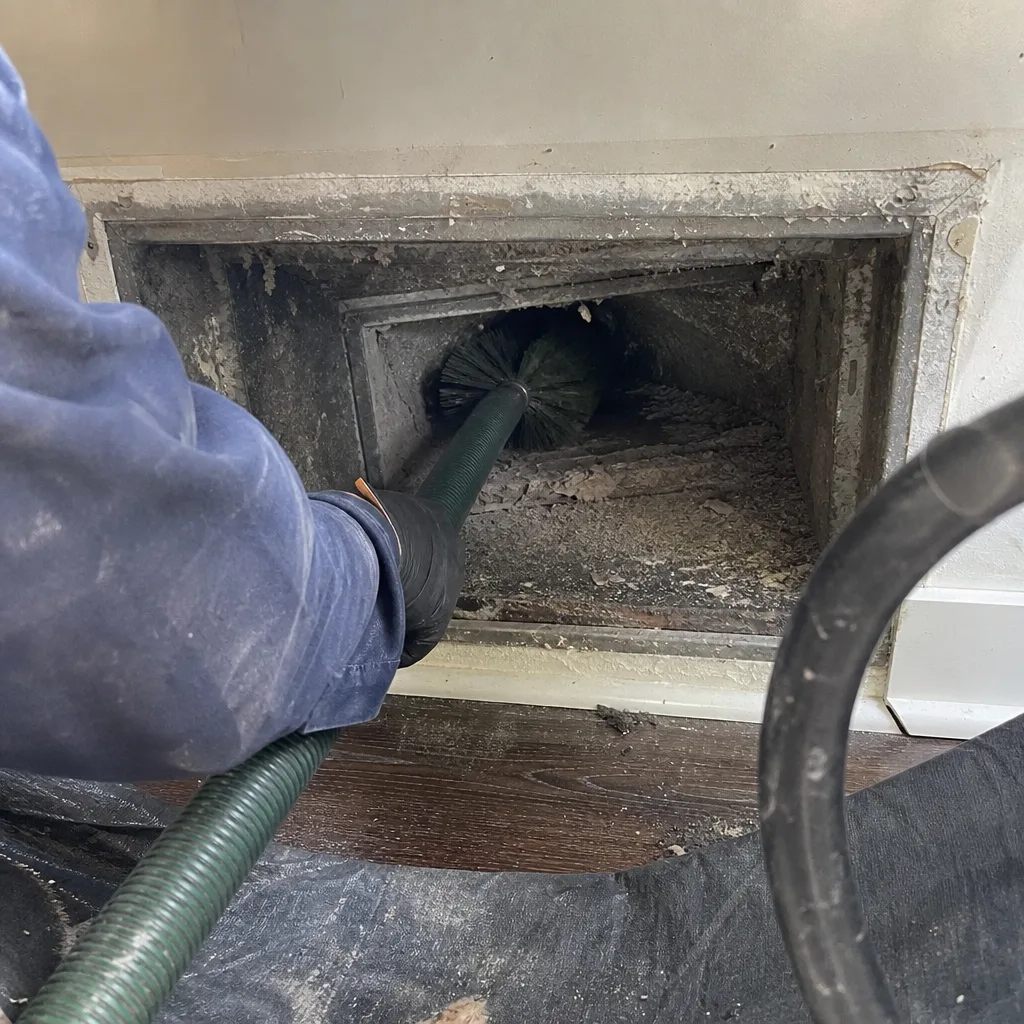 Before
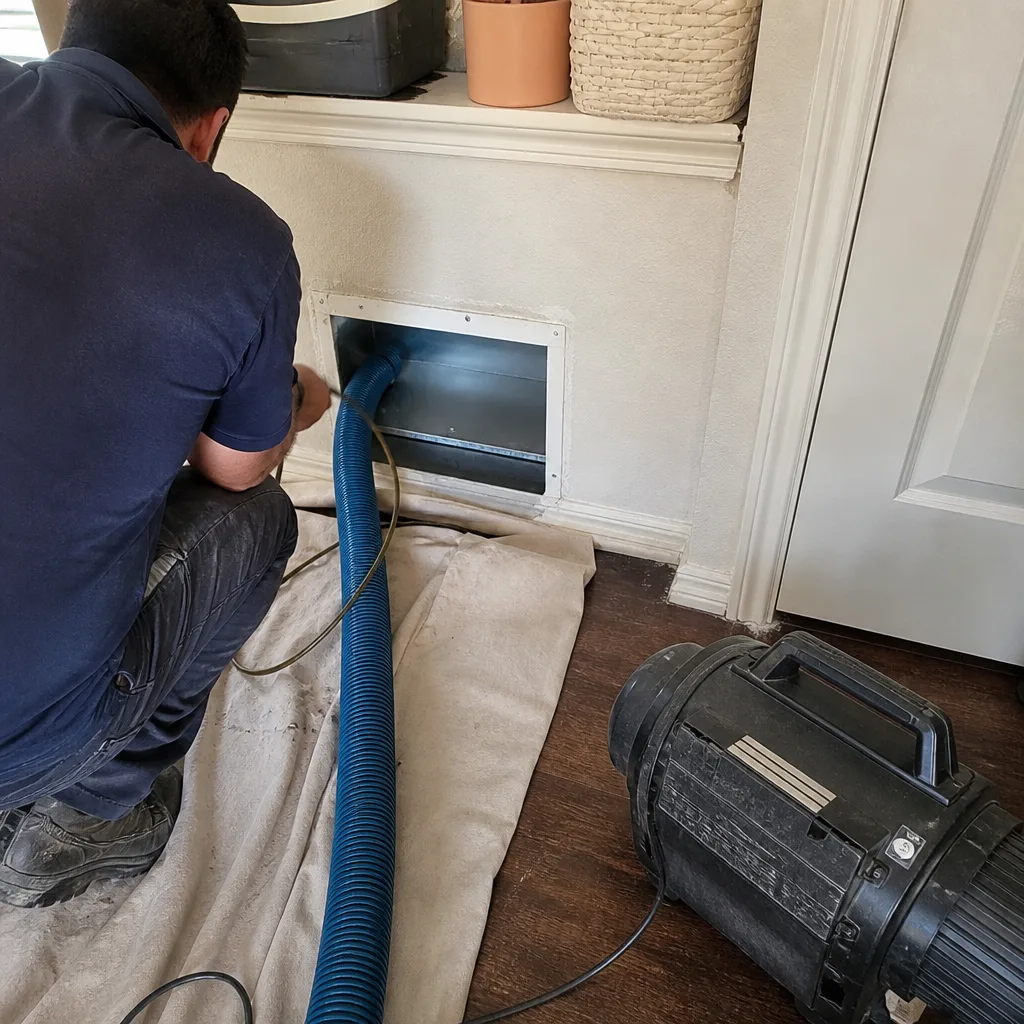 After
After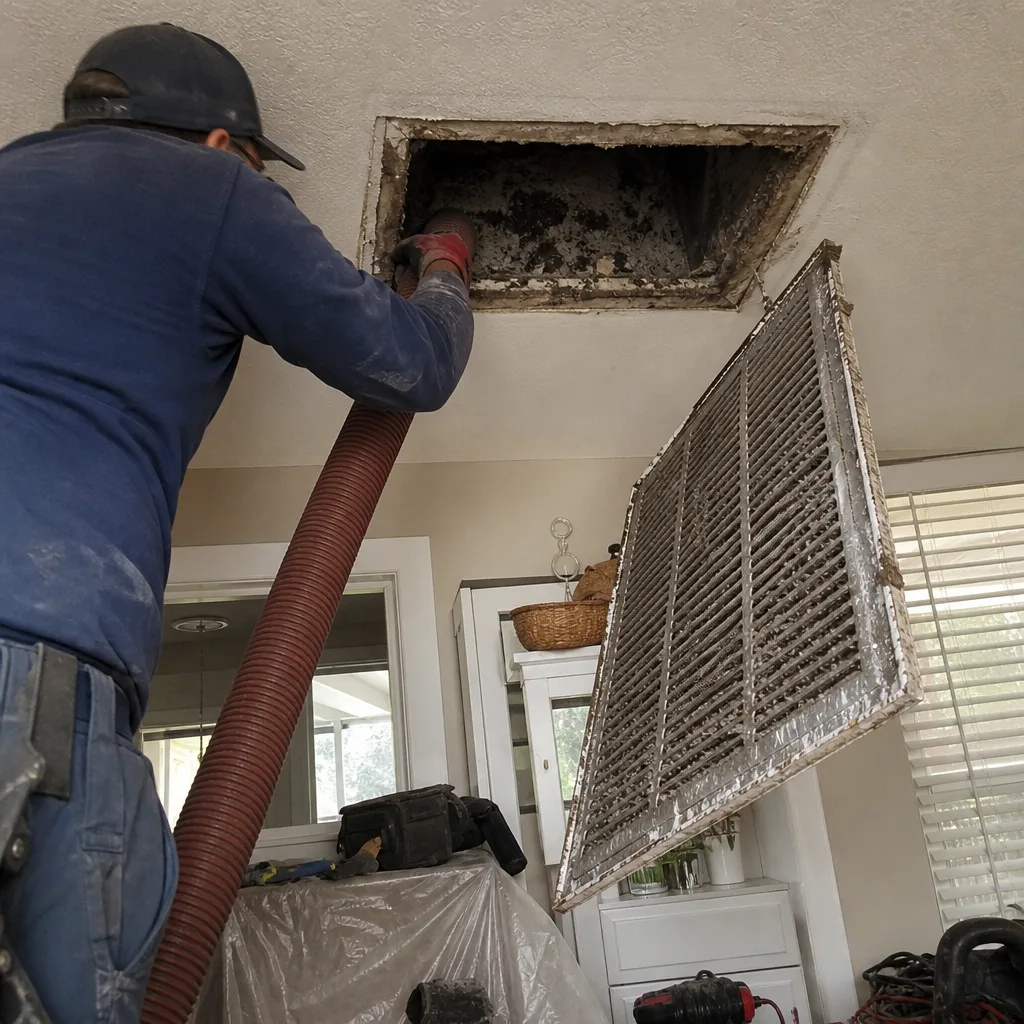 Before
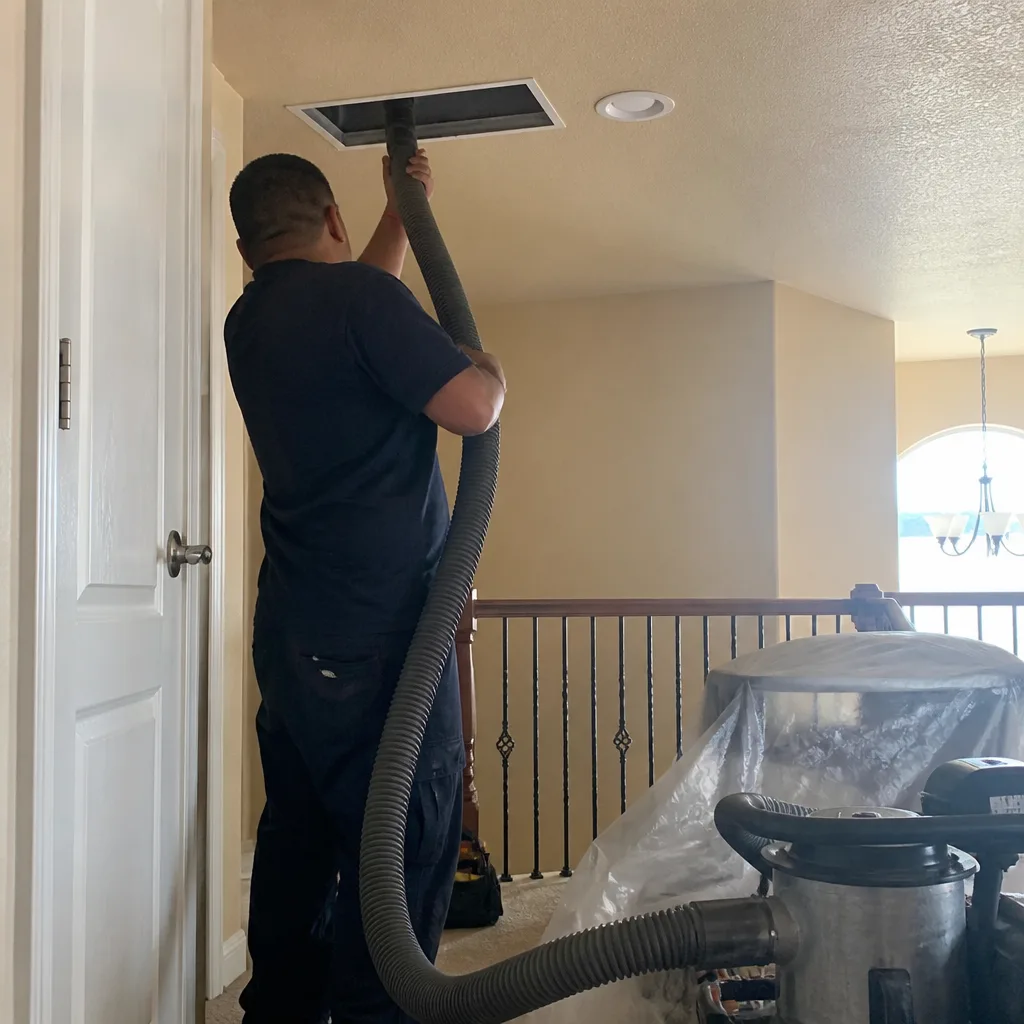 After
After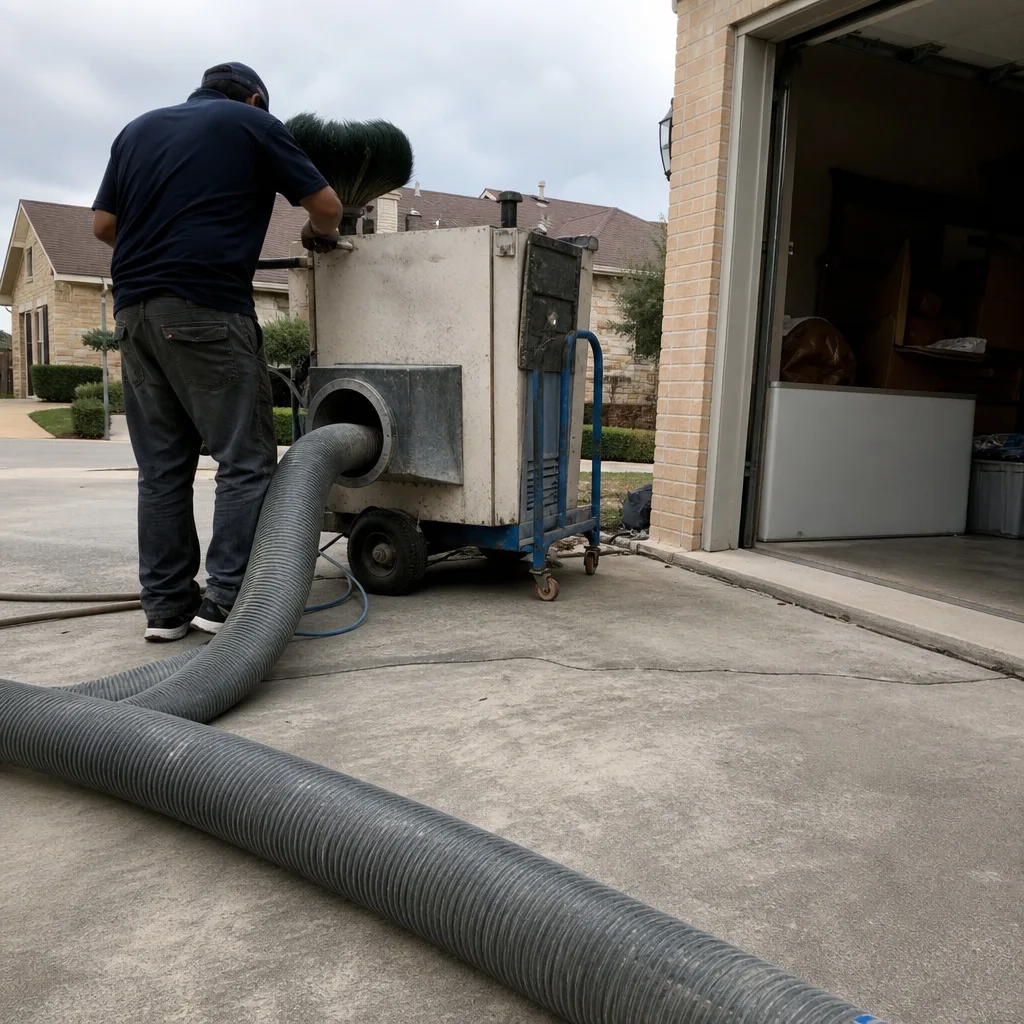 Before
 After
AfterThe Complete Guide to Air Duct Cleaning in Schertz
The EPA has never recommended a specific cleaning frequency for residential air ducts. Yet walk through any Schertz neighborhood, from The Crossvine to Willow Grove, and you’ll find coupons in mailboxes promising $79 whole-house cleanings with a “recommended every 3-5 years” sticker. That number isn’t regulation. It’s a sales rhythm. The actual standard, published by the National Air Duct Cleaners Association, reads differently: clean when documented contamination warrants it. This guide explains what that standard means for Schertz homeowners, how to tell real duct contamination from marketing theater, and why the inspection camera matters more than the vacuum truck. For more on what professional cleaning involves, see our Air Duct Cleaning services.
Quick Answer
Air duct cleaning in Schertz should be performed only when an inspection camera documents visible debris, microbial growth, or pest evidence inside the ductwork. A complete job covers all supply branch runs and return pathways, uses negative-pressure extraction equipment, and delivers a written scope with before-and-after photography. In Schertz’s market, whole-system cleaning typically ranges from $400 to $900 for a standard single-system home, with pricing agreed in writing before work begins.
Table of Contents
- What the EPA Actually Says About Duct Cleaning Frequency
- What Schertz Conditions Actually Deposit in Your Ductwork
- Inspection Finding vs. Upsell: How to Tell the Difference
- What a Complete Duct Cleaning Job Looks Like
- The Written Scope: What Must Be on Paper Before Any Price Is Valid
- Professional Equipment vs. Shop-Vac Noise
- Why Before-and-After Photography Changes Everything
- What Air Duct Cleaning Costs in Schertz
BeforeAfterWhat the EPA Actually Says About Duct Cleaning Frequency
The EPA’s official position on residential air duct cleaning is shorter than most homeowners expect. The agency states that duct cleaning has never been shown to prevent health problems, and that no study conclusively demonstrates that particle levels inside homes increase because of dirty air ducts. The EPA does recommend cleaning in specific circumstances: visible mold growth inside hard-surface ducts, ducts infested with vermin, or ducts clogged with excessive debris and dust particles actually releasing into the home.
That’s the standard. Not a calendar. Not a feeling that “it’s been a while.” Documented evidence of one of those three conditions.
The National Air Duct Cleaners Association, the trade body that publishes actual cleaning standards, aligns with this evidence-first approach. NADCA Standard 1992-01 specifies that cleaning should be performed “when an inspection indicates that cleaning is necessary.” The inspection comes first. The recommendation follows. Any company that skips the inspection and opens with a price for “standard maintenance” is operating outside both EPA guidance and trade standard.
We’ve been in Schertz homes where the camera showed spotless galvanized steel from the plenum to the register, and we’ve been in homes where the first elbow held two inches of compacted pollen and construction debris from a 2019 renovation that was never properly sealed. The difference isn’t time. It’s what the camera sees.
Here’s what an evidence-based inspection actually checks:
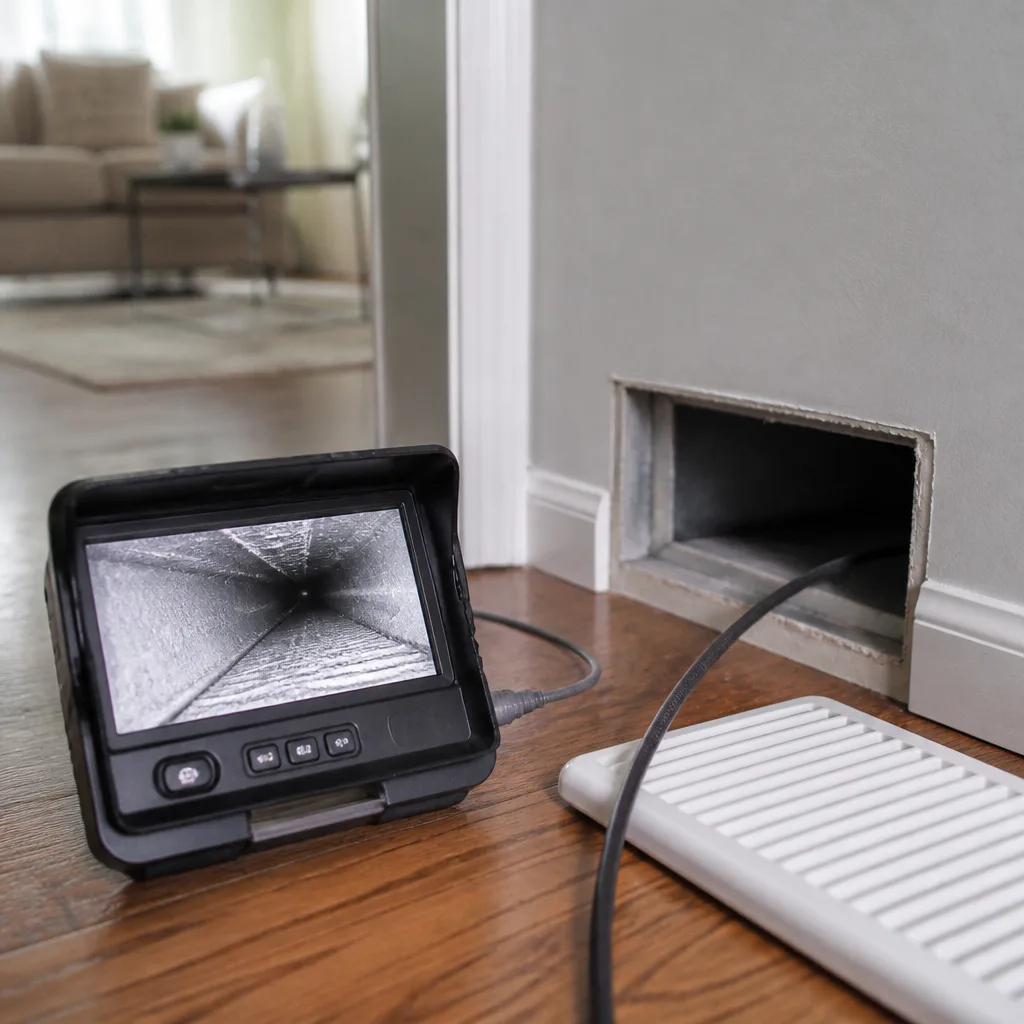
- Visual examination of all accessible duct surfaces - the technician uses a borescope or inspection camera to view the interior of supply and return runs, not just the register opening.
- Debris depth measurement - loose dust is normal; compacted buildup exceeding 1/8 inch on duct walls indicates cleaning may be warranted.
- Moisture and microbial assessment - any dark staining, musty odor, or visible growth triggers a recommendation for cleaning plus source remediation.
- Register and boot condition - the transition from duct to room often collects debris that the main run doesn’t.
- System performance context - restricted airflow measured at registers can indicate blockage requiring investigation.
The inspection takes 30 to 45 minutes for a typical Schertz home. It produces either a documented reason to clean or a documented reason to wait. Both outcomes are valid. Both protect the homeowner from unnecessary spending.
What Schertz Conditions Actually Deposit in Your Ductwork
Schertz sits at the edge of the Texas Hill Country, where the Blackland Prairie meets the Balcones Escarpment. That geography creates specific conditions that affect what ends up inside residential ductwork, and understanding those conditions helps separate legitimate cleaning recommendations from generic scare tactics.
Pollen load from live oak and mountain cedar. Schertz’s tree canopy is heavy with live oak, and the surrounding region experiences significant mountain cedar (ashe juniper) pollen events each winter. These pollens are small, 20-30 microns, and enter homes through normal ventilation and door openings. In homes with fresh air intakes or older window seals, pollen accumulates in return pathways and can compact in low-velocity sections of ductwork. We’ve photographed cedar pollen layers an inch thick in Schertz homes near Cibolo Creek, where humidity keeps the pollen sticky enough to adhere to duct walls rather than passing through to the filter.
Sandy soil and caliche dust. The soils around Schertz, particularly in newer developments like Pasadera and Sitterle Homes communities, are sandy with caliche layers beneath. Construction activity, landscaping, and normal foot traffic generate fine mineral dust that enters homes. This dust is heavier than organic debris and tends to settle in horizontal duct runs and at direction changes. The camera shows it as a gray, granular layer distinct from the fluffy accumulation of paper and textile fibers.
Humidity pockets near Cibolo Creek and local waterways. Schertz’s eastern neighborhoods, including areas near Green Valley Road and the Cibolo Creek corridor, experience higher sustained humidity than the western side of town. In ducts with any air leakage to unconditioned spaces, this humidity can support microbial growth on dust deposits that would remain inert in drier conditions. We’ve documented this pattern specifically in homes built between 2015 and 2020, where duct sealing practices varied by builder.
Post-construction debris in newer homes. Homes built during Schertz’s 2015-2022 construction boom often contain drywall dust, wood framing debris, and insulation fragments in ductwork. Builders’ rough cleanings rarely remove material from inside the duct system, and the first years of HVAC operation can circulate this debris. The camera typically reveals it concentrated near the plenum, where the largest particles settle before reaching branch runs.
What doesn’t matter: marketing claims about “toxins,” “mystery particles,” or air quality indices that aren’t measured in your specific home. The conditions above are photographable, identifiable, and location-specific. They’re what an honest inspection in Schertz actually finds.
Inspection Finding vs. Upsell: How to Tell the Difference
The most important skill a Schertz homeowner can develop is distinguishing a genuine inspection finding from a sales script. The duct cleaning industry has a documented pattern of bait-and-switch pricing: a low initial quote that expands dramatically once the technician is inside the home. Understanding how legitimate findings are communicated protects against this.
A genuine inspection finding includes four elements:
- Specific location. “The inspection camera at supply register 3 in the northeast bedroom showed a 2-inch debris accumulation at the first elbow” - not “your ducts are dirty.”
- Visual evidence. The technician can show you the image or video in real time, not describe it from memory.
- Identified material. “Compacted pollen and dust” or “drywall fragments” - not “contaminants” or “buildup.”
- Connection to a symptom or risk. “This restriction is reducing airflow by approximately 15% at this register” or “This moisture staining indicates a leak that should be sealed before cleaning.”
A sales upsell typically lacks these specifics. Common red flags include:
- Vague language like “contaminated” or “toxic” without identifying the substance.
- Pressure to decide immediately, with pricing that changes based on “how much we find.”
- Recommendations based solely on home age or time since last cleaning, with no camera inspection.
- Per-vent pricing that escalates as “additional problems” are discovered during the job.
At CleanRun Air Duct Cleaning Schertz home, we publish our pricing structure before arrival: one flat price per HVAC system, based on register count and system configuration, agreed in writing before any panel comes off. Haven Standard Clause 1 requires this. If an inspection finds no documented contamination, we tell the homeowner exactly that, charge only for the inspection, and recommend a re-inspection in 12-24 months. The camera shows what it shows. We don’t invent findings to justify a visit.
We’ve had Schertz homeowners call us after another company quoted $1,400 for “emergency cleaning” based on a flashlight glance into one register. In every case, our inspection camera showed normal dust levels. The homeowner paid our inspection fee and spent nothing on unnecessary cleaning. That’s the correct outcome when the evidence doesn’t support the work.
What a Complete Duct Cleaning Job Looks Like
Not all duct cleaning is the same work. A technician who only cleans the main trunk line - the large central duct that runs from the air handler - leaves the majority of the system untouched. Understanding the difference between trunk-line cleaning and complete branch-run cleaning helps homeowners evaluate what they’re actually paying for.
The main trunk line or plenum. This is the large rectangular or round duct that distributes air from the HVAC unit to the smaller branch runs. It’s accessible, usually visible in the attic or crawl space, and relatively easy to clean. A job that only addresses the trunk line takes 1-2 hours and leaves 60-70% of the duct surface area uncleaned. We’ve seen this marketed as “whole house duct cleaning” in Schertz, and it’s not.
Branch runs. These are the smaller ducts, typically 6-8 inches in diameter, that run from the trunk to each supply register and from each return grille back to the main return. In a typical Schertz home with 12-16 supply registers, there are 12-16 individual branch runs, each with its own debris profile based on room usage, register location, and duct orientation. These runs require individual access, agitation, and extraction. A complete job addresses every run.
Return pathways. Return ducts often accumulate more debris than supply ducts because they draw unfiltered room air. The return grille, boot, and run to the main return trunk all require cleaning. In Schertz homes with central returns, this is a single large pathway; in homes with multiple return grilles, each is a separate run.
A complete residential duct cleaning in Schertz follows this sequence:
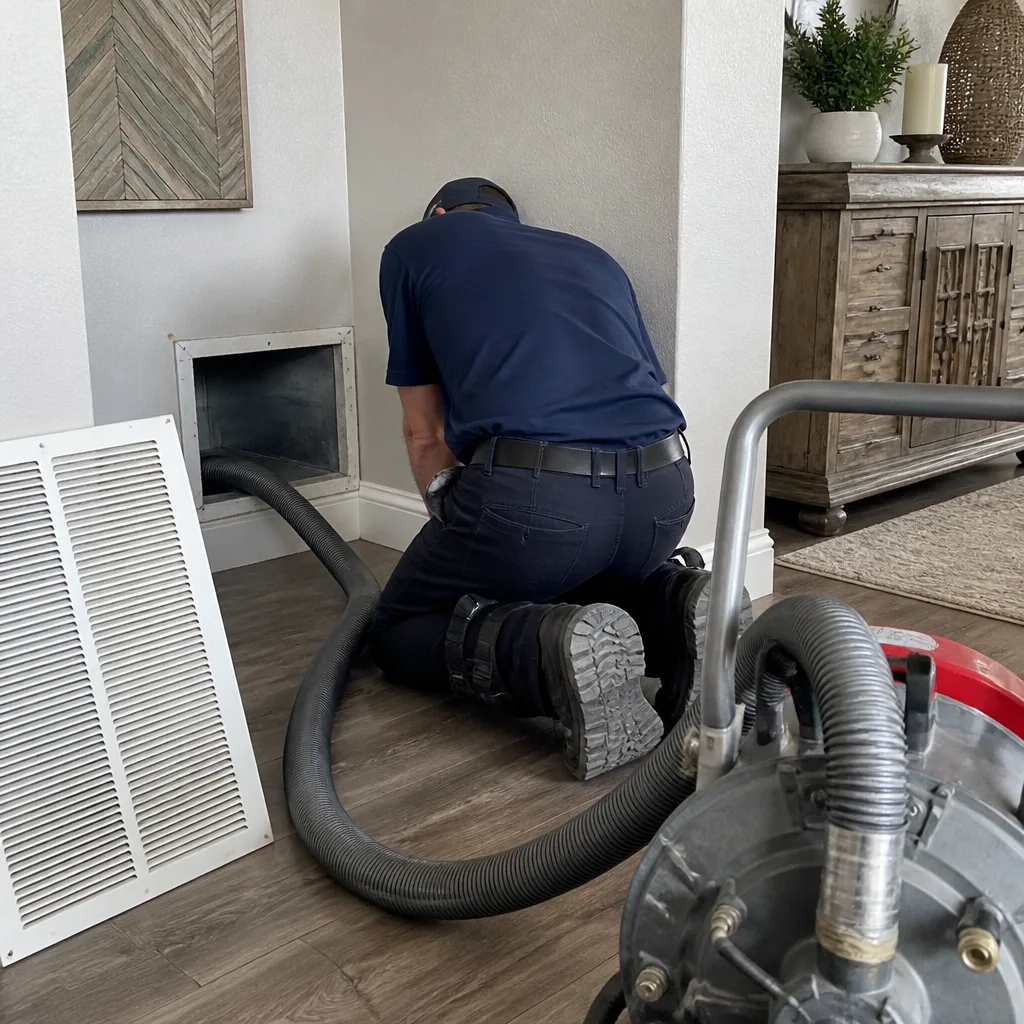
- System assessment and photography. The technician photographs the interior of each duct run before cleaning, using a borescope camera. Images are saved to the job record.
- Access creation. Service openings are cut where needed to reach branch runs, or existing access panels are used. All openings are properly sealed after cleaning.
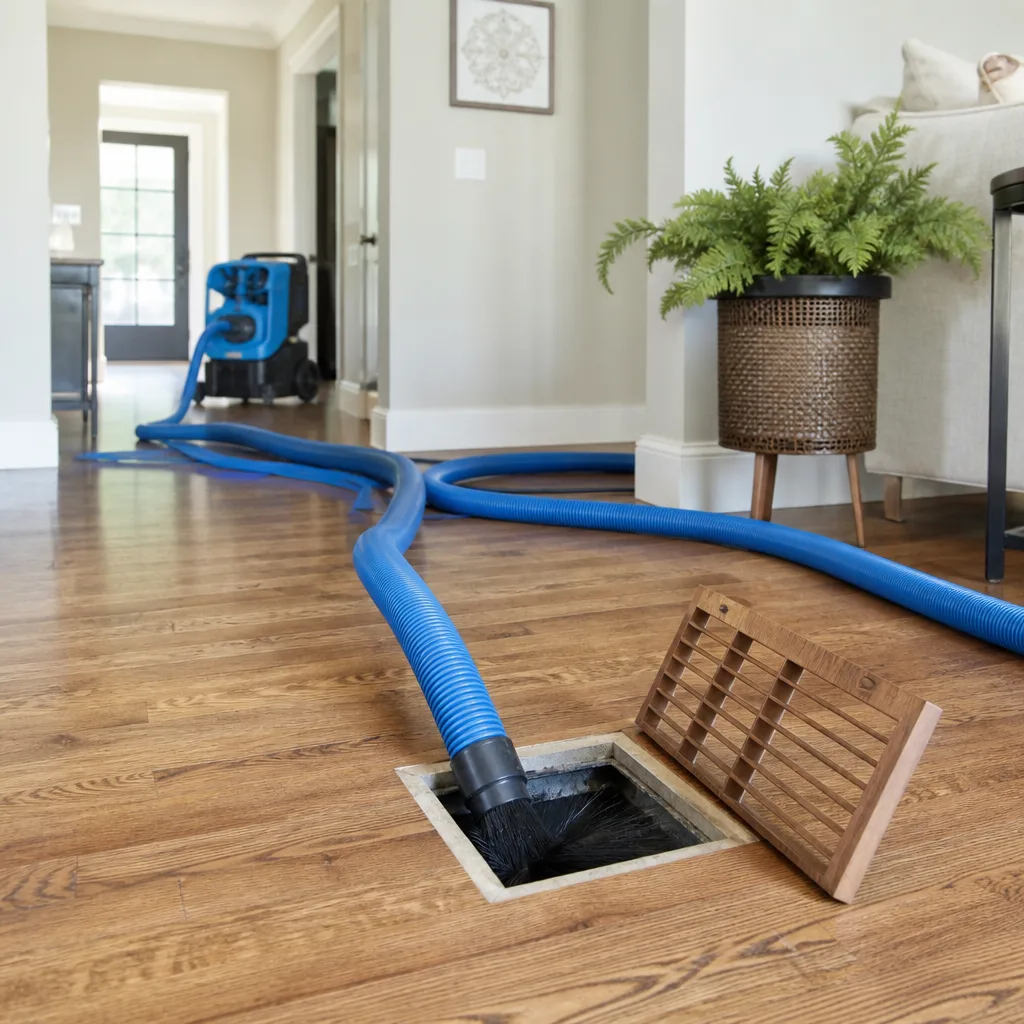
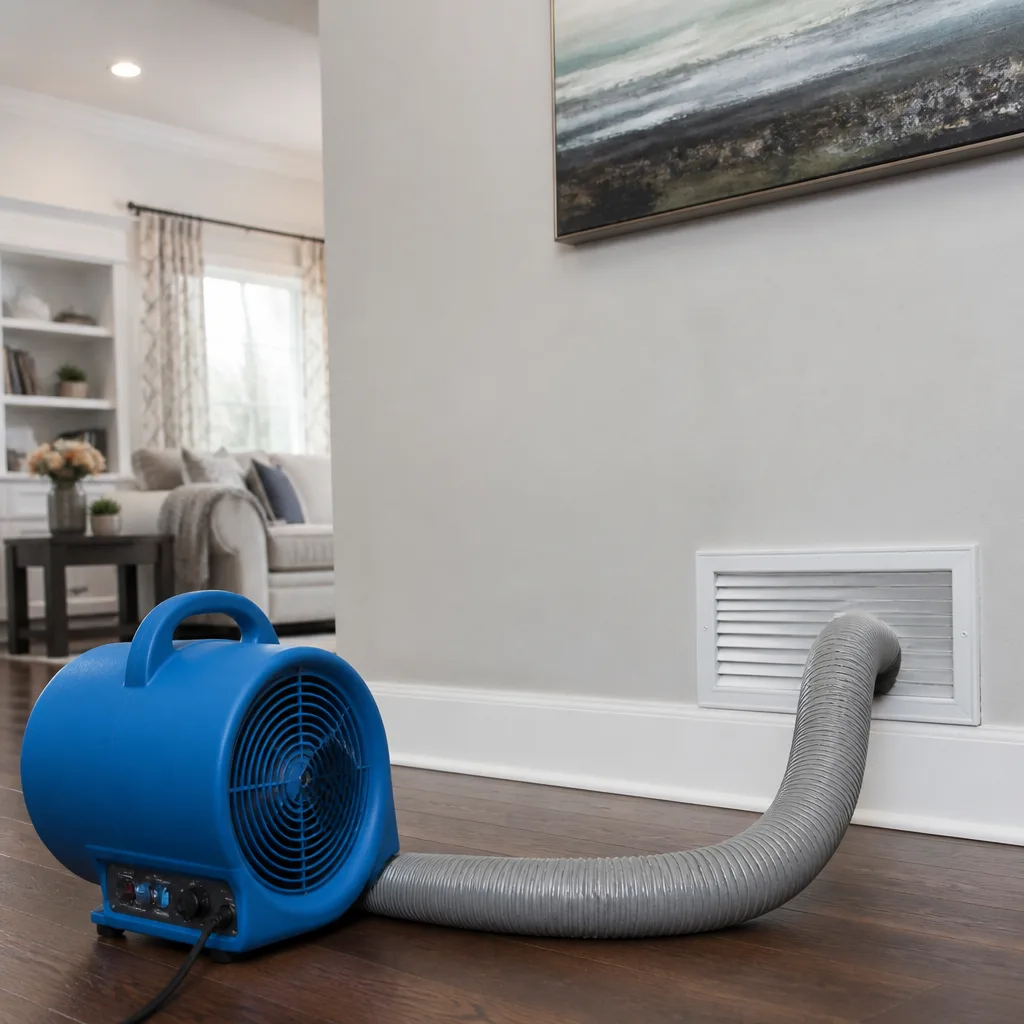
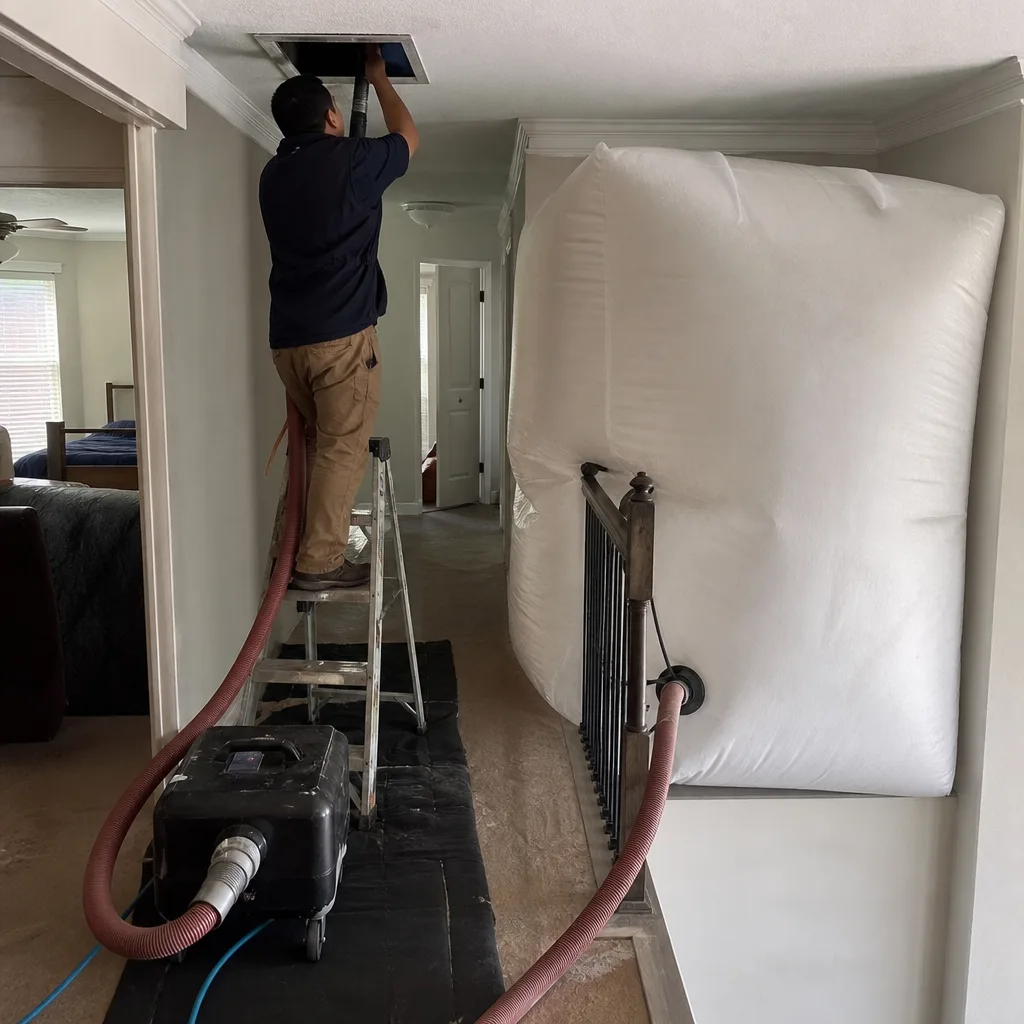
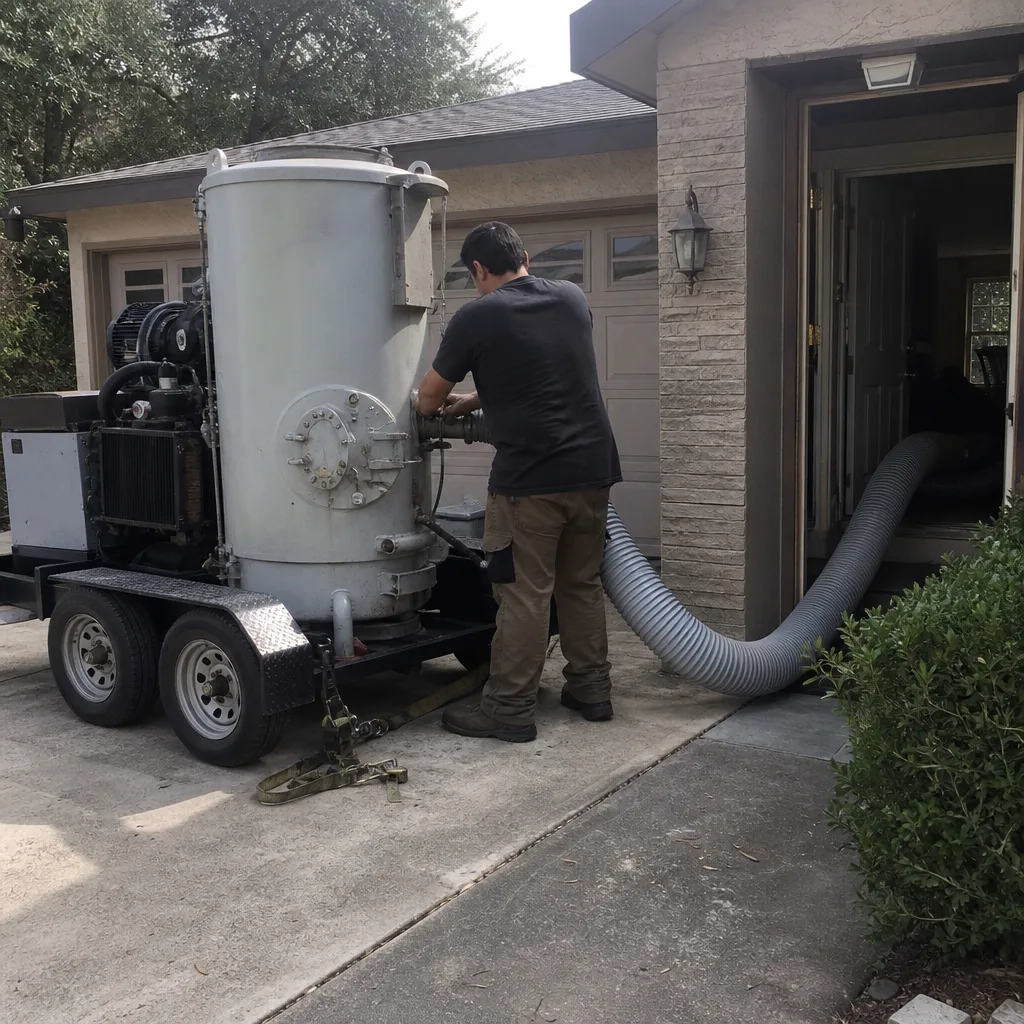
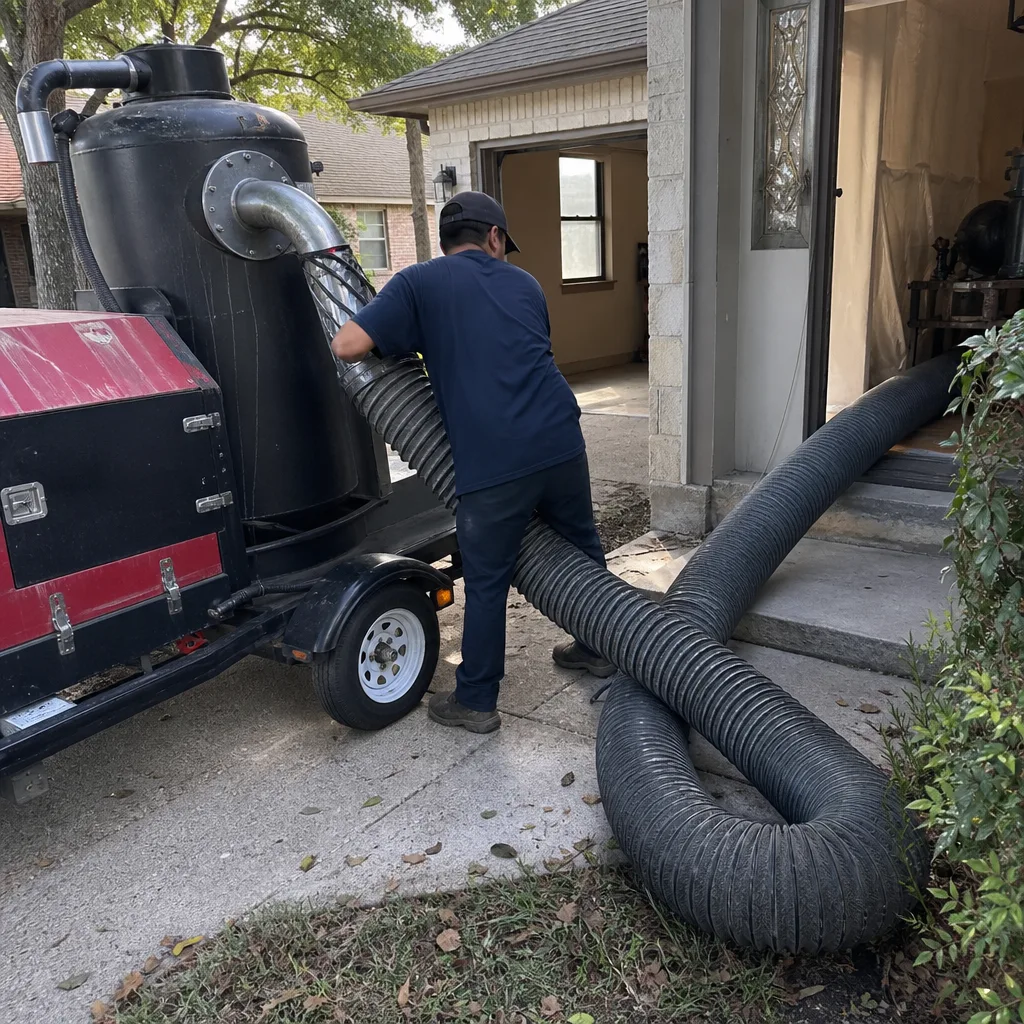
- Negative-pressure extraction setup. A large vacuum collection unit, typically mounted on a truck or portable HEPA system, is connected to create suction throughout the duct system.
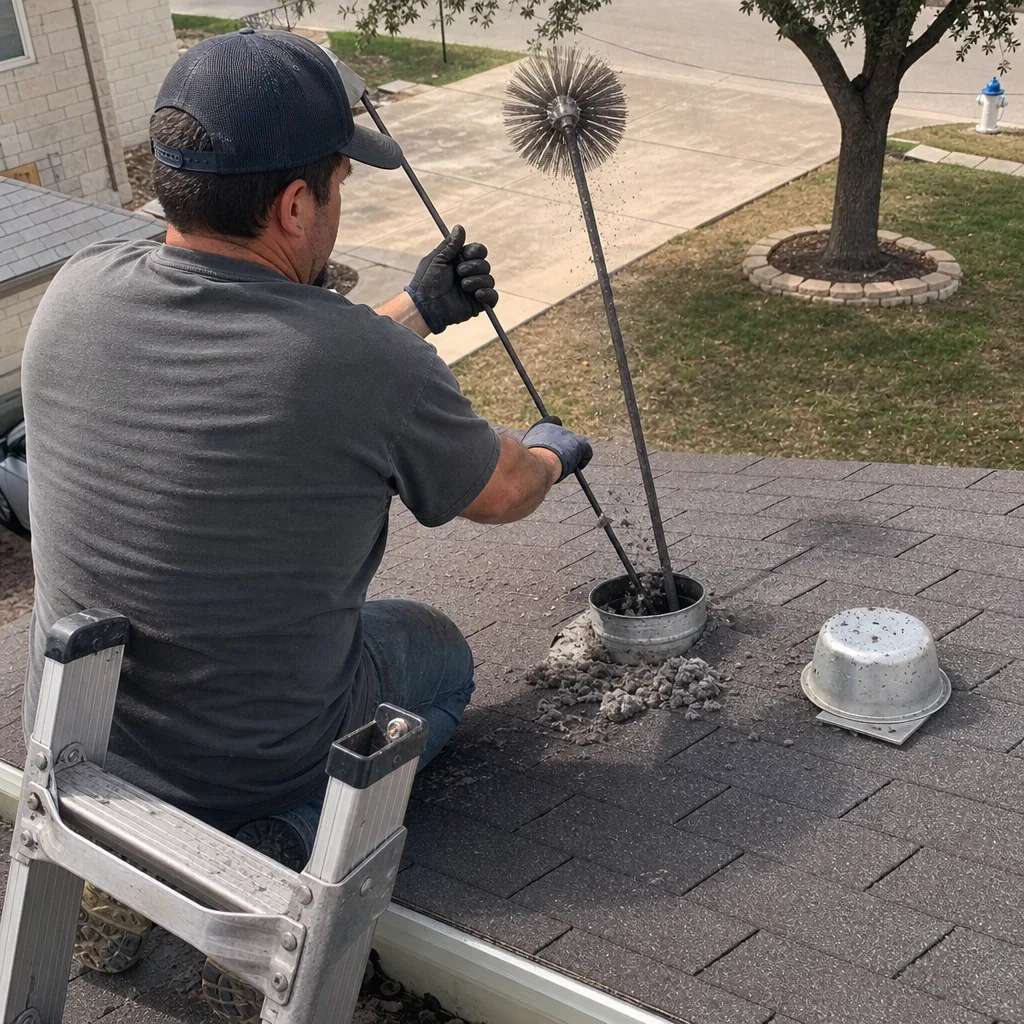
- Agitation and debris removal. Mechanical brushes, air whips, or compressed air tools dislodge debris from duct walls while the vacuum extracts it. Each branch run is cleaned individually.
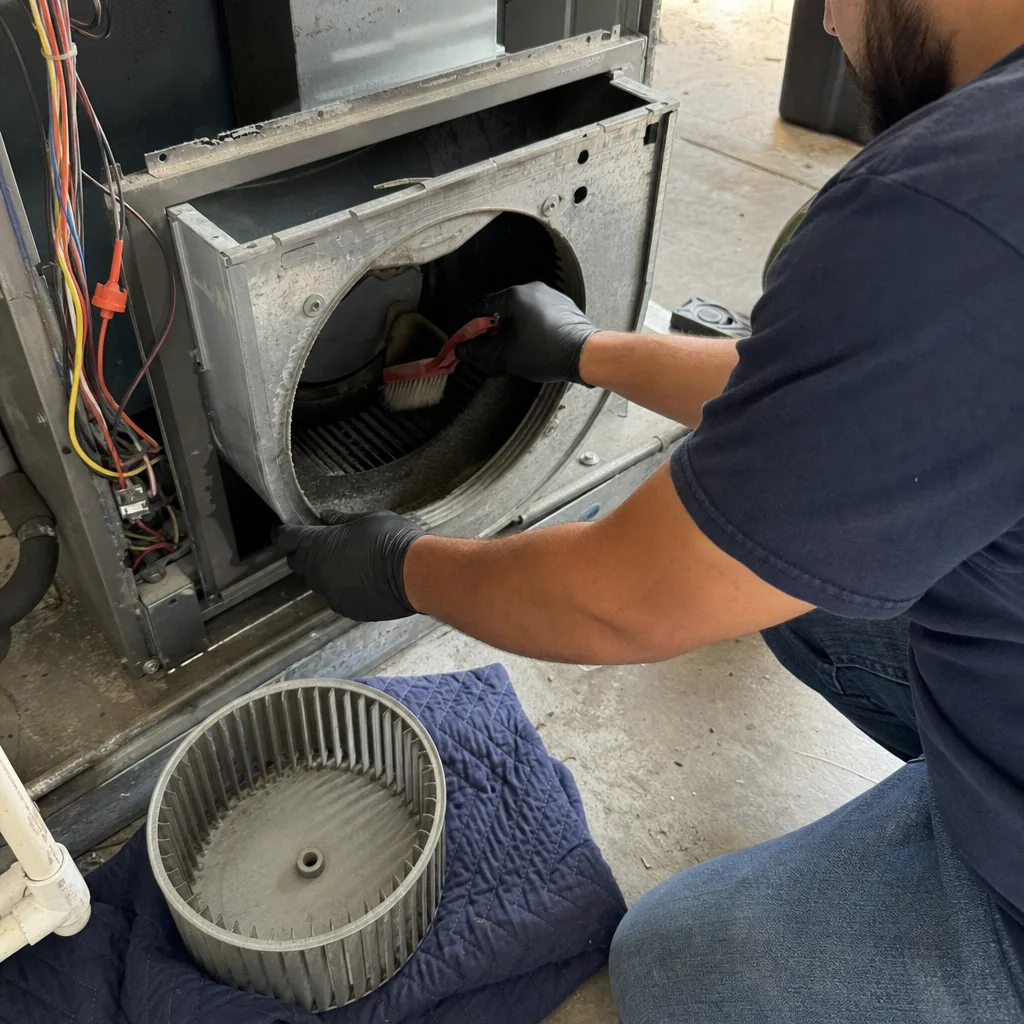
- Component cleaning. The plenum, coils (if accessible), and registers are cleaned. This is distinct from full HVAC Cleaning in Schertz, which addresses the entire mechanical system.
- Post-cleaning photography. The same duct runs are photographed after cleaning to document the change.
- System restoration and testing. Access points are sealed, registers reinstalled, and system operation verified.
A complete job for a typical single-system Schertz home takes 4-6 hours with a two-person crew. A 2-hour job is not complete. A job priced at $79 is not complete. The math doesn’t work: technician time, equipment, disposal, and documentation cost more than that before any profit.
The Written Scope: What Must Be on Paper Before Any Price Is Valid
Haven Standard Clause 1 requires a written price before any work starts. But a price without a scope is just a number. The written scope of work defines what the price covers, and without it, a homeowner has no basis to evaluate whether the job was performed as agreed.
Before any duct cleaning work begins in a Schertz home, the written scope should include:
- Number and location of supply registers. “12 supply registers: 4 bedrooms, 2 bathrooms, kitchen, living room, dining room, office, hallway, utility room, garage conversion” - specific enough to verify completion.
- Number and location of return grilles. “1 central return in hallway; 1 dedicated return in master bedroom.”
- System count and type. “Single gas furnace with split AC, attic-mounted air handler.”
- Access points to be created or used. “Existing access at plenum; new 8-inch access at trunk line midpoint for branch run cleaning; all openings sealed with UL-181 approved tape and mastic.”
- Equipment to be used. Specific manufacturer and model: “Nikro HP20G gas-powered vacuum with HEPA filtration; Rotobrush aiR+ XP mechanical brush system.”
- Cleaning method. “Negative-pressure extraction with mechanical agitation of all branch runs; compressed air whip for return pathway.”
- Documentation deliverables. “Before-and-after photography of every duct run, delivered via customer portal within 24 hours.”
- Total price and payment terms. One flat price, no per-vent add-ons, no “if we find more” contingencies.
A scope that omits any of these elements creates ambiguity that benefits the company, not the homeowner. “Clean all ducts” means nothing if “all” isn’t defined. “Standard cleaning” means nothing if the standard isn’t specified.
We provide this scope on every Air Duct Cleaning in Schertz job. The homeowner initials each section before work begins. If we discover an access issue that requires scope modification - a duct run buried behind a finished wall, for instance - we stop, document the finding, and present a revised scope with revised pricing before proceeding. Haven Standard Clause 1 doesn’t permit surprises on the invoice.
For homeowners comparing estimates, we offer a Free Second Opinion on any written estimate from another company. Bring the competitor’s scope. We’ll review it against NADCA standards and point out what’s included, what’s omitted, and what questions to ask before signing. No charge, no obligation.
Professional Equipment vs. Shop-Vac Noise
The equipment used on a duct cleaning job determines what can actually be removed from the system. Homeowners rarely see the equipment in operation, but they can ask about it before agreeing to a price, and the answers reveal significant differences between professional work and superficial cleaning.
Negative-pressure extraction systems. Professional duct cleaning requires a vacuum source capable of maintaining sustained negative pressure throughout the duct system. Truck-mounted systems like the Nikro line generate 10,000+ CFM of suction, enough to pull dislodged debris through long branch runs without losing effectiveness. Portable HEPA units from Abatement Technologies serve homes where truck access is limited. These systems cost $15,000-$40,000 and require dedicated power or fuel sources.
Mechanical agitation tools. Debris adheres to duct walls through static, moisture, and compaction. Suction alone doesn’t remove it. Mechanical brushes, like the Rotobrush systems we use, physically contact duct walls to dislodge material while the vacuum extracts it. Air whips and skipper balls use compressed air for the same purpose in round flex duct. The tool must match the duct type: aggressive brushes damage flex duct; air whips are ineffective on heavily compacted debris in hard pipe.
HEPA filtration. The vacuum exhaust must be HEPA-filtered to prevent collected debris from re-entering the home. Professional equipment includes this as standard; consumer-grade shop vacuums do not, even with “HEPA” aftermarket filters that don’t seal properly.
Inspection and documentation equipment. Borescope cameras with image capture capability are essential for both pre-cleaning assessment and post-cleaning verification. We use equipment that records 1080p video and still images, with lighting sufficient to show duct wall condition clearly.
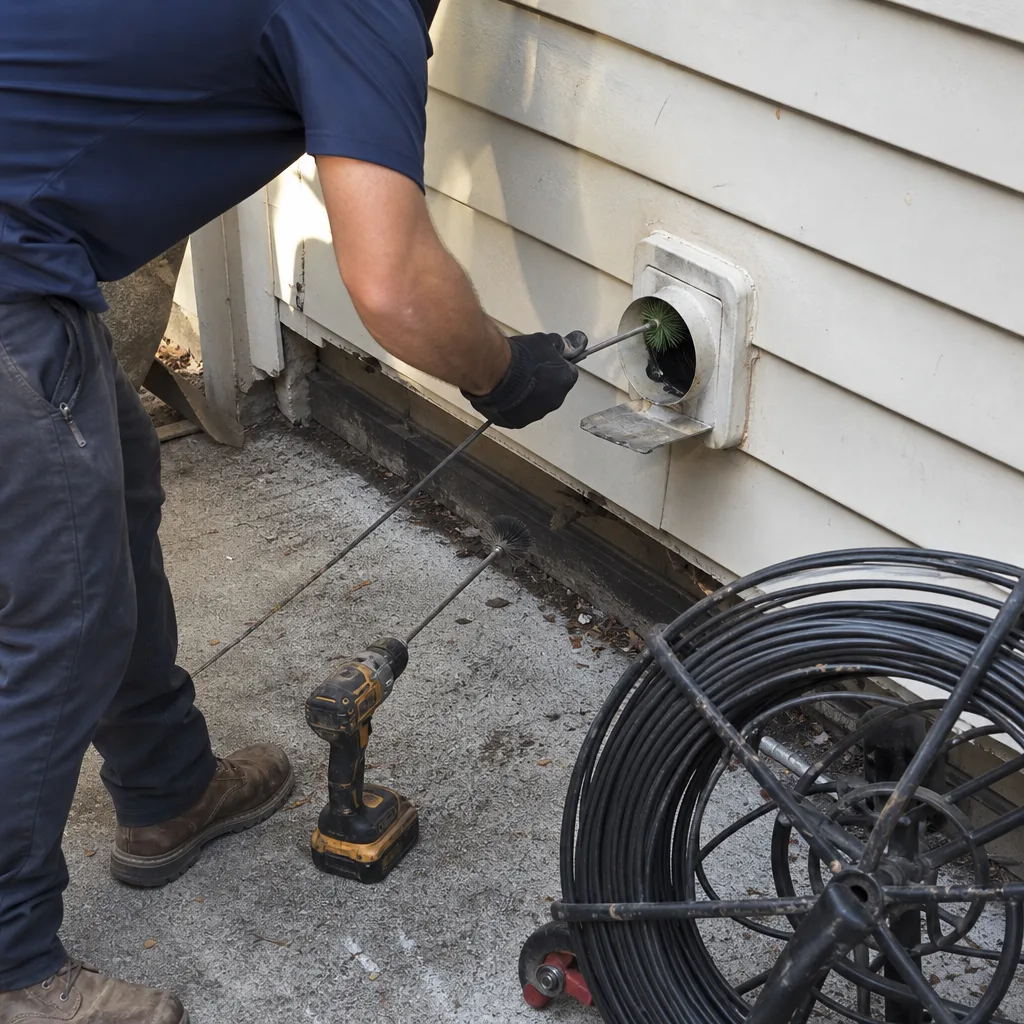
What a shop vacuum cannot do: maintain negative pressure across a whole duct system, mechanically agitate debris from duct walls, filter exhaust to HEPA standards, or document the condition of interior surfaces. The shop-vac approach, sometimes marketed as “rotary brush cleaning” with a drill attachment, cleans approximately 3 feet from the register opening and leaves the rest of the system untouched. We’ve photographed the evidence: clean first two feet, undisturbed debris beyond.
When evaluating a duct cleaning company in Schertz, ask specifically what equipment will be used on your home. The answer should include manufacturer names and models you can verify independently. “Professional equipment” without specifics is not an answer.
Why Before-and-After Photography Changes Everything
The duct cleaning industry has a trust problem. The work happens inside walls, above ceilings, in spaces the homeowner cannot see. A company can claim to have cleaned every run, and the homeowner has no practical way to verify the claim without dismantling drywall. Before-and-after photography solves this.
A documented photo record serves three functions:
Verification that work was performed. The image of a duct run before cleaning, with visible debris, and the same run after cleaning, with that debris removed, is direct evidence of completed work. Without it, the homeowner has only the technician’s word.
Protection against unnecessary work. Photos of a clean duct system, provided at inspection, protect the homeowner from paying for cleaning that isn’t needed. We’ve shown Schertz homeowners images of spotless galvanized steel and recommended against cleaning. The photo record documents that recommendation as clearly as it would document a finding of heavy contamination.
Accountability after the job. The 365-Day Done Right Promise means that if a homeowner believes a duct run was missed, we can reference the photo record. If the run was cleaned and photographed, we show the image. If it wasn’t, we return and complete the work at no charge. The photo record makes this accountability possible; without it, disputes devolve into memory against memory.
Since our first job in 2013, CleanRun has photographed every duct run on every visit. The images are delivered to the customer as part of the standard job record, not held hostage for a review or additional fee. In Schertz’s market, where homeowners research extensively before hiring, this documentation is often the deciding factor. A competitor may quote a lower price, but they cannot show what was actually done.
We encourage homeowners to ask any duct cleaning company: “Will I receive photographs of the inside of every duct run, before and after, as part of the standard job?” A company that hesitates, qualifies, or charges extra for documentation is telling you something important about how they operate.
What Air Duct Cleaning Costs in Schertz
Price transparency is central to how CleanRun operates, and that means publishing actual ranges rather than teaser rates. Explore more guides & resources on home maintenance and indoor air quality. The Schertz market for professional duct cleaning reflects real costs: technician labor, equipment maintenance and depreciation, disposal fees, insurance, and documentation.
Whole-system air duct cleaning in Schertz typically falls in these ranges:
| Home/System Type | Typical Range | What’s Included |
|---|---|---|
| Single-system home, 8-12 supply registers | $400 - $600 | All supply branch runs, return pathway, plenum, registers; before-and-after photography; written scope |
| Single-system home, 13-20 supply registers | $550 - $750 | Extended register count, additional branch run time, same documentation |
| Two-system home or zoned system | $800 - $1,100 | Both air handlers and complete duct networks; dual documentation set |
| Inspection only (no cleaning warranted) | $125 - $175 | Full camera inspection of all accessible runs; written findings; recommendation |
These ranges assume standard access: attic or crawl space reachable without structural modification, ductwork in normal condition. Significant modifications - buried ductwork requiring drywall access, extensive pest damage requiring repair before cleaning, or hazardous material concerns - are scoped separately with pricing agreed before any additional work.
What these prices do not include: per-vent surcharges, “disposal fees” added after quote, equipment charges, or photography fees. Haven Standard Clause 1 prohibits these practices. The price agreed in writing is the price paid.
Why some Schertz quotes are significantly cheaper:
- Trunk-line only cleaning. A job that only addresses the main duct, leaving branch runs untouched, requires half the time and none of the individual run access work.
- Shop-vacuum or drill-brush method. Equipment costing hundreds rather than tens of thousands; effective cleaning depth measured in feet, not system-wide.
- No documentation. Eliminating photography, written scope, and job records reduces labor and accountability costs.
- Bait-and-switch structure. A low initial quote that expands with “required” add-ons once the technician is in the home and the homeowner is committed.
We’ve reviewed competitor quotes for Schertz homeowners that started at $89 and ended at $680 on the invoice. The initial price was meaningless. The final price exceeded our flat-rate quote for equivalent work, with none of our documentation or guarantee protections.
For an exact quote on your Schertz home, we need two pieces of information: number of HVAC systems and approximate register count. With that, we provide a written price before scheduling. Call (830) 402-5110 or request an estimate through our site.
Common Mistakes to Avoid
- Scheduling cleaning without a prior inspection. The EPA and NADCA both specify inspection-first. Any company that quotes cleaning without seeing your ducts is selling a calendar, not a service.
- Accepting per-vent pricing. This structure incentivizes the company to “find” additional vents or charge for returns as separate from supplies. Flat pricing per system eliminates this conflict.
- Ignoring the return pathway. Returns often contain more debris than supplies. A scope that only mentions “supply vents” is incomplete.
- Hiring based on coupon price alone. The $79 Schertz duct cleaning coupon typically covers 30 minutes of trunk-line vacuuming. The actual cost of complete work is higher everywhere; the only question is whether you know the real price before the truck arrives.
- Not asking for equipment specifics. “Professional equipment” is not a brand name. Ask what vacuum, what agitation method, and what filtration standard. Verify the answers independently.
- Skipping documentation requirements. A company that won’t photograph your ducts before and after is asking for trust they haven’t earned. In an industry with documented bait-and-switch patterns, documentation is not optional.
When to Call a Professional
Call a professional duct cleaning company when an inspection camera documents one of the EPA’s three conditions: visible mold growth inside hard-surface ducts, evidence of vermin infestation, or excessive debris that restricts airflow or releases particles into occupied space. Also call when you’ve completed renovation work that generated significant dust, or when you’re experiencing unexplained airflow reduction at multiple registers.
Do not call for “routine maintenance” on a schedule. The EPA does not recommend this, and no evidence supports it.
CleanRun Air Duct Cleaning Schertz offers free estimates in Schertz. We’ll inspect your system with a camera, show you what we find, and provide a written price before any work is discussed. If cleaning isn’t warranted, we’ll tell you that and charge only for the inspection. Call (830) 402-5110 to schedule.
Frequently Asked Questions
Whole-system air duct cleaning in Schertz typically costs $400 to $750 for a single-system home with 8-20 supply registers, and $800 to $1,100 for two-system homes. These are flat prices per system, agreed in writing before work begins, with no per-vent add-ons. Call (830) 402-5110 for an exact quote based on your register count - estimates are free.
Low quotes typically cover trunk-line-only cleaning with shop-vacuum equipment, leaving branch runs untouched, or use bait-and-switch pricing that increases once the technician arrives. A complete job requires negative-pressure extraction, mechanical agitation of every branch run, and documentation. The equipment and labor for this work cost more than $79-$149 can cover. Ask for a written scope defining exactly what “cleaning” includes before comparing prices.
Require before-and-after photography of every duct run as a standard deliverable, not an extra. The images should show specific locations - register numbers or room names - with timestamps if possible. Without this documentation, you have no verifiable evidence that branch runs were accessed and cleaned. At CleanRun, this photo record has been standard on every job since 2013.
There is no recommended frequency. The EPA states that ducts should be cleaned when inspection documents visible mold, vermin infestation, or excessive debris - not on a calendar schedule. In Schertz’s pollen-heavy environment, some homes develop warranting conditions in 3-5 years; others remain clean for 10+ years. The only way to know is periodic camera inspection.
Air duct cleaning addresses the distribution network: supply and return ducts, plenum, and registers. HVAC Cleaning in Schertz addresses the mechanical components: evaporator coils, blower assembly, heat exchanger, and condensate system. They are distinct services with different scopes, though they can be scheduled together. Duct cleaning alone does not clean your coils or blower.
Schertz’s live oak and mountain cedar pollen, sandy soils, and humidity pockets near Cibolo Creek can accelerate debris accumulation compared to drier, less vegetated regions. However, this is a tendency, not a rule. Some Schertz homes in these conditions remain clean inside; others develop significant buildup. Climate increases the value of periodic inspection; it does not automatically warrant cleaning.
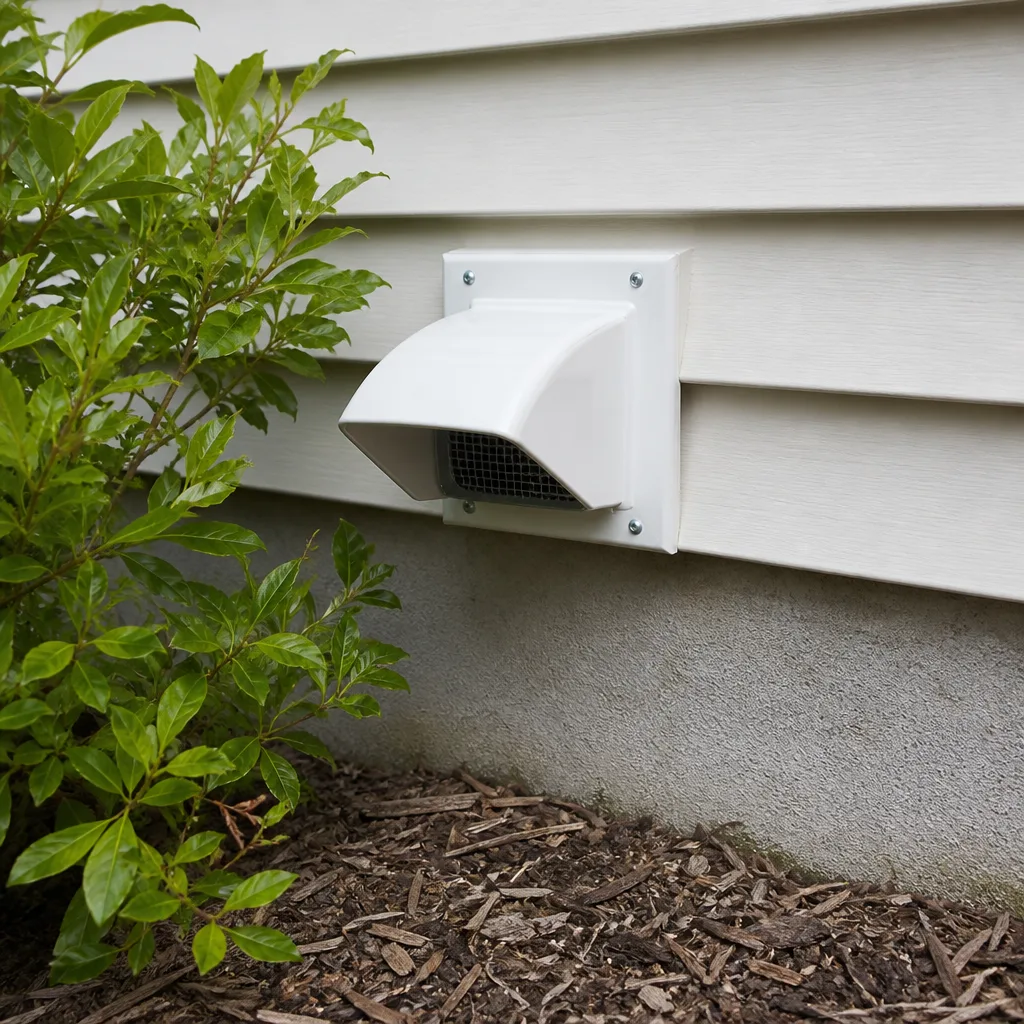
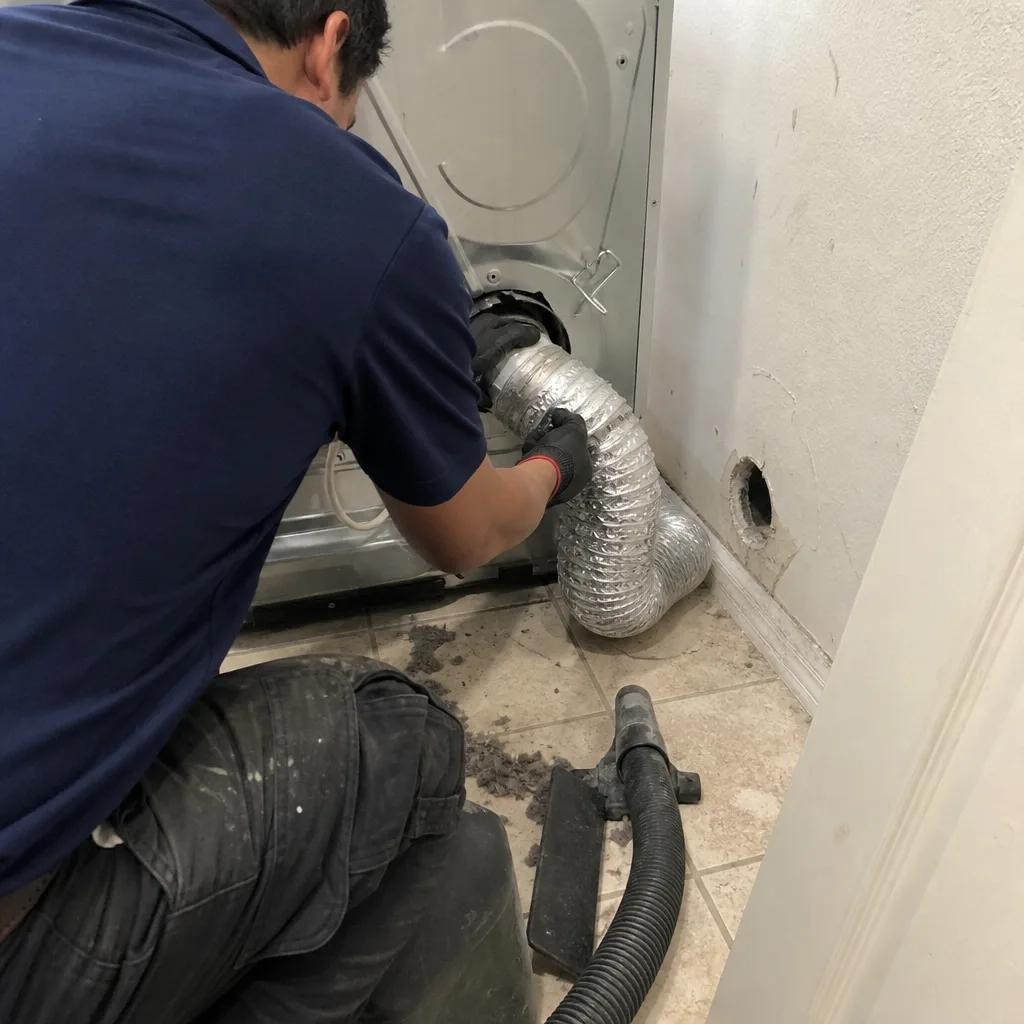
Dryer vent cleaning is a separate service with a different purpose: removing lint accumulation that creates fire risk. If your dryer vent hasn’t been cleaned in over a year, or if drying times have increased, scheduling Dryer Vent Cleaning in Schertz alongside duct inspection is efficient. The services use different equipment and address different systems, but can be completed in the same visit.
The Bottom Line
Air duct cleaning in Schertz is a service to purchase when evidence demands it, not on a schedule or a coupon. The starting point is always a camera inspection that documents what’s actually inside your ducts. The work itself, when warranted, must cover every branch run with negative-pressure extraction and mechanical agitation, documented with before-and-after photography, and priced as a flat rate agreed in writing before work begins. Anything less leaves most of your system uncleaned and most of your money unprotected. The companies that operate this way are identifiable: they show you the photo before quoting the price, they name their equipment, and they put their promises in writing.
Written by Tomas Reyes, Owner at CleanRun Air Duct Cleaning Schertz, serving Schertz since 2013.