
Last updated September 23, 2026
Whole-system duct and dryer vent check with before-and-after photos - you see exactly what came out of your vents
That "$99 whole-house special" is a bait ad - the real number appears once they are in your hallway, or the "clean" is a shop-vac at the register. We photograph the inside of your ducts before and after instead.
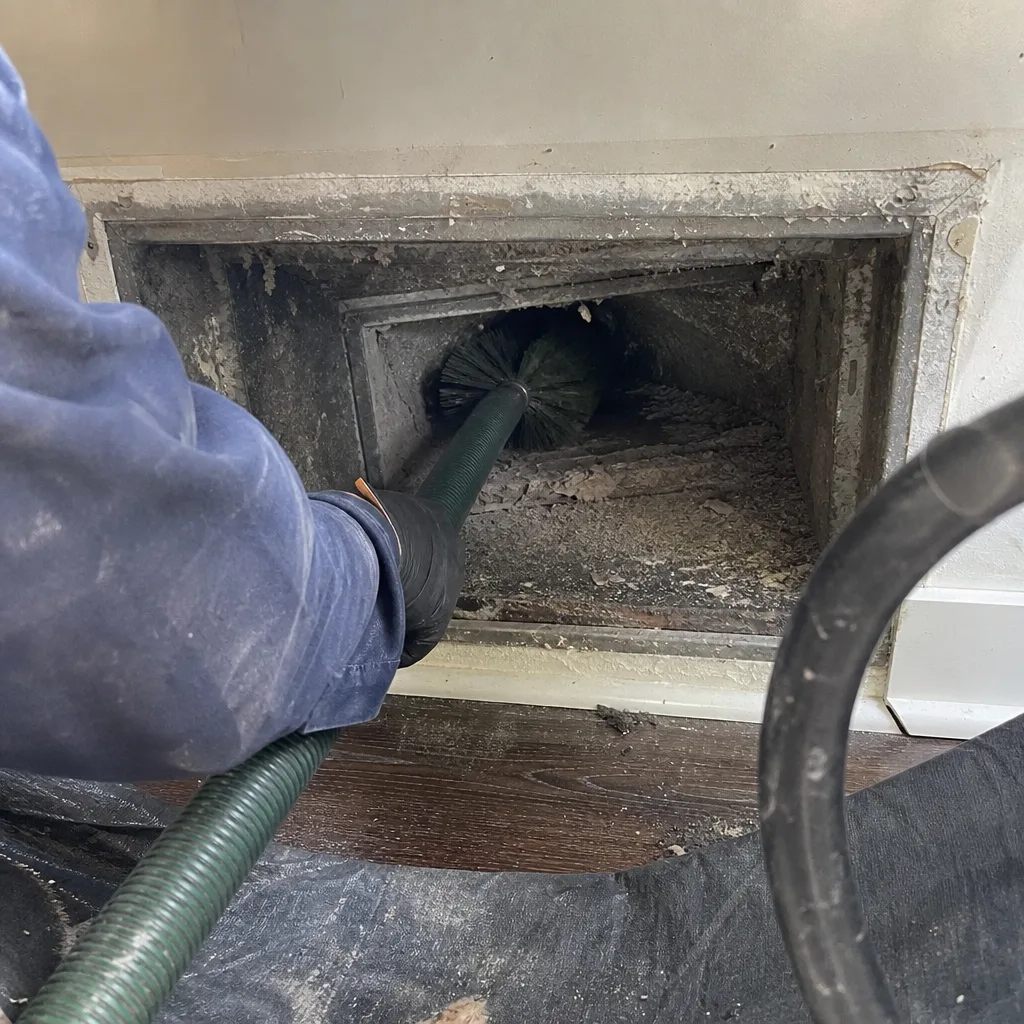 Before
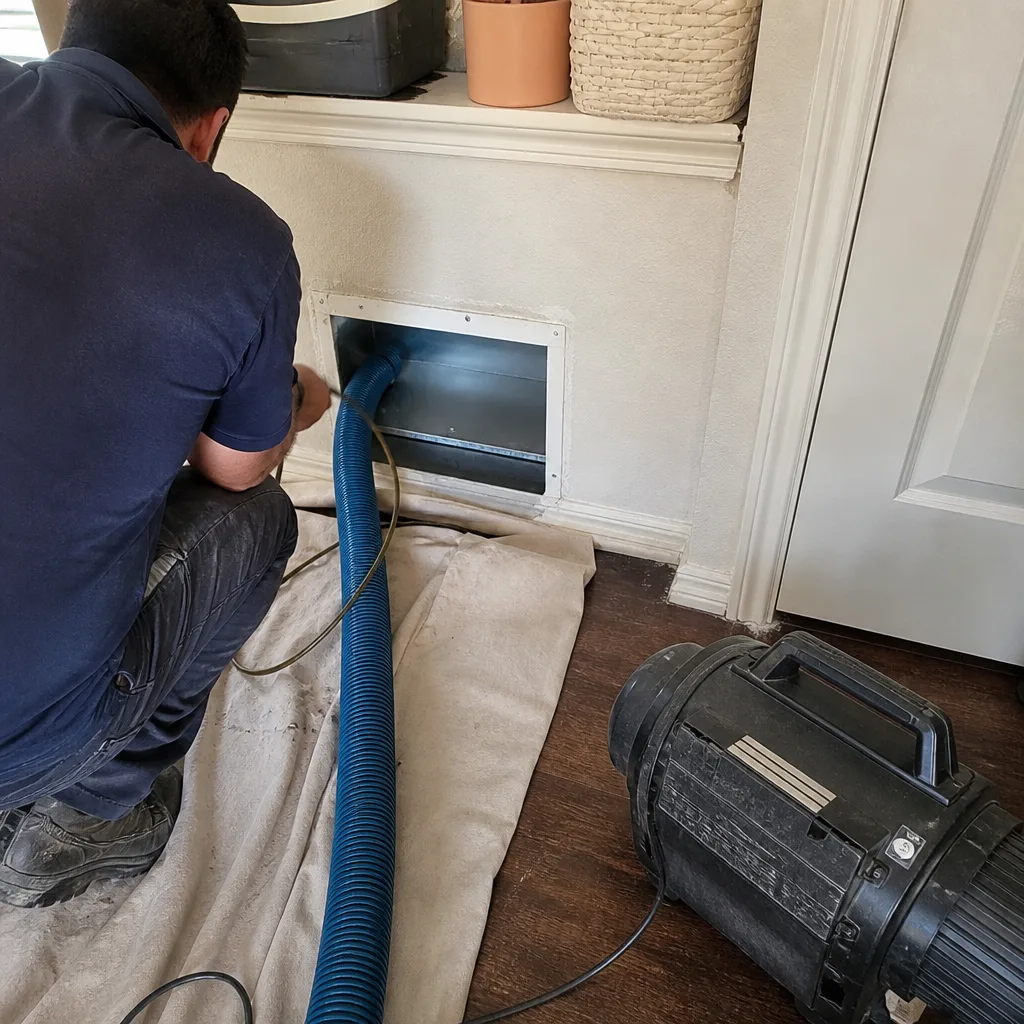 After
After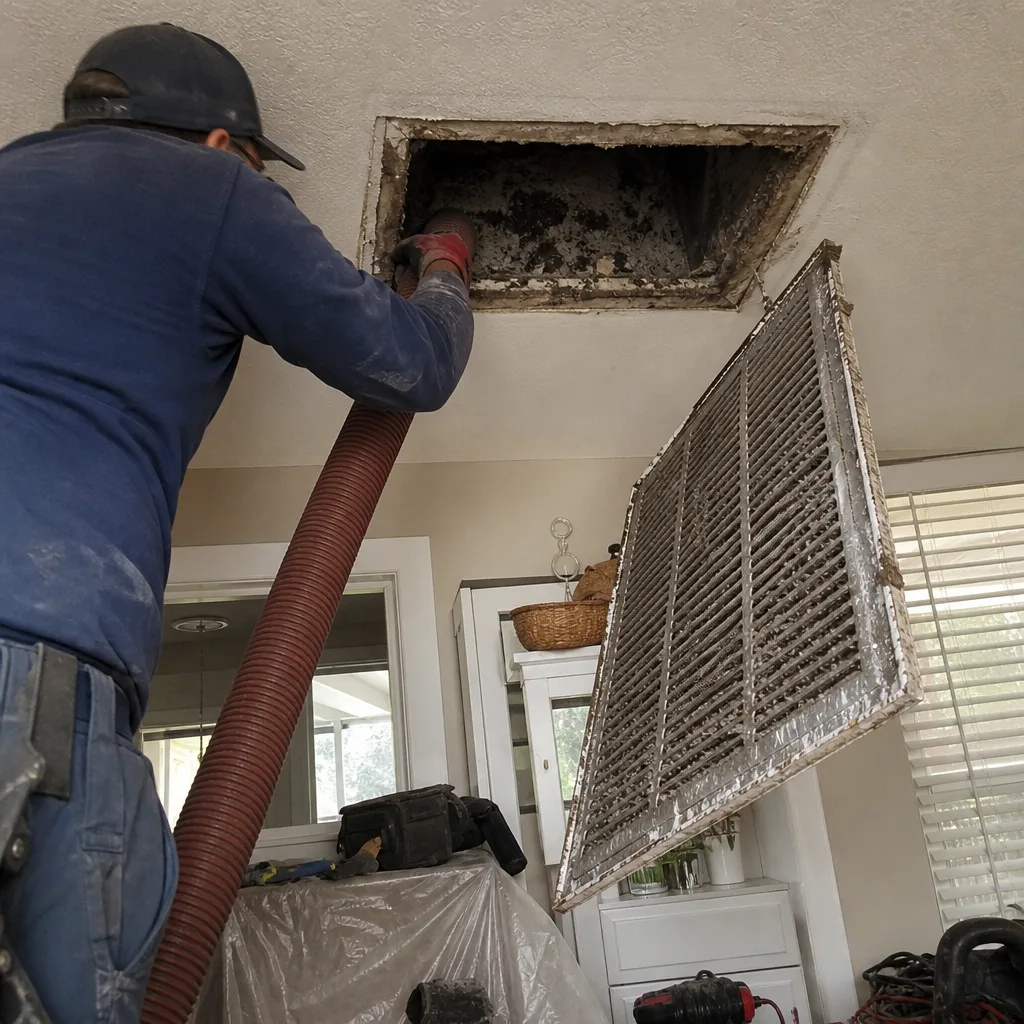 Before
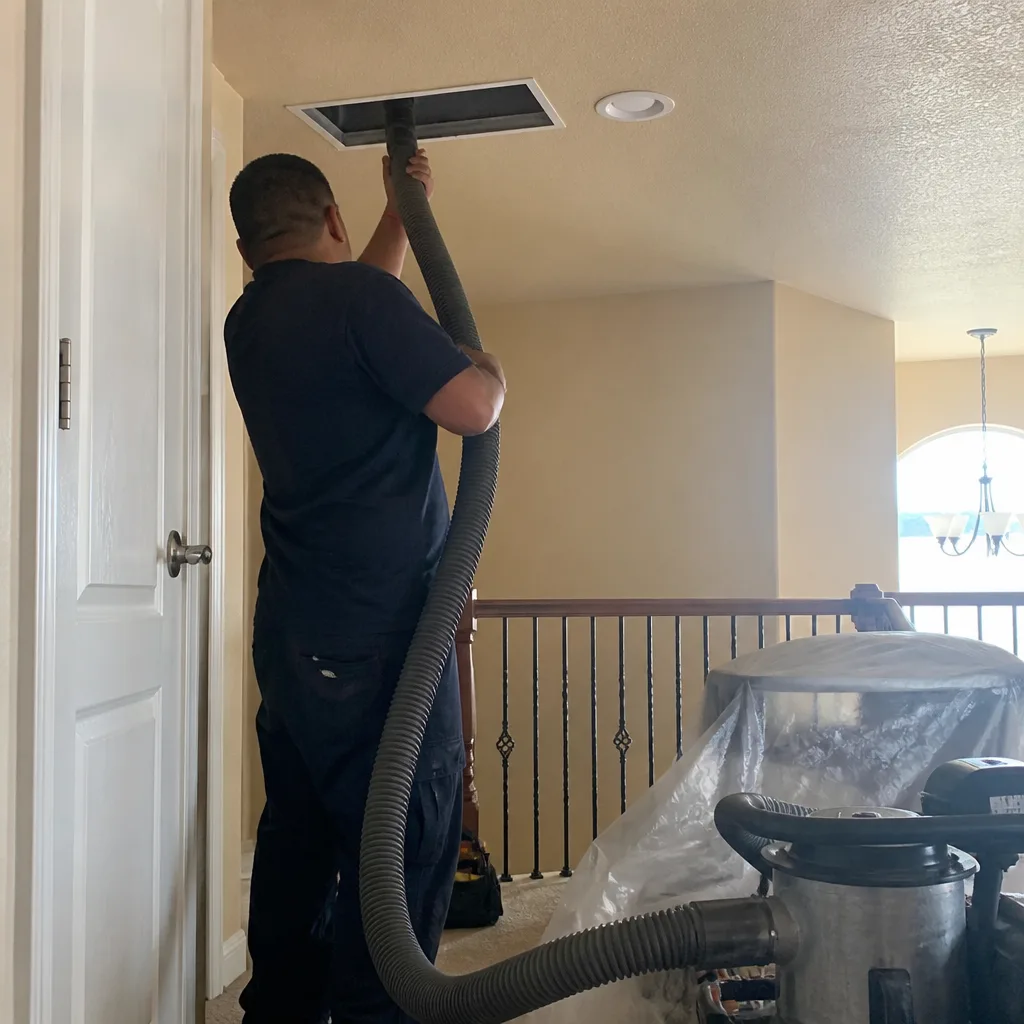 After
After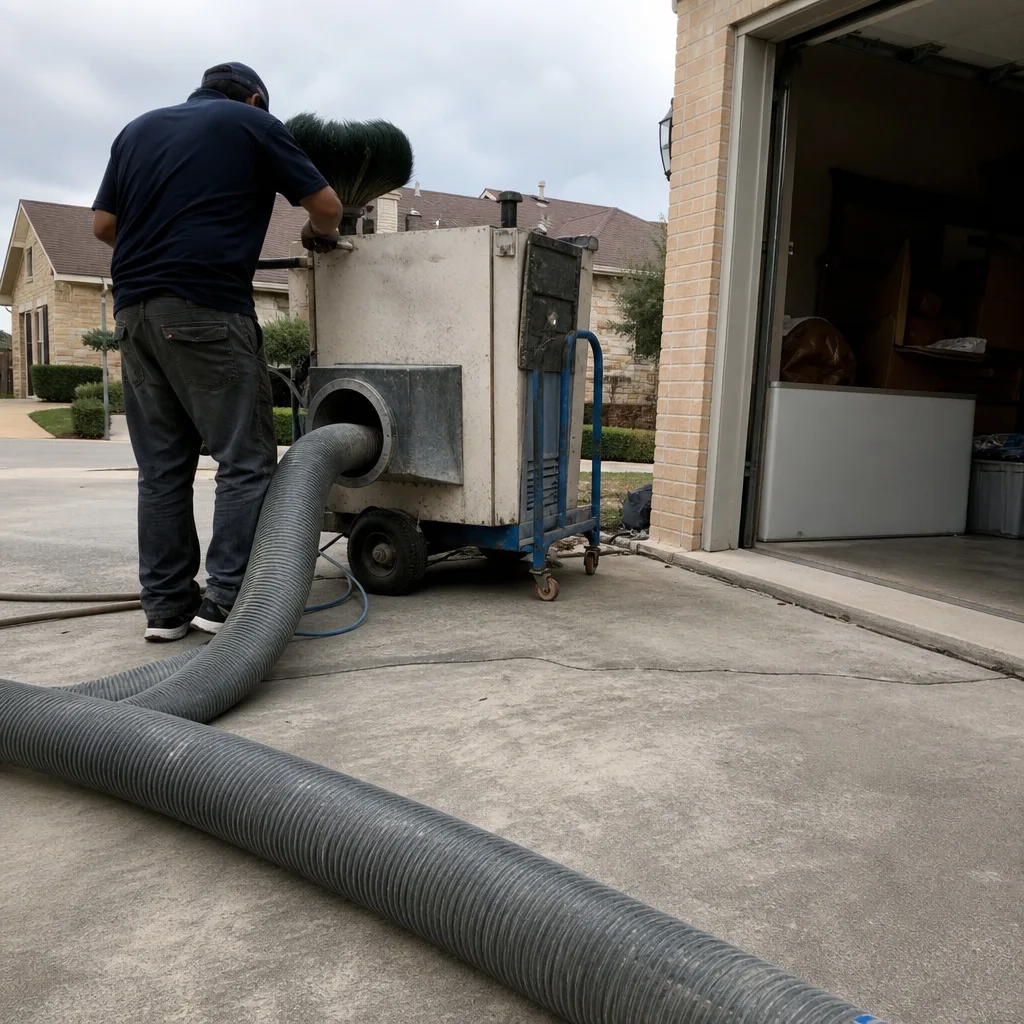 Before
 After
AfterDIY vs Professional Air Duct Cleaning: The Schertz Homeowner’s Decision Guide
Most Schertz homeowners who ask whether to clean their own air ducts start with the wrong question. They compare a $400 professional job against a $80 hardware store rental, as if the two accomplish the same thing. They don’t. In twelve years of documented inspections across Schertz neighborhoods from The Crossvine to Willow Grove, we’ve found that DIY attempts typically reach about 18 inches past the register - the visible part - while leaving the full duct run, trunk line, and plenum untouched. The debris that actually restricts airflow and degrades indoor air quality lives past that point, where only negative-pressure extraction equipment can reach. This guide explains what you can legitimately do yourself, what requires Air Duct Cleaning professionals with proper equipment, and how to tell which category your situation falls into before spending money either way.
Quick Answer
DIY air duct cleaning is appropriate for surface-level maintenance: vacuuming registers, cleaning visible boot interiors, and inspecting accessible dryer vents. Professional cleaning is required when debris has accumulated past the first elbow of a duct run, after renovations, or when flex duct has separated from its boot - situations that demand negative-pressure extraction systems like the Nikro and Abatement Technologies equipment we deploy on every Air Duct Cleaning in Schertz job. The deciding factor is not cost or skill; it’s physical access to the contamination.
Table of Contents
- What Homeowners Can Legitimately Do Themselves
- The Physics of Negative-Air Duct Cleaning
- When DIY Is the Correct Answer
- When Professional Equipment Is Non-Negotiable
- How to Evaluate Whether a Professional Quote Is Justified
- Schertz-Specific Factors That Affect the Decision
- DIY Tools vs. Professional Equipment: What Each Actually Does
- The Real Cost Comparison Most Guides Get Wrong
BeforeAfterWhat Homeowners Can Legitimately Do Themselves
There is honest, useful maintenance that belongs in a homeowner’s routine. It won’t replace professional duct cleaning, but it can extend intervals between professional visits and improve day-to-day air quality at the rooms you use most.
Here’s what we tell Schertz homeowners who call asking whether to attempt it themselves:
- Remove and vacuum supply registers. Use a brush attachment and a vacuum with a HEPA filter. The filter matters - without it, you’re recirculating fine particulate through the motor and back into the room. Wash metal registers with mild detergent; replace stained or warped plastic ones, which can harbor mold in Schertz’s humidity.
- Clean the visible boot interior. The boot is the sheet-metal transition between your register and the duct run itself. A flashlight and a long-handled brush kit (about $25-$40 at hardware stores) will reach 12 to 18 inches down. That’s your limit without specialized equipment. Document what you see: if debris extends past your brush’s reach, you’ve reached the boundary of DIY effectiveness.
- Inspect and clean the return air grille. Return grilles collect more debris than supply registers because they pull air in. Remove the grille, vacuum both sides, and check the filter slot behind it for gaps or bypass air. A poorly seated filter in a Schertz home with active pollen seasons renders even a new filter half as effective.
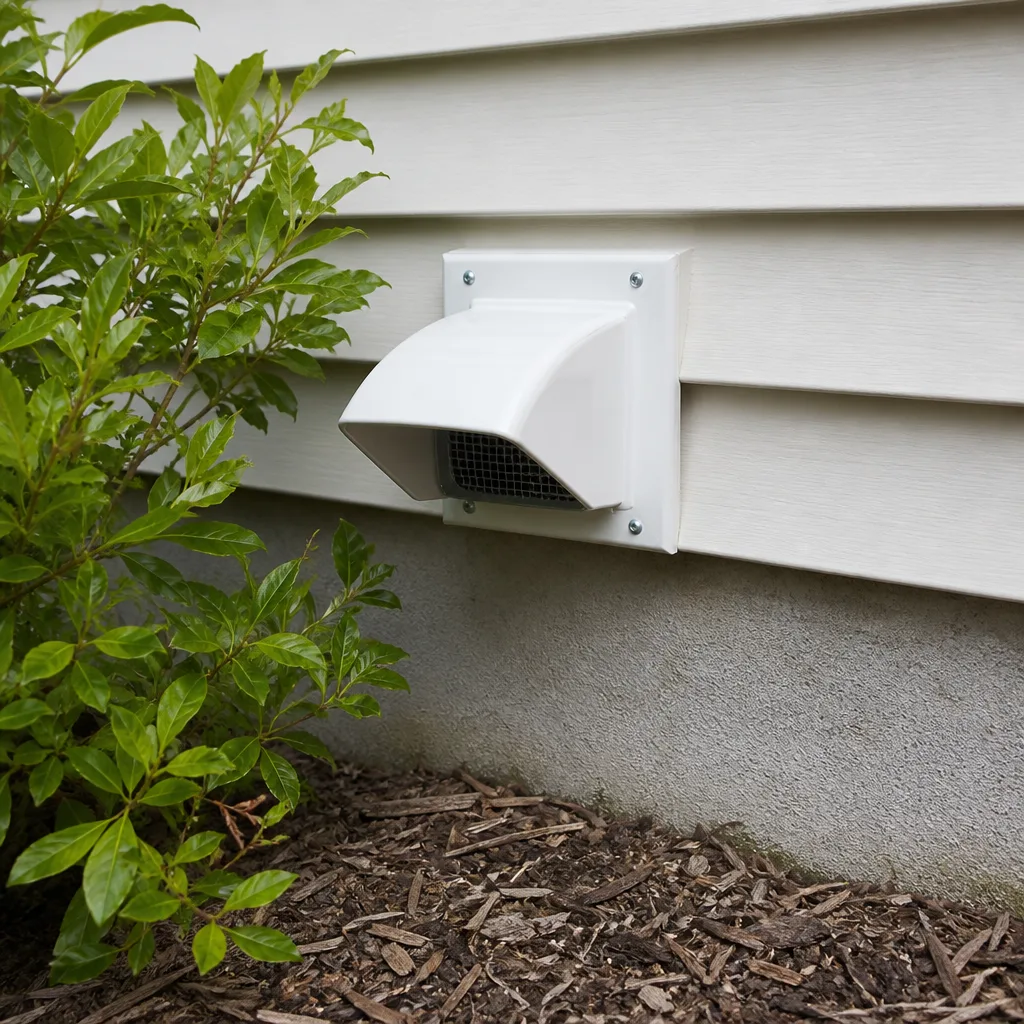
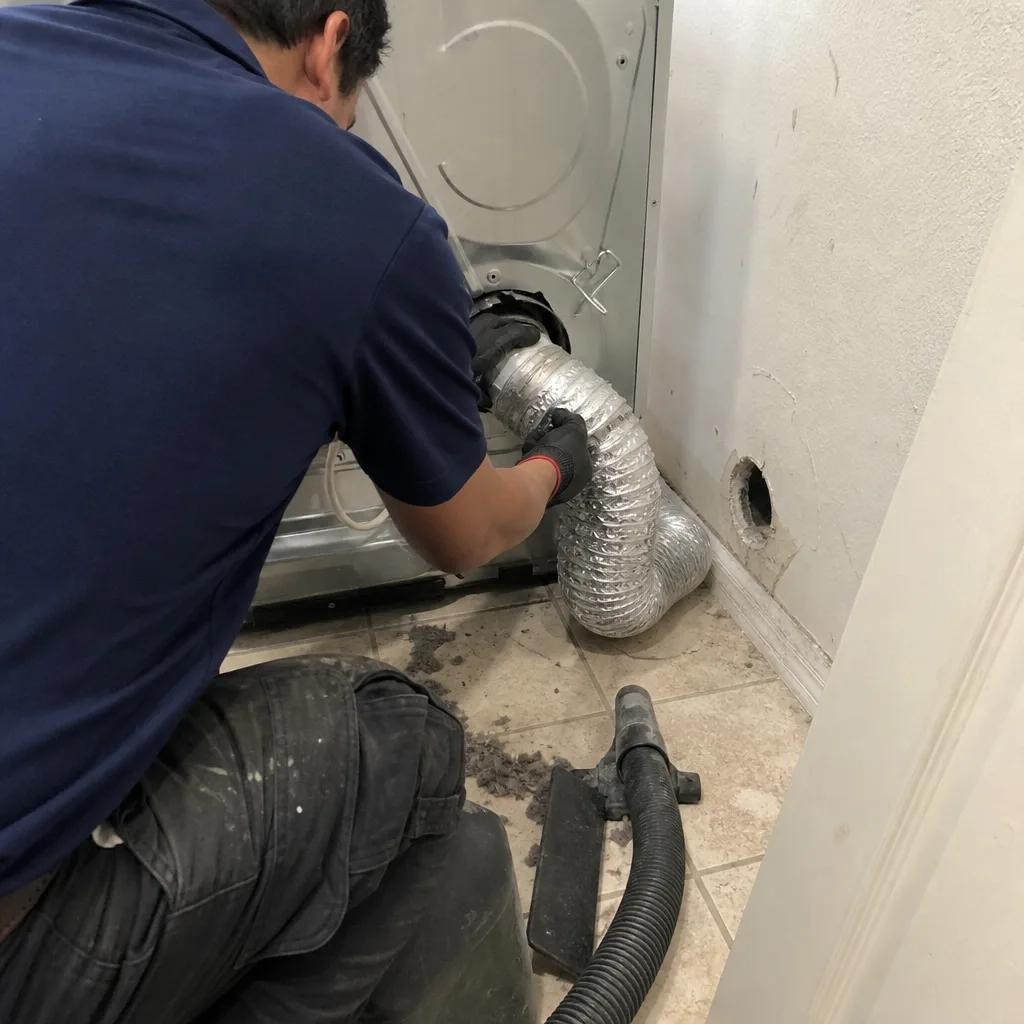
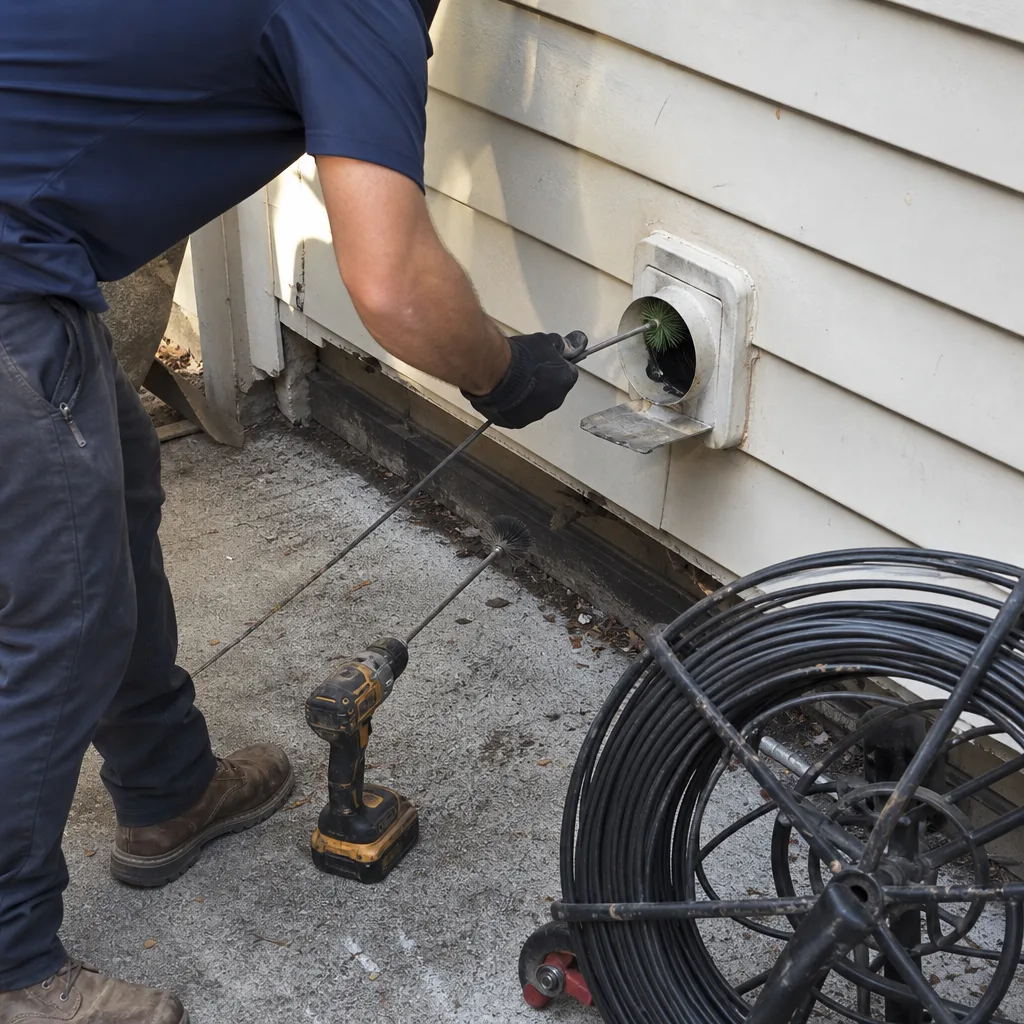
- Perform a visual dryer vent inspection. If your dryer vent terminates on an exterior wall within arm’s reach, remove the cover and look for lint buildup or nesting material. In Schertz’s established neighborhoods like Turnberry, we’ve found bird nests in vents with inadequate screening. A vacuum with a crevice tool can clear accessible lint; a vent brush kit ($20-$35) can push through short, straight runs.
- Change filters on schedule, not by appearance. A filter that looks clean may still be loaded with fine particulate. In Schertz, where caliche dust and cedar pollen are significant seasonal factors, we recommend MERV 11-13 pleated filters for most systems, changed every 60-90 days during high-use seasons.
What these tasks share: they’re all at the boundary of the system, where human hands and standard tools can reach. What they don’t do: move debris from the interior of a 25-foot flex duct run, clean a plenum (the central distribution box above your furnace), or address contamination in trunk lines that feed multiple rooms.
The Physics of Negative-Air Duct Cleaning
This is the part most competitors gloss over, and it’s the entire reason professional equipment exists.
A standard shop vacuum creates positive pressure at the nozzle. It sucks debris into the canister, which is effective when the nozzle is in contact with the debris. In a duct run, the nozzle is at one end, and the debris is somewhere along a 20- to 40-foot span of flexible or sheet-metal duct. The shop vac’s airflow pulls air from the path of least resistance - typically the nearest register opening - rather than establishing enough velocity to dislodge and transport debris from deep in the run.
Worse, without sealed access points, a shop vac can actually push debris deeper. The positive pressure at the nozzle creates turbulence that disturbs settled material without capturing it. We’ve documented this in Schertz homes where homeowners ran a vacuum hose down a register for an hour, then our inspection camera showed the same debris layer - just redistributed farther from the opening.
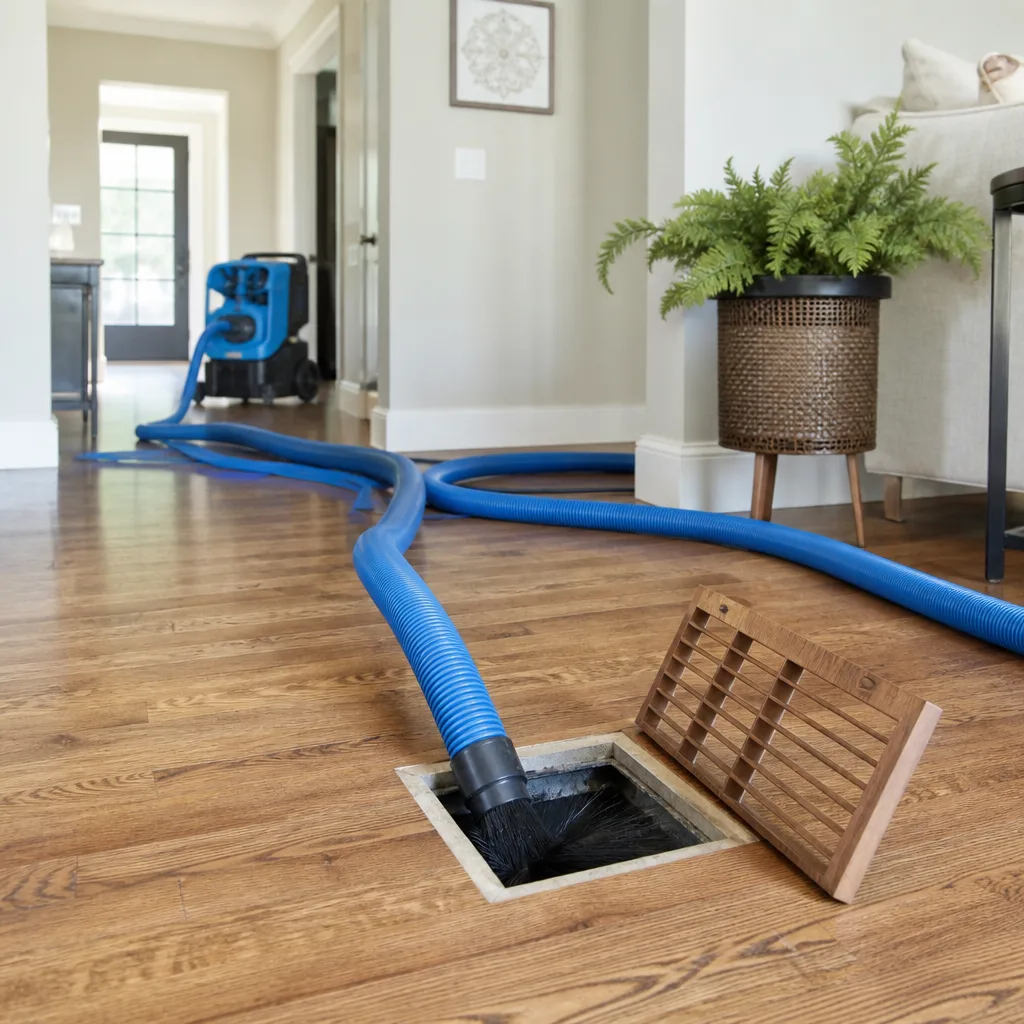
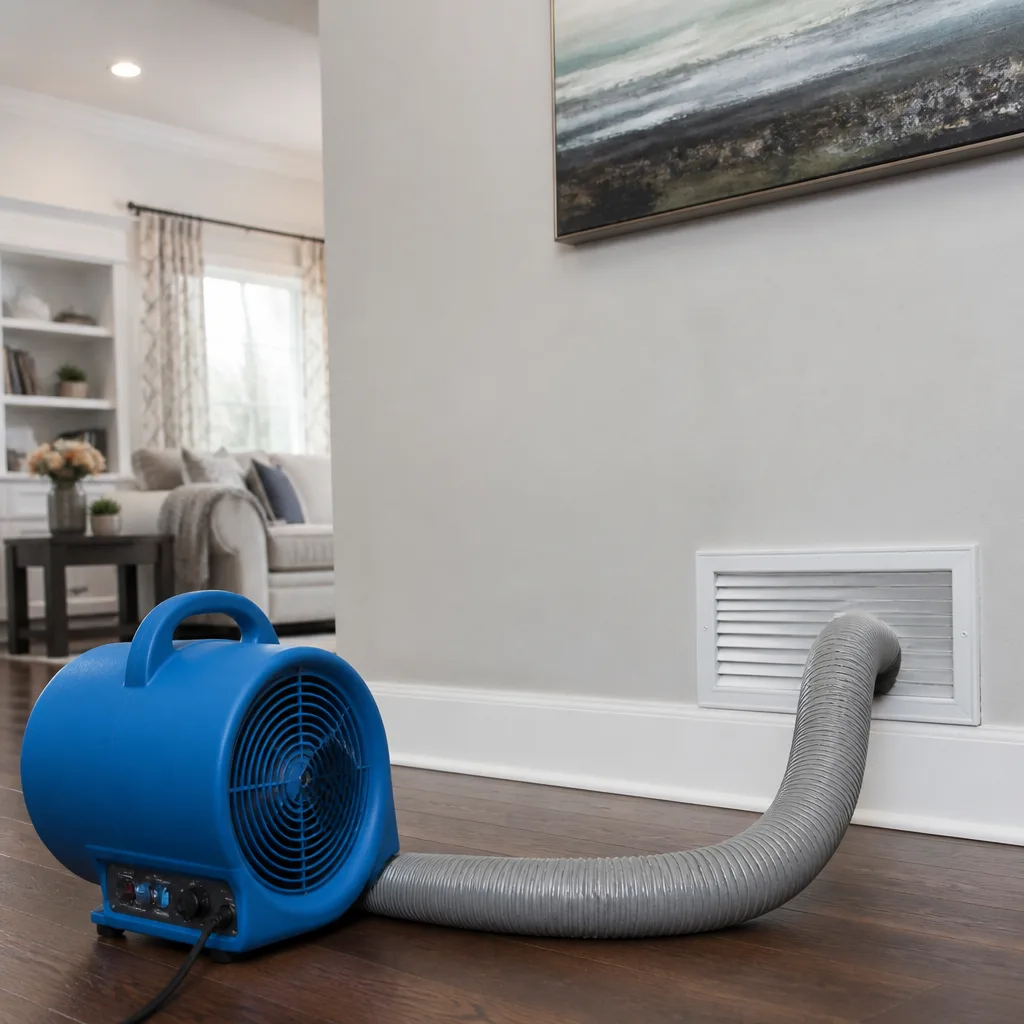
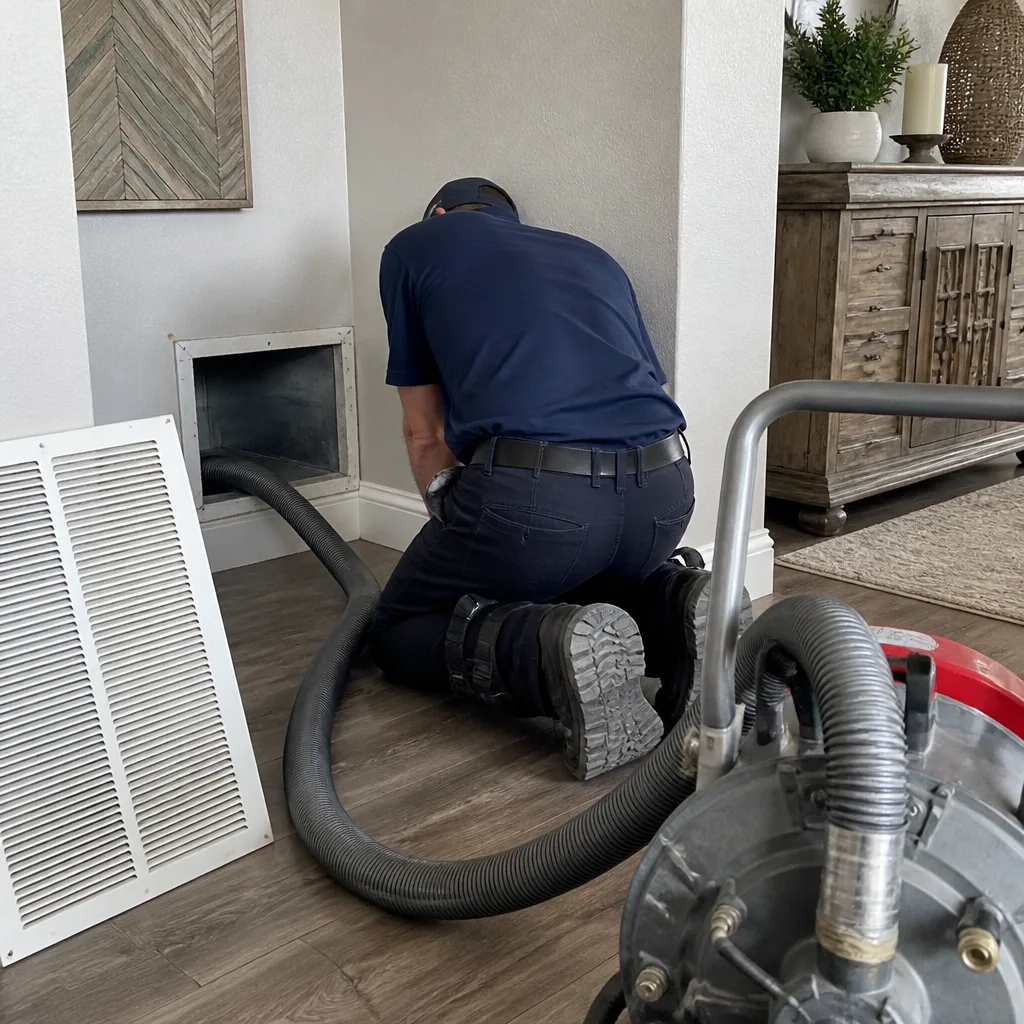
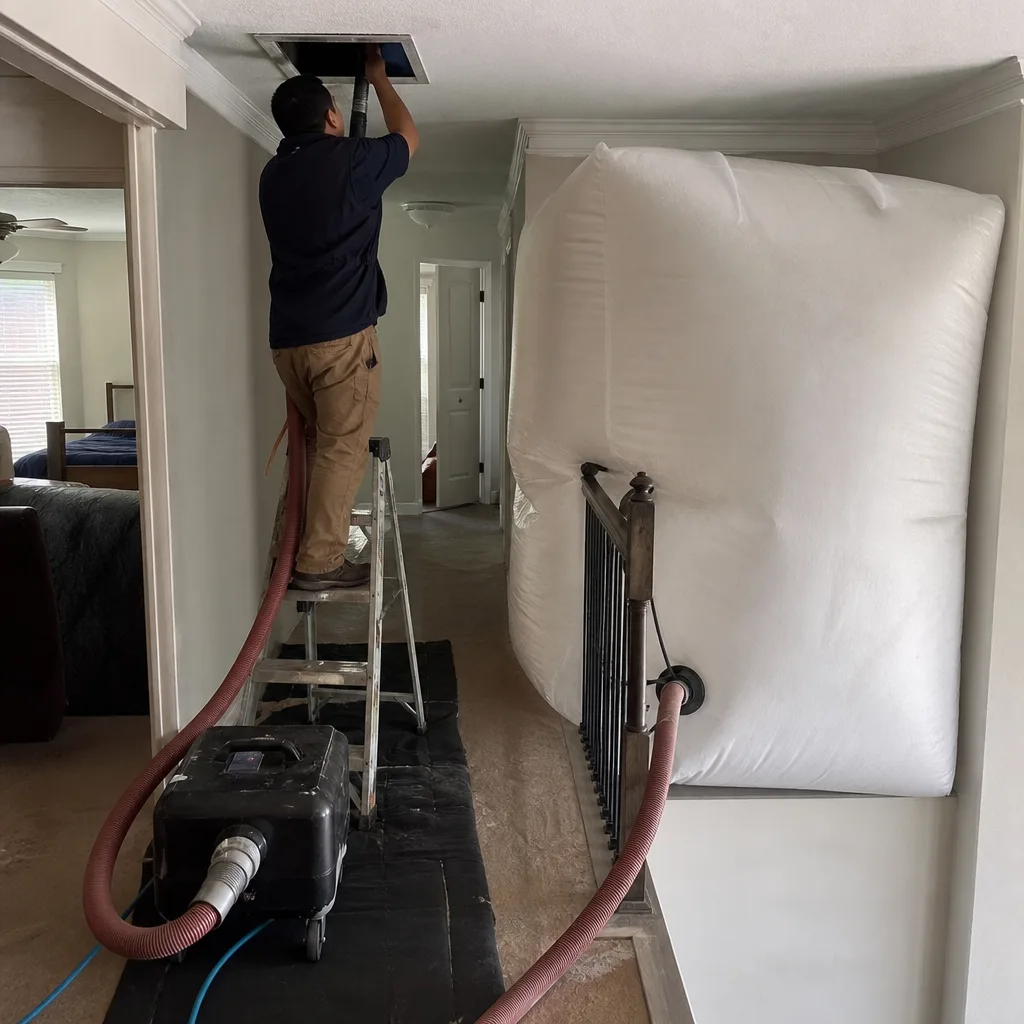
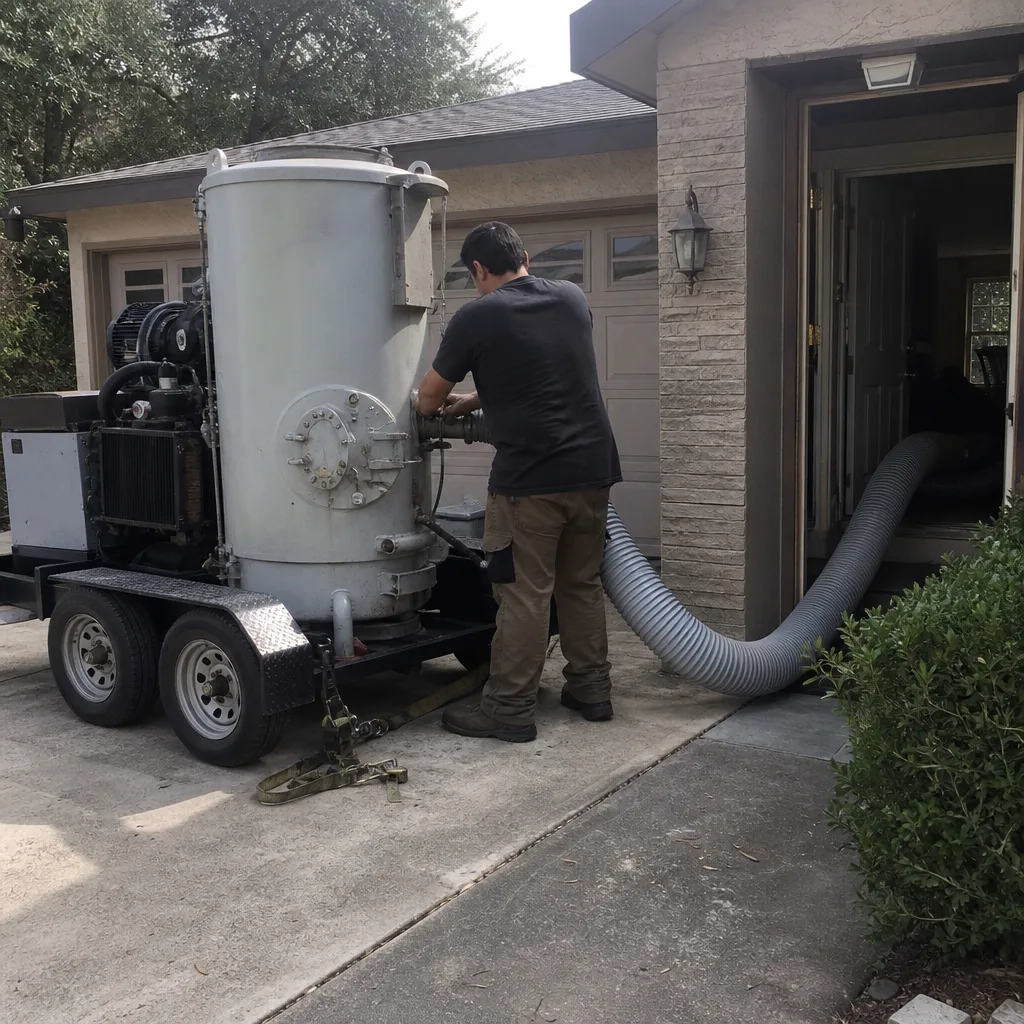
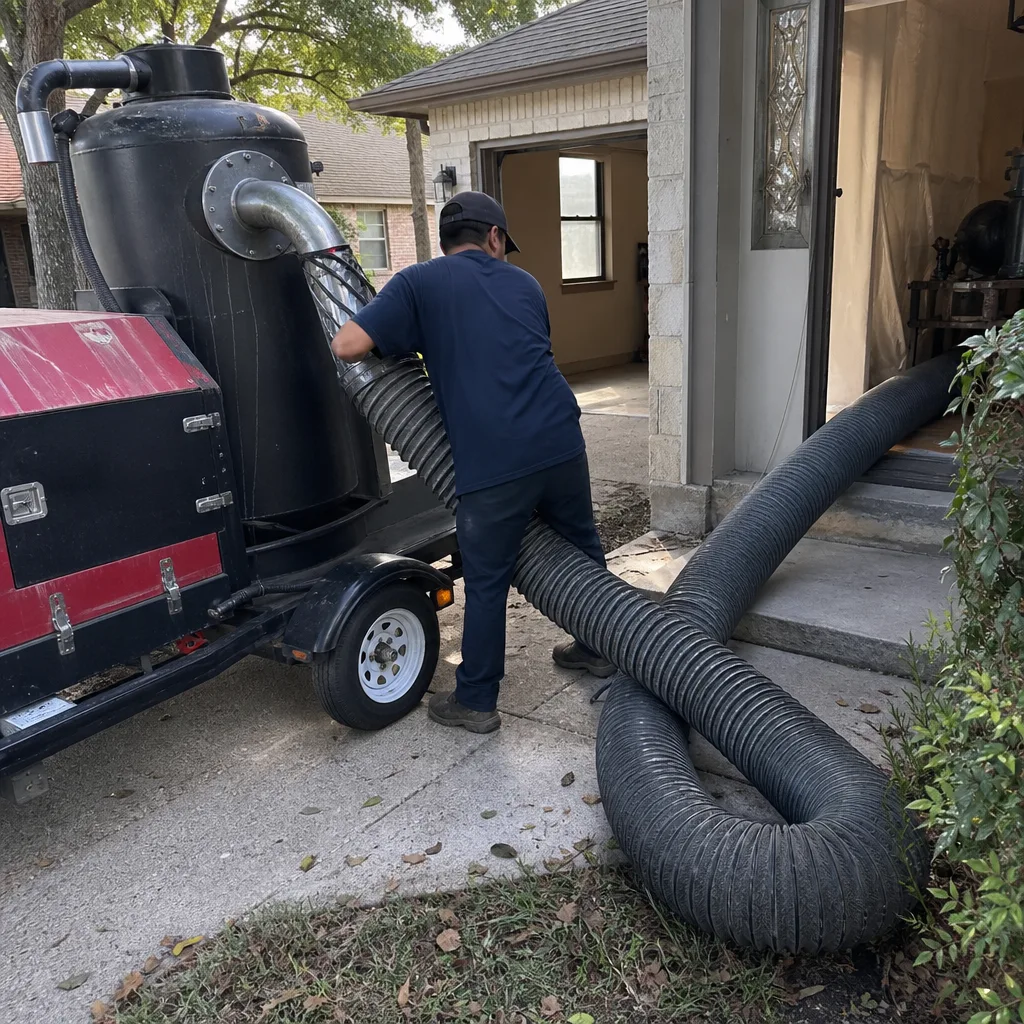
Professional negative-pressure systems reverse this dynamic. A large vacuum unit, typically mounted on a truck or portable cart, connects to the duct system through a sealed access port. This establishes continuous negative pressure throughout the entire duct network. Agitation tools - rotating brushes, air whips, or compressed-air skipper balls - then dislodge debris, which is immediately drawn toward the extraction point by the pressure differential rather than pushed deeper.
The equipment matters specifically. Our crews use Nikro portable negative-air machines and Abatement Technologies HEPA-filtered extractors, both of which maintain sufficient airflow volume (measured in cubic feet per minute) to overcome the resistance of long duct runs and multiple branches. A shop vac moves roughly 100-150 CFM. The units we deploy move 2,000-5,000 CFM, with HEPA filtration rated at 99.97% efficiency at 0.3 microns.
Directional airflow is the variable that determines whether debris leaves the system or relocates within it. Without negative pressure at the extraction point, you’re not cleaning ducts. You’re rearranging dust.
When DIY Is the Correct Answer
Professional duct cleaning is not always necessary. In specific, limited circumstances, a homeowner with basic tools can resolve the actual problem without paying for equipment access they don’t need.
A single clogged or dirty register. If one room smells musty or shows weak airflow, and your inspection shows debris limited to the boot and first few inches of duct, a brush kit and HEPA vacuum will solve it. This is common in Schertz’s newer construction, where construction debris sometimes collects at the first elbow before the system ever runs.
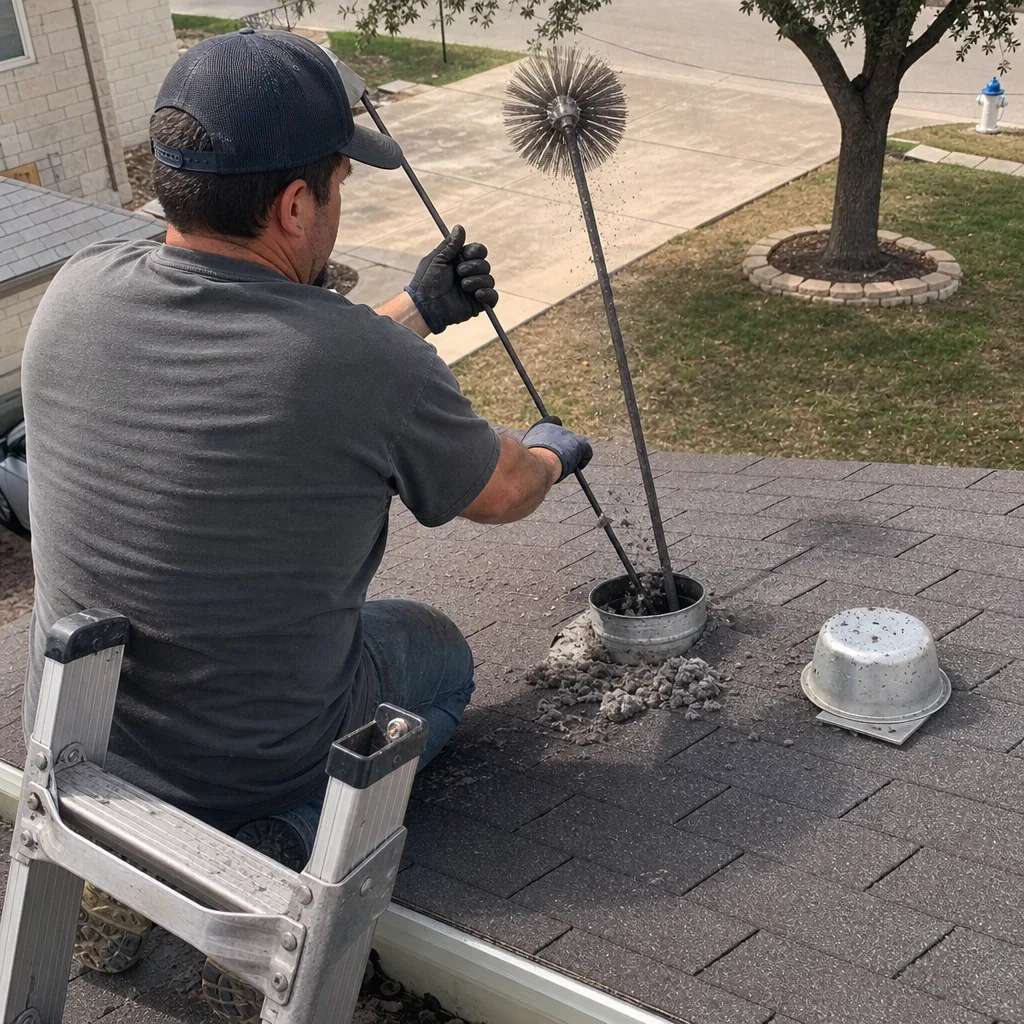
A dryer vent with visible, accessible blockage. Bird nests, lint buildup at the termination point, or a disconnected flex transition behind the dryer are all within reach of a homeowner with a screwdriver and vacuum. The key qualifier: you can see and touch the problem. If lint extends past the first bend of a wall or roof vent, you’re past the DIY threshold - and dryer vent fires are a genuine hazard that justify professional Dryer Vent Cleaning in Schertz.
Visible debris on the downstream side of a recently replaced filter. This indicates the filter was poorly seated or bypass air was pulling around it. Clean the filter slot with a vacuum, ensure the new filter fits snugly, and monitor for recurrence. No professional visit required unless the debris has traveled past the filter into the blower compartment.
Seasonal register maintenance during high-pollen periods. Schertz’s spring oak and cedar pollen loads can coat register surfaces in weeks. Quarterly register removal and cleaning is reasonable homeowner maintenance that reduces allergen load at the point of delivery.
The common thread: the problem is visible, reachable, and limited in scope. When any of those three conditions fails, DIY stops being the correct answer.
When Professional Equipment Is Non-Negotiable
Certain conditions make negative-pressure extraction mandatory, not optional. These are not judgment calls; they’re physical realities of duct system design and contamination type.
- Post-renovation debris in trunk lines. Construction dust - drywall compound, insulation fragments, sawdust - is fine, abrasive, and widely distributed. It settles in trunk lines (the large central ducts that feed multiple branches) where no register provides access. In Schertz’s active growth areas like Passare, we’ve documented post-construction debris in systems less than two years old. Only sealed-system negative pressure can extract this material without distributing it to every room.
- Confirmed or suspected rodent debris. Droppings, nesting material, or carcries in ductwork require HEPA-contained extraction and often antimicrobial treatment. This is not a DIY project for safety reasons; disturbed rodent debris can aerosolize hantavirus and other pathogens. Professional crews use contained extraction and appropriate PPE as standard protocol.
- Flex duct that has partially separated from a boot or trunk. This creates a leak that pulls unconditioned attic air into the system, often accompanied by insulation debris. Repair requires access to the attic, mechanical fastening, and mastic sealing - plus verification that the full duct run is intact. A homeowner cannot verify this from a register opening.
- Visible mold growth on duct interiors. Surface mold on a register is cleanable. Mold past the first elbow, or musty odors that persist after register cleaning, indicates growth on duct interiors that requires professional remediation with contained extraction and often antimicrobial application using EPA-registered products.
- System-wide airflow reduction with no single point of blockage. If multiple rooms show weak airflow and filters are clean, the restriction is likely in trunk lines or at the plenum. This requires pressure testing and camera inspection to locate - capabilities built into professional service, not available to homeowners.
- Homes with in-slab ductwork. Some Schertz homes built in the 1970s and 1980s, particularly in older sections near FM 3009, have underground duct runs. These cannot be accessed at all without specialized equipment and are prone to moisture intrusion that only professional inspection can assess.
In these situations, the question is not whether to hire a professional. It’s whether the professional you hire has the equipment and documentation practices to prove the work was done. Which brings us to evaluation.
How to Evaluate Whether a Professional Quote Is Justified
The duct cleaning industry’s reputation for bait-and-switch pricing is earned. A $79 coupon that becomes a $600 invoice is not an exception; it’s a common business model. Here’s how to determine whether a quote represents real value before any work begins.
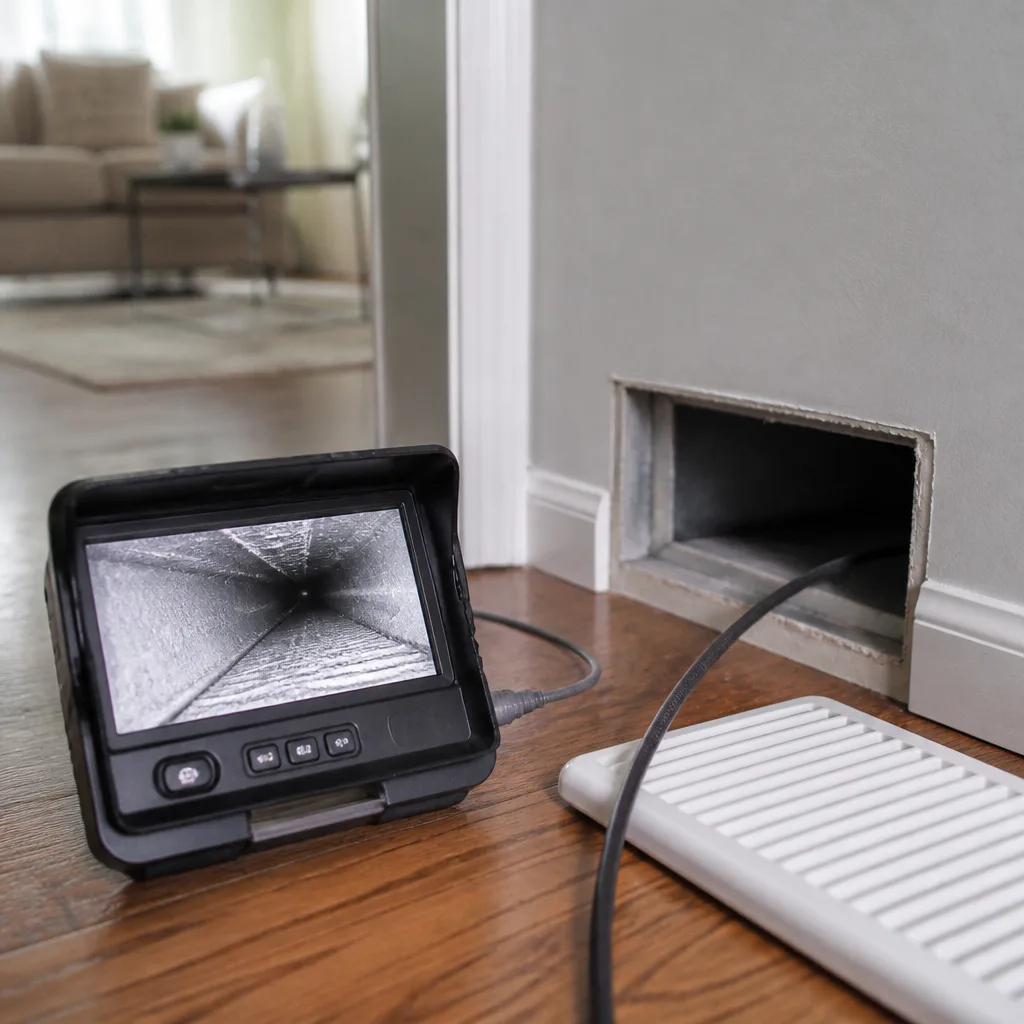
Demand a pre-work inspection with camera documentation. A legitimate technician can show you the interior of your ductwork before quoting. Not a generic photo from another job - your actual ducts, with a timestamp. At CleanRun, this is standard on every visit: the inspection camera feeds to a tablet, and the homeowner sees what we see. If a company quotes over the phone without seeing your system, that quote is not binding. It’s bait.
Request a written, itemized scope before work starts. Haven Standard Clause 1 requires exactly this: a written price delivered before any work begins, every time. The scope should specify how many duct runs will be cleaned, whether trunk lines and the plenum are included, and what equipment will be used. Vague language like “whole system cleaning” without line-item detail is a red flag.
Verify the equipment roster. Professional-grade duct cleaning uses specific, verifiable equipment: negative-air machines from Nikro or Abatement Technologies, rotary brush systems from Rotobrush, HEPA filtration from Honeywell or Aprilaire. A company that cannot or will not name its equipment is likely using shop-vac-level tools and charging professional prices.
Ask how the work will be documented. Before-and-after photos of every duct run should be standard deliverables, not upsells. Our Documented Photo Record, included on every job since 2013, shows the interior of each run before agitation and after extraction. If a company promises “before and after” but won’t specify whether this means your ducts or a stock photo, press for clarity.
Compare whole-system pricing, not per-vent teaser rates. Per-vent pricing ($15-$25 per register) is a classic upsell structure: the base price covers minimal work, and every “additional” service inflates the total. Honest pricing is whole-system, agreed in writing before work starts. In the Schertz market, professional air duct cleaning for a typical 2,000-square-foot home generally ranges from $350 to $550 for complete system cleaning including trunk lines and plenum, with legitimate variation based on system complexity and accessibility.
Check for a written guarantee, not a verbal promise. The 365-Day Done Right Promise we provide on every job is a written document, not a policy subject to manager discretion. Any guarantee that requires you to “call the office” and plead your case is not a guarantee. It’s a hope.
The evaluation process itself tells you something. A company that resists documentation, written pricing, or equipment transparency is telling you exactly what kind of transaction to expect.
Schertz-Specific Factors That Affect the Decision
Local conditions influence both how often ducts need cleaning and what type of cleaning is appropriate. Schertz presents several factors that should inform the DIY vs. professional decision.
Caliche soil and construction activity. The limestone-derived caliche soil in this region generates fine, abrasive dust that infiltrates homes during dry periods. New construction in developing Schertz neighborhoods stirs additional particulate. We’ve documented accelerated debris accumulation in homes within a mile of active construction, sometimes requiring shorter intervals between professional cleanings.
High pollen loads and extended seasons. Cedar fever peaks in winter; oak pollen follows in spring. These loads stress HVAC filtration and increase the volume of organic debris that reaches ductwork. Homes with standard 1-inch filters often see pollen bypass that deposits in boots and first duct sections - the DIY-accessible zone - but extended high-load periods can push debris deeper.
Age and style of housing stock. Schertz’s rapid growth since 2000 means many homes have flex duct in vented attics, a configuration prone to separation at boots and sagging that creates debris traps. Older homes near the original downtown may have galvanized steel ductwork with internal rust scale that requires professional agitation to remove safely.
Hard water and humidifier residue. Whole-home humidifiers, common in Schertz installations, can leave mineral scale and biological growth in ductwork if not maintained. This residue bonds to duct interiors and resists vacuum-only cleaning.
Local code and permit context. Duct modifications or repairs in Schertz fall under the International Mechanical Code as adopted by Guadalupe County and city inspection departments. Significant duct repair or replacement requires permit and inspection; cleaning does not, but repairs discovered during cleaning (separated ducts, damaged flex) should be performed by a contractor who understands local code requirements.
These factors don’t automatically mandate professional service, but they shift the threshold. A Schertz home with active construction nearby, standard filtration, and flex duct in a vented attic is a different calculation than a sealed-duct home in a stable neighborhood with upgraded filtration.
DIY Tools vs. Professional Equipment: What Each Actually Does
Understanding capability limits requires naming specific equipment and what it accomplishes. Here’s an honest comparison:
| Tool / Equipment | Typical Cost | What It Actually Reaches | What It Cannot Do |
|---|---|---|---|
| Shop vacuum with hose extension | $80-$200 owned; $30-$50 rental | Register surface, boot interior to ~18 inches | Create negative pressure in sealed system; extract debris from duct runs past first elbow |
| Rotary brush kit (consumer grade) | $25-$60 | Flexible rod reaches 10-15 feet into straight duct | Navigate multiple elbows; maintain contact pressure against duct walls; extract dislodged debris |
| Dryer vent brush kit | $20-$35 | Straight or gently curved vent runs up to ~12 feet | Clear blockages past second bend; extract bird nests intact; verify full vent integrity |
| Nikro portable negative-air machine | Professional use only | Full system: all duct runs, trunk lines, plenum via sealed access ports | Not applicable - this is the extraction capability DIY tools lack |
| Abatement Technologies HEPA extractor | Professional use only | Same as above, with 99.97% HEPA filtration and contained debris disposal | Not applicable |
| Rotobrush brush-and-vac system | Professional use only | Simultaneous agitation and extraction at the point of contact, navigable through multiple elbows | Not applicable |
| Inspection camera system | $200+ consumer; professional grade $2,000+ | Visual documentation of full duct interior | Consumer units often lack sufficient lighting and articulation for clear documentation |
The gap is not incremental. Professional equipment reaches what DIY tools physically cannot access, with extraction power that prevents redistribution rather than causing it. The cost difference reflects capability, not markup.
The Real Cost Comparison Most Guides Get Wrong
Industry pricing guides typically compare a $400 professional job against $80 in DIY supplies and declare a $320 savings. This math ignores what each approach actually delivers, what it risks, and what hidden costs follow incomplete cleaning.
The DIY ledger:
- Brush kit, HEPA vacuum rental or purchase, flashlight, replacement filters: $100-$250 initial outlay
- Time: 3-6 hours for thorough register and boot cleaning
- Result: clean registers and boots, unchanged duct runs
- Risk: pushing debris deeper, disturbing mold without containing it, missing separated ductwork that leaks conditioned air
- Hidden cost: continued airflow restriction, potential blower motor strain from debris bypass, undetected duct damage that inflates energy bills
The professional ledger (honest operator):
- Whole-system cleaning with documented photo record: $350-$550 in Schertz market
- Time: 2.5-4 hours on site, zero homeowner labor
- Result: extracted debris from all accessible duct runs, trunk lines, and plenum; documented condition; identified repair needs
- Risk: minimal, with contained extraction and insured technicians
- Hidden cost: none, if pricing is upfront and guaranteed
The correct comparison is not price versus price. It’s partial, undocumented surface cleaning versus complete, documented system cleaning. If your ducts don’t need complete cleaning - if the inspection shows debris limited to accessible zones - then DIY is the rational choice and a professional quote is not justified. If the inspection shows contamination past the first elbow, DIY is not a cheaper alternative. It’s a different, inadequate service that doesn’t solve the problem.
This is why we offer free second opinions on any written estimate. Bring a competitor’s quote; we put our number next to it with line-item detail. The decision should be based on documented scope, not advertised price.
Common Mistakes to Avoid
- Using a standard vacuum without HEPA filtration. Fine particulate passes through standard filters and recirculates. In Schertz’s pollen-heavy environment, this can actually increase airborne allergen load during “cleaning.”
- Agitating debris without extraction capability. A brush down a duct run dislodges material that then resettles deeper. We’ve documented this in homes where homeowners felt proud of the dust their brush collected, unaware that ten times that volume was now distributed past the next elbow.
- Ignoring the return side. Supply ducts deliver conditioned air; return ducts pull air back to the unit. Return ducts are typically larger, dirtier, and harder to access. Focusing only on supplies addresses half the system at best.
- Cleaning ducts without addressing the source. If your Schertz home has a failing filter seal, a humidifier breeding bacteria, or a rodent entry point in the attic, cleaned ducts recontaminate within months. Professional inspection should identify source conditions; DIY cleaning cannot.
- Accepting “whole house” pricing without defining “whole.” Some operators define “whole house” as supply registers only, with trunk lines and returns as upsells. Get the scope in writing before comparing quotes.
- Assuming newer homes need no attention. Construction debris in new Schertz homes is well-documented. We’ve extracted drywall compound, wood scraps, and insulation fragments from systems in homes less than a year old. Age of home does not equal cleanliness of ducts.
- Treating duct cleaning as purely an air quality service. Restricted airflow makes your HVAC system work harder, shortening component life and raising energy costs. The financial case for professional cleaning includes equipment protection and efficiency, not just indoor air quality.
When to Call a Professional
Call a professional when the problem is past your physical reach, when the contamination type requires contained extraction, or when you need documentation of system condition for warranty, sale, or health reasons. Specifically: post-renovation, confirmed or suspected rodent debris, mold growth past the first elbow, system-wide airflow reduction, or any flex duct configuration you cannot visually inspect from accessible points.
CleanRun Air Duct Cleaning Schertz offers free estimates in Schertz - call (830) 402-5110. For more guides & resources, visit our blog. Every estimate includes inspection camera documentation of your actual ductwork, a written scope and price before any work begins, and no obligation to proceed. If your situation is within DIY reach, we’ll tell you that directly. Haven Standard Clause 1 applies either way: the written price comes before the work, every time.
Frequently Asked Questions
Whole-system air duct cleaning for a typical 2,000-square-foot Schertz home generally ranges from $350 to $550, including all duct runs, trunk lines, plenum, and a documented photo record. Prices vary with system complexity, accessibility, and whether repairs are needed. Per-vent teaser pricing should be avoided; honest quotes are whole-system and written before work starts. Call (830) 402-5110 for a specific estimate - estimates are free.
Low quotes typically use one of three models: per-vent pricing that balloons with “additional services,” shop-vac-level equipment that doesn’t extract debris from duct runs, or bait-and-switch tactics where the quoted price covers minimal work and the technician upsells on arrival. A legitimate quote specifies equipment (Nikro, Abatement Technologies, Rotobrush), scope (which ducts, whether trunk lines and plenum are included), and documentation (before-and-after photos of your system). If these elements are missing, the low price is not a deal.
Demand a documented photo record of every duct run, before and after, with timestamps. This has been standard on every CleanRun job since 2013. Without it, you’re trusting a technician’s word that debris was extracted from ducts you cannot see. The photo record is your proof of work performed, not a marketing promise.
For most Schertz homes with standard filtration and no special conditions, every 3 to 5 years is appropriate. Homes with pets, recent renovations, active construction nearby, or occupants with respiratory conditions may need more frequent service. The correct interval is determined by inspection, not calendar. A camera inspection every two years lets you schedule based on actual accumulation rather than guesswork.
You can clean registers, boots, and accessible surfaces yourself, which is useful maintenance. You cannot create the negative-air pressure required to extract debris from full duct runs, trunk lines, or plenums without professional equipment. If your inspection shows debris past the first elbow, DIY is not a cost-saving alternative; it’s an incomplete service that doesn’t address the actual problem.
Schertz’s combination of caliche dust, high pollen loads, and humidity that supports biological growth creates conditions that accelerate duct contamination compared to drier, less vegetated climates. This doesn’t mean every home needs annual cleaning, but it does mean that standard intervals used in other regions may be insufficient here. Inspection-based scheduling is more reliable than calendar-based assumptions.
The Bottom Line
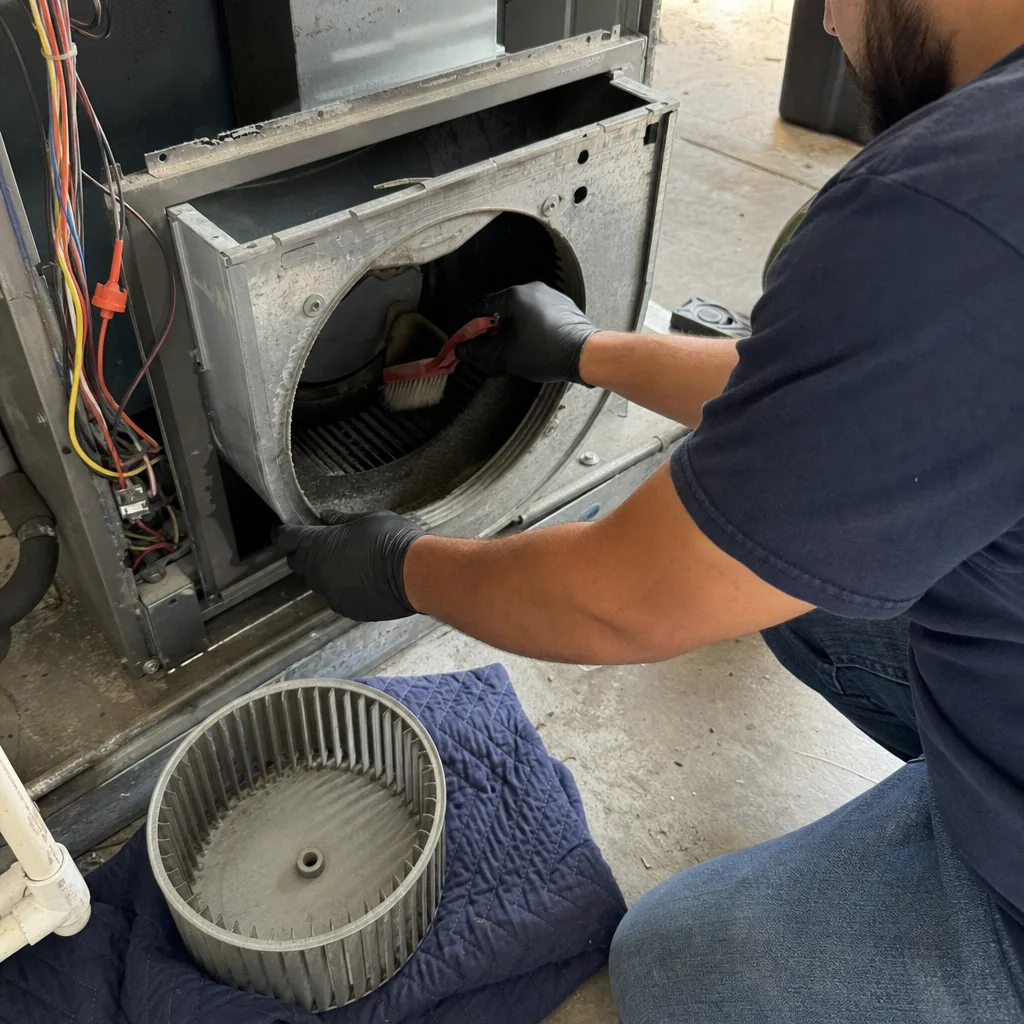
The DIY versus professional question is not about cost or competence. It’s about access. Homeowners can maintain registers, boots, and visible surfaces effectively with basic tools and a few hours. What they cannot do is establish negative-air pressure throughout a sealed duct system, navigate professional agitation equipment through multiple elbows, or document the full interior condition of ductwork they cannot see. The correct decision framework: inspect first, define the actual problem, then match the solution to the scope. When the problem is past your reach, professional service with documented results is the only approach that solves it. When it’s within reach, DIY is rational and honest operators will tell you so.
Written by Tomas Reyes, Owner at CleanRun Air Duct Cleaning Schertz, serving Schertz since 2013.