
Last updated September 23, 2026
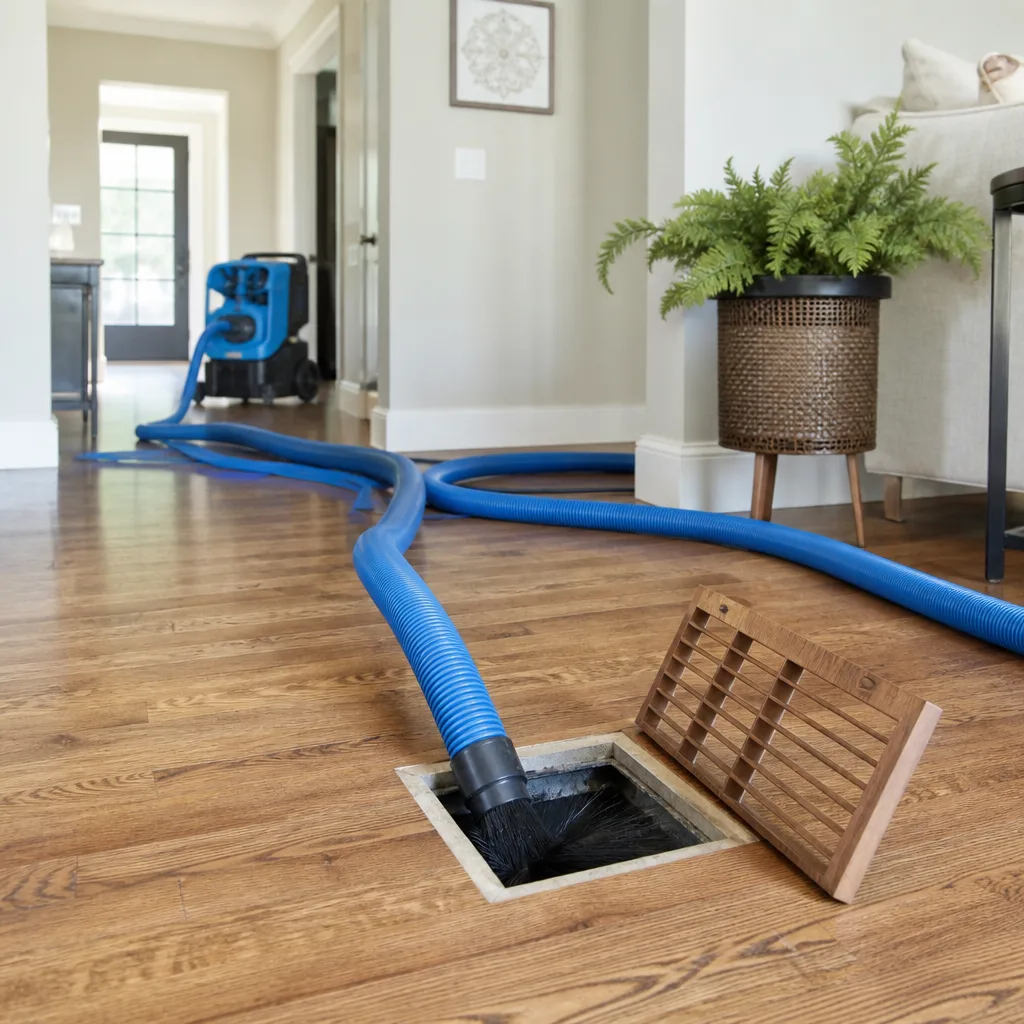
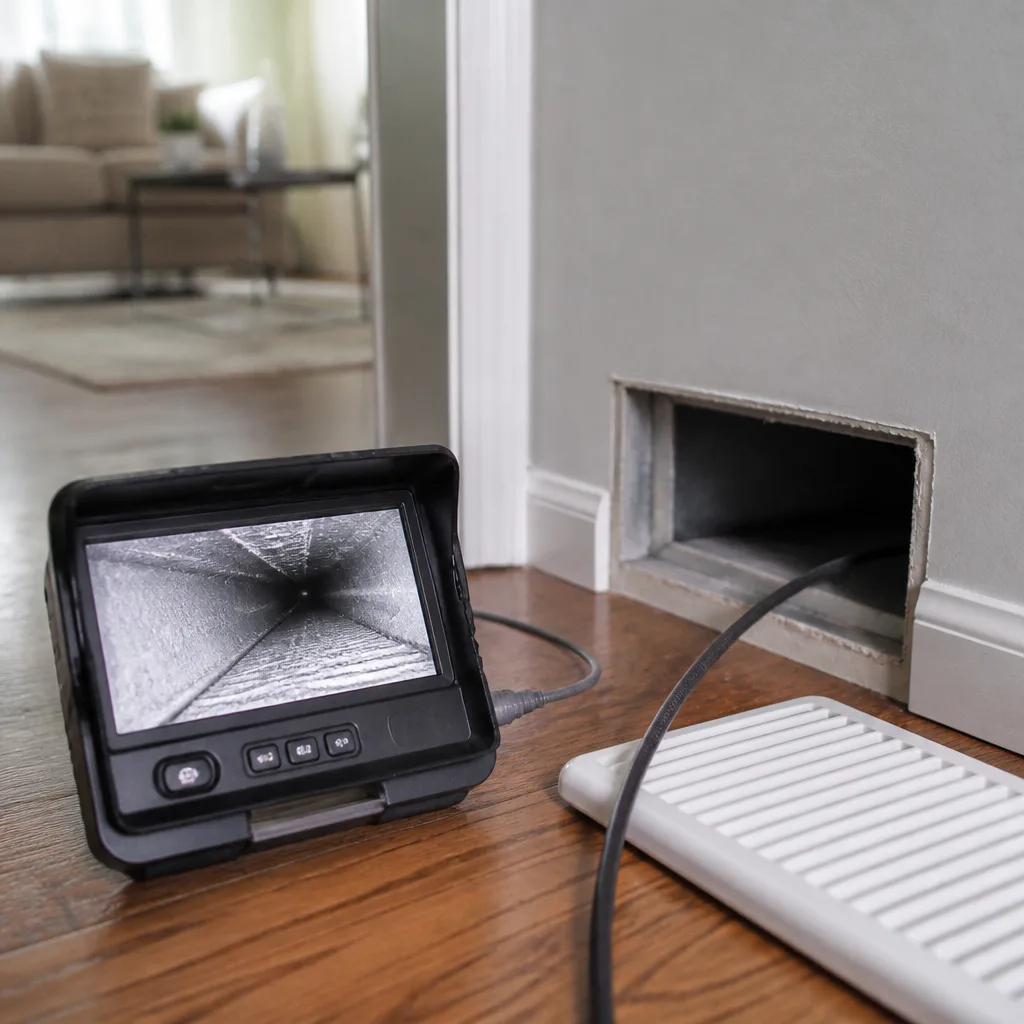
Whole-system duct and dryer vent check with before-and-after photos - you see exactly what came out of your vents
That "$99 whole-house special" is a bait ad - the real number appears once they are in your hallway, or the "clean" is a shop-vac at the register. We photograph the inside of your ducts before and after instead.
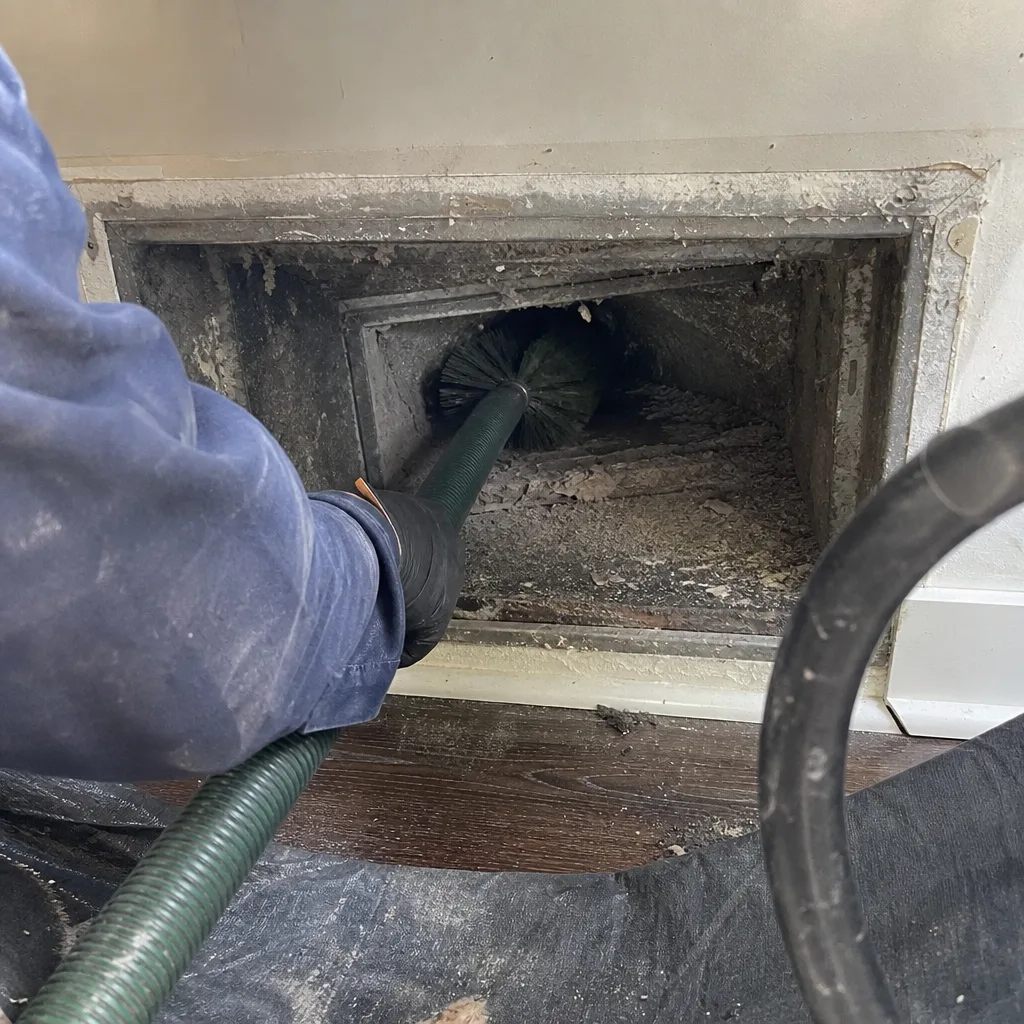 Before
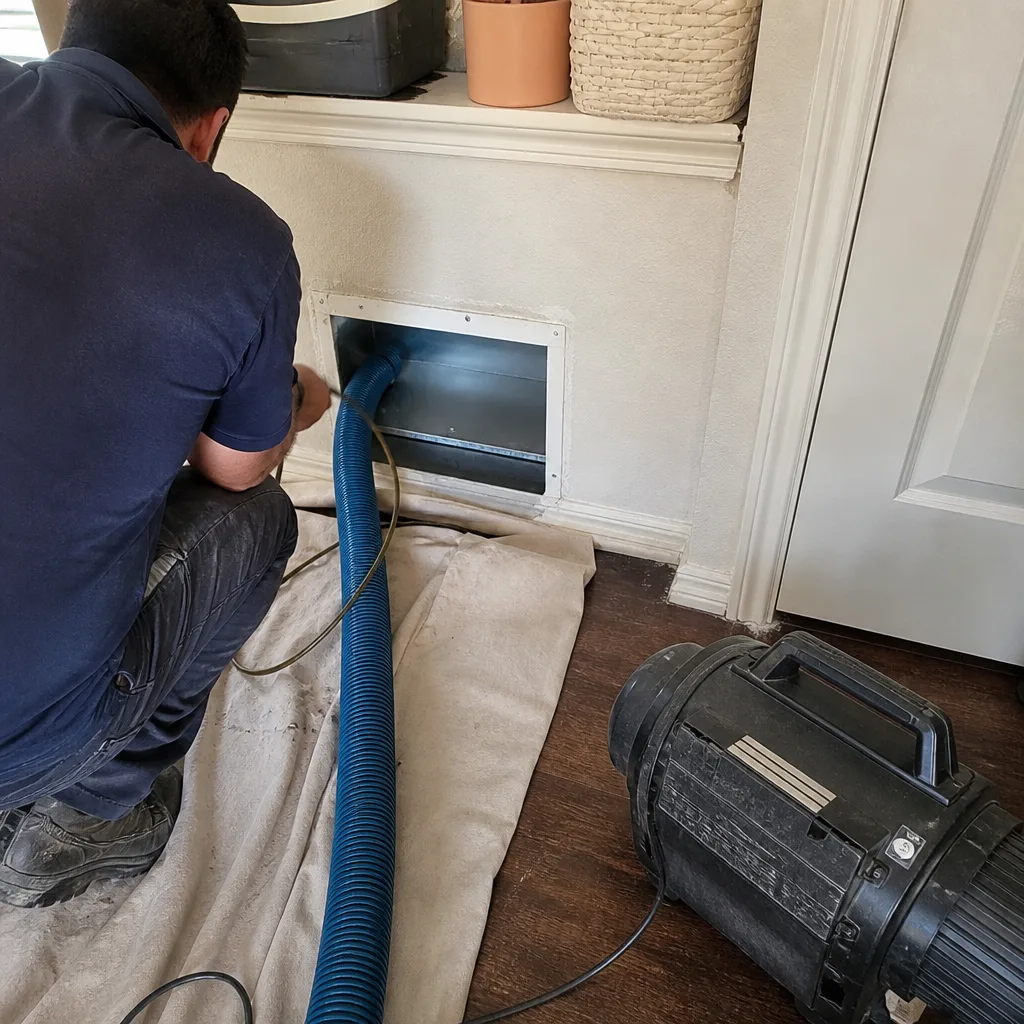 After
After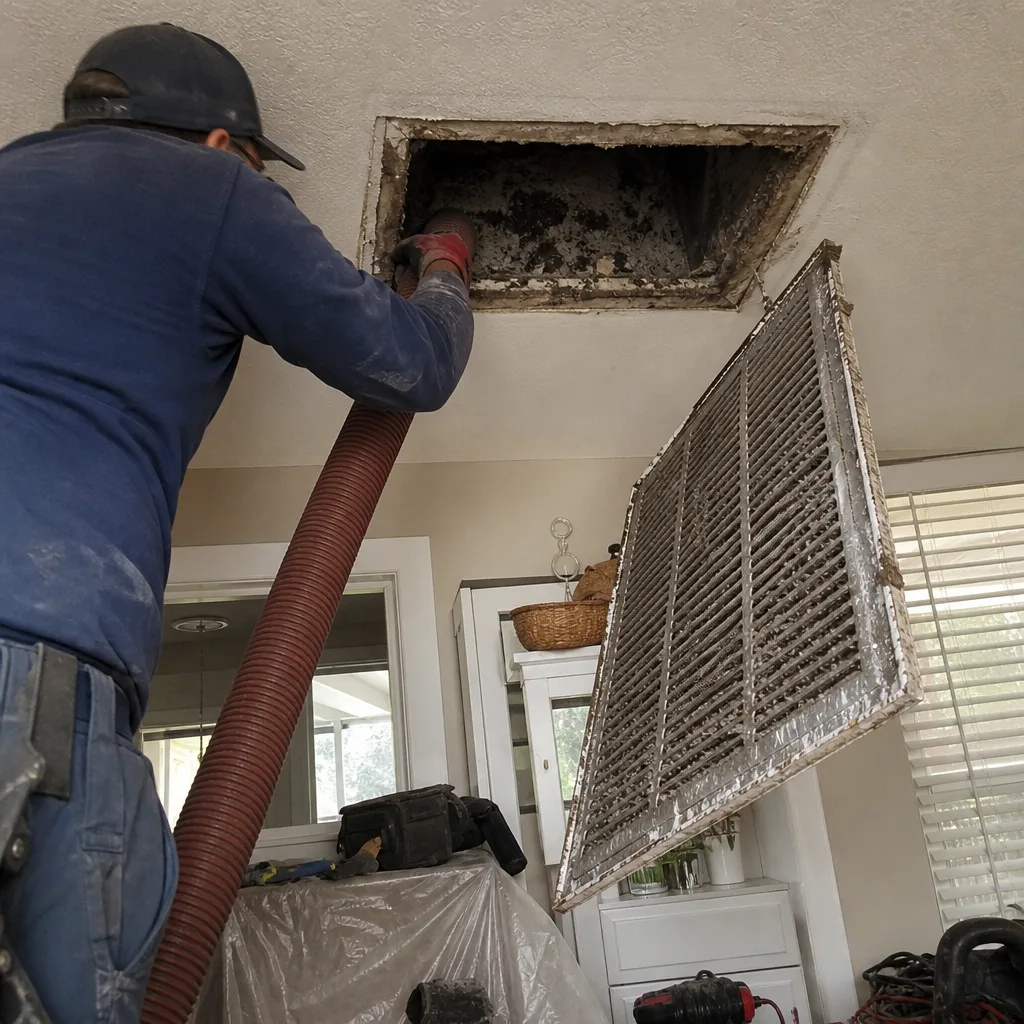 Before
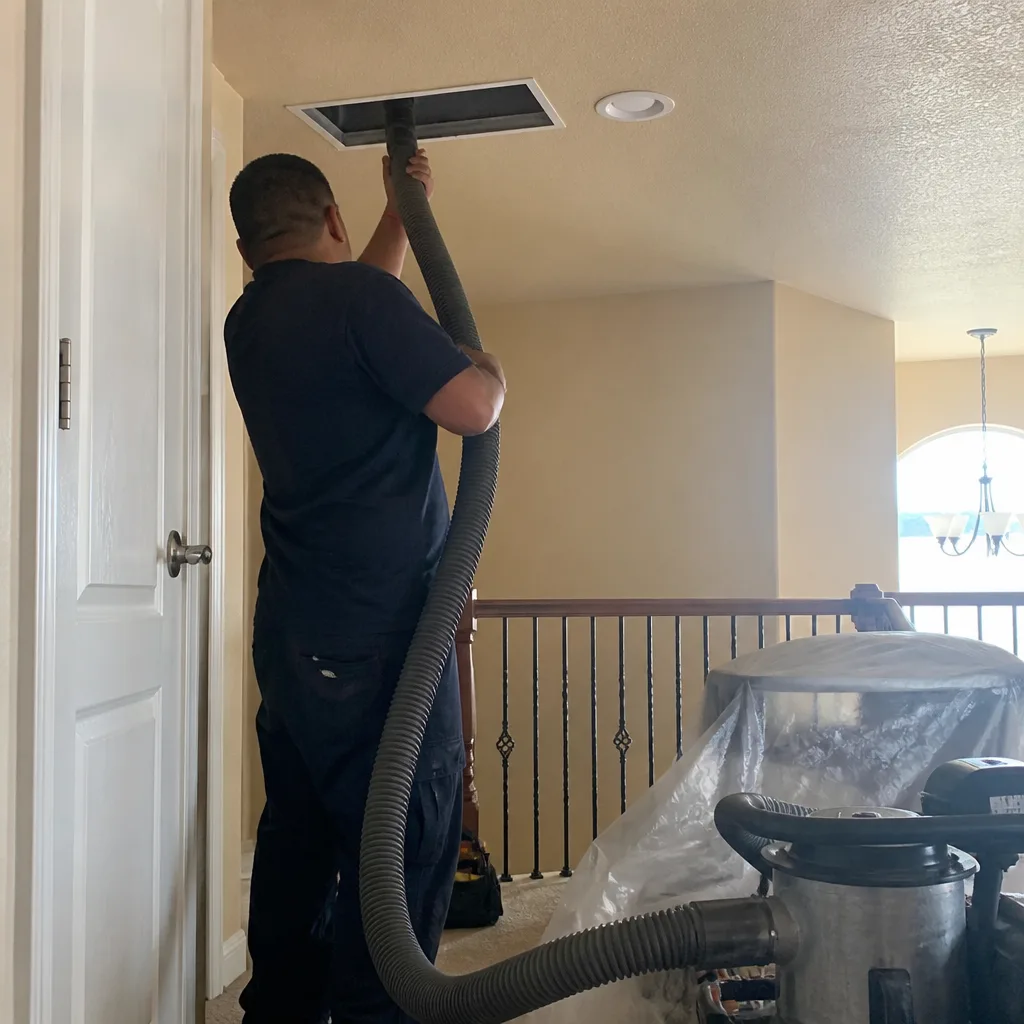 After
After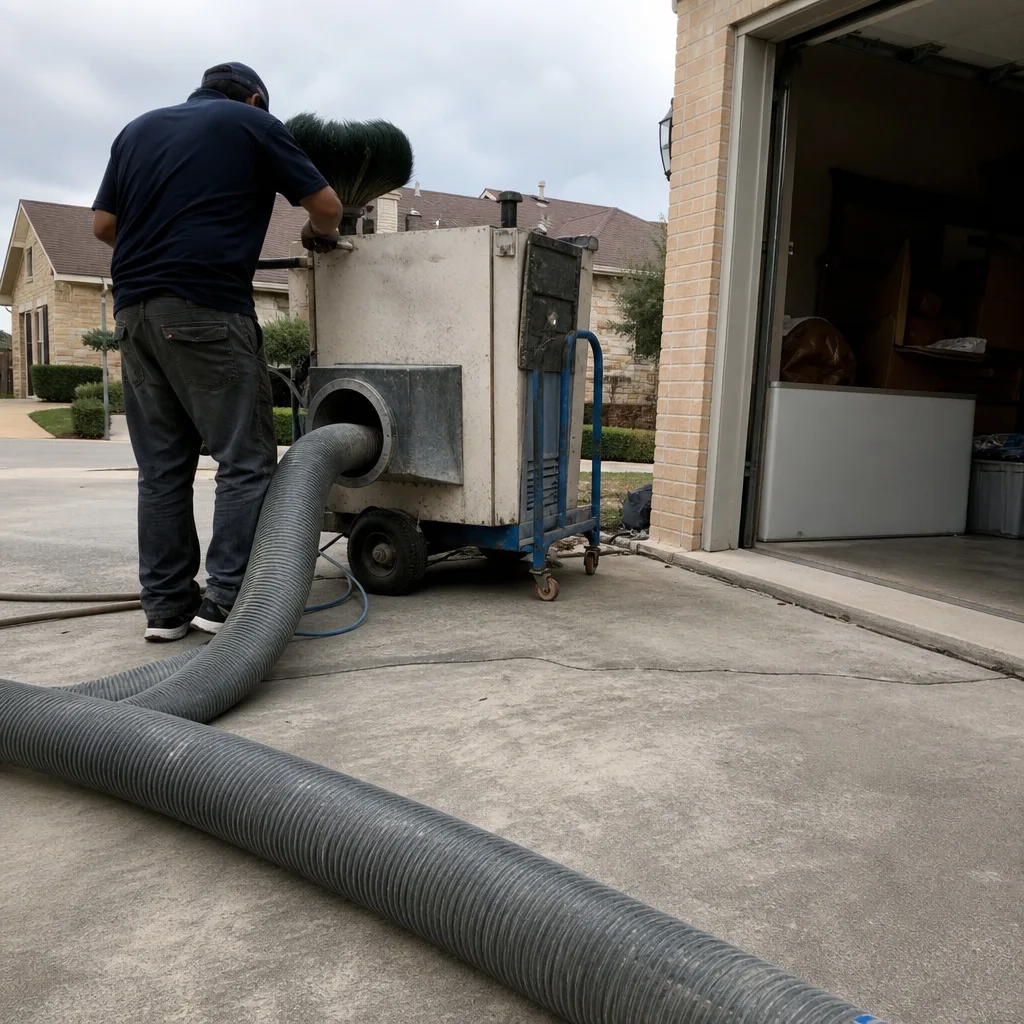 Before
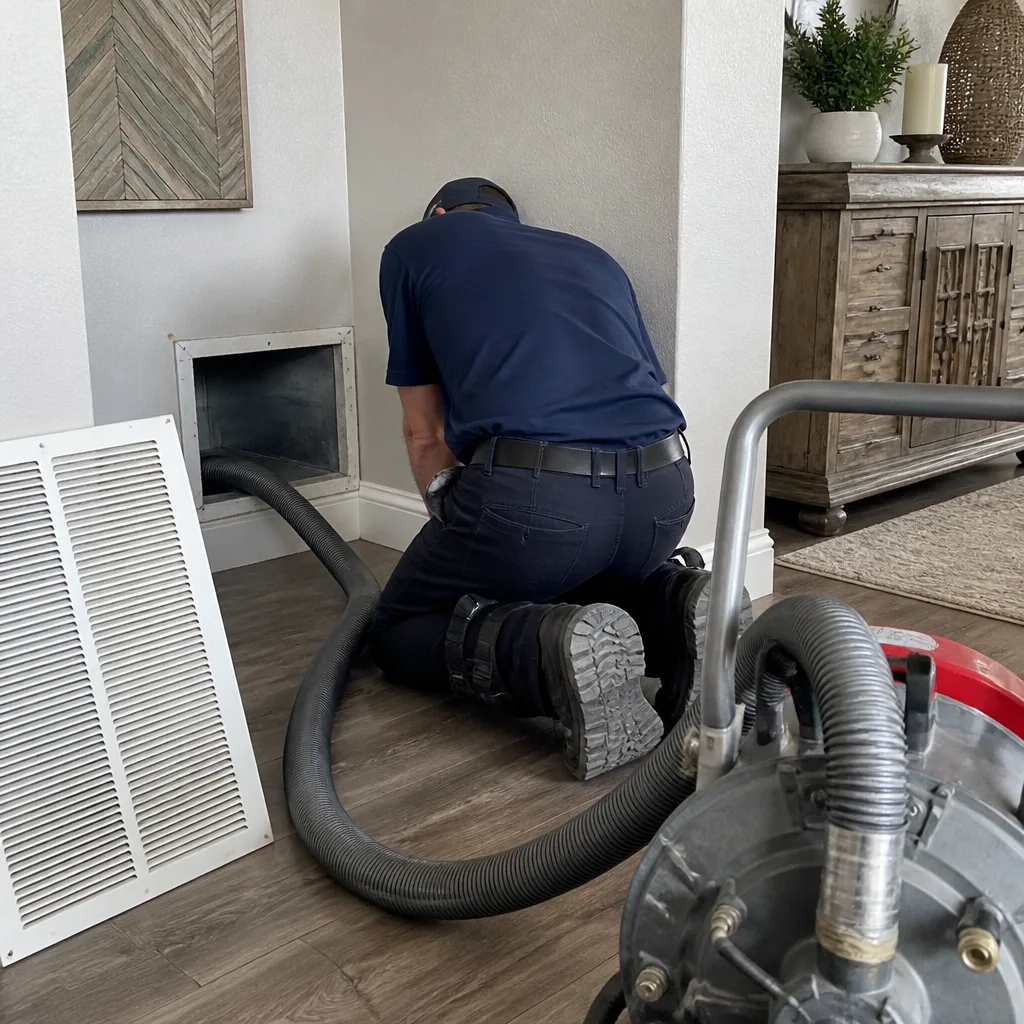 After
AfterSeasonal Air Duct Cleaning Care for Schertz: Year-Round Homeowner’s Guide
Mountain cedar pollen in Schertz peaks in December and January, not spring. That means the highest airborne particle load of the year moves through your duct system during the same months most homeowners assume their air quality problems are over. In our work across Schertz since 2013, we’ve documented this pattern repeatedly: the camera shows a 3-inch debris build-up at the first elbow that started forming in January, not July. This guide breaks down what actually happens inside Schertz ductwork across all four seasons, and how to time inspections, filter changes, and our Air Duct Cleaning services based on your home’s real conditions rather than a generic three-year interval.
Quick Answer
Schertz homeowners should inspect their ductwork after cedar season ends in February, after oak pollen subsides in May, and before heating season starts in October. Professional cleaning with full photo documentation is most valuable after the December-May pollen sequence, when layered debris is still fresh and hasn’t hardened into baked-on buildup from summer attic heat.
Table of Contents
- December-February: Cedar Season and the Hidden Particle Surge
- March-May: Oak Pollen Layering and the Case for Post-Spring Inspection
- June-September: Attic Heat Loading and Flex Duct Degradation
- October-November: The System Restart Inspection
- How to Build a Schertz-Specific Maintenance Calendar
- Equipment and Filter Choices for Schertz Conditions
- Common Mistakes to Avoid
- When to Call a Professional
- Frequently Asked Questions
BeforeAfterDecember-February: Cedar Season and the Hidden Particle Surge
Schertz sits at the edge of the Texas Hill Country cedar break, and the pollen counts from Ashe juniper - what locals call mountain cedar - routinely spike above 20,000 grains per cubic meter in late December through mid-January. For perspective, that’s roughly ten times the threshold where sensitive individuals experience symptoms. What most homeowners miss: this isn’t an outdoor problem that stays outdoors. Every time your HVAC system runs, the return side pulls that air through the grille, across the filter, and into the duct network.
Here’s what we’ve found when we put inspection cameras into Schertz homes in February. The debris isn’t evenly distributed. It concentrates at two points: the filter slot, where overloaded media begins to bypass, and the first elbow downstream of the air handler - the plenum, the central distribution box where all duct runs begin. The pollen is tacky. It adheres to duct walls rather than passing through. By late January, we’re regularly photographing a visible coating on galvanized steel ductwork that wasn’t there in November.
The filter management mistake we see most often in Schertz is running the same 1-inch fiberglass panel from Thanksgiving through Valentine’s Day. At 20,000 grains per cubic meter, that filter loads in two to three weeks, not ninety days. The pressure drop across a clogged filter increases, and the system begins pulling unfiltered air around the edges - what’s called bypass - straight into the ductwork.
What to do during this window:
- Switch to MERV 11 or higher pleated media in mid-December, before the peak.
- Inspect the filter every two weeks; replace when the media appears gray or resistance is visibly high.
- Run the fan continuously during peak pollen days rather than cycling on and off - this maintains constant filtration rather than allowing settling between cycles.
- Schedule a professional duct inspection for late February, after the pollen peak subsides but before debris hardens in place.
The February inspection timing matters. Fresh cedar pollen wipes off metal ductwork with negative-pressure extraction. Left through spring and summer, it bakes into a hardened layer that requires more aggressive cleaning and sometimes shows up as permanent staining on flex duct liner.
March-May: Oak Pollen Layering and the Case for Post-Spring Inspection
Live oak pollen in the Schertz area typically peaks in March and April, with a secondary grass pollen wave in May. The critical difference from cedar season: oak pollen is larger, heavier, and more abrasive. Where cedar pollen coats surfaces in a fine film, oak pollen accumulates in visible drifts. And because it arrives three months after cedar season, it lands on top of whatever wasn’t removed in February.
This two-season sequence - cedar base layer, oak top layer - is the single best argument for post-spring inspection rather than the more common fall scheduling. We’ve documented this pattern across hundreds of Schertz homes. The camera shows stratified buildup: a darker January layer, a lighter March layer, and often a fibrous May layer from grass and early weed pollen. Each layer has different properties. The cedar layer is tacky and adhesive. The oak layer is dry and mobile. The grass layer is fibrous and tends to snag on flex duct corrugations.
Post-spring cleaning, completed in May or early June, removes all three layers before summer heat transforms them. The combination of accumulated organic material and rising attic temperatures creates conditions for microbial growth that we don’t see in homes cleaned before June. This isn’t theoretical. In Schertz homes with south-facing attics and limited ventilation, we’ve measured duct surface temperatures above 120°F by late May. Organic debris at that temperature, with humidity from condensate lines or minor duct leakage, produces the musty odor that prompts many of our mid-summer calls.
The inspection focus in spring should include:
- The return ductwork from grille to air handler - this is where pollen concentrates
- Filter slot condition - spring pollen is when we find collapsed or improperly seated filters
- Supply register seals - oak pollen is large enough to leak through gaps that finer particles wouldn’t
- Condensate pan and drain line - spring humidity plus pollen debris creates clogs
Homes in Schertz neighborhoods with mature oak canopy - parts of Live Oak, sections of Selma near the Cibolo Creek corridor - show this layering pattern most dramatically. The pollen load correlates with tree density more than with home age or system type.
June-September: Attic Heat Loading and Flex Duct Degradation
Schertz attic temperatures routinely exceed 140°F in July and August. This isn’t uncomfortable for the technician - it’s actively destructive to certain duct materials. Flex duct, the insulated flexible tubing used in most residential construction since 1990, has a foil-faced polyester liner rated for sustained exposure to 200°F. That rating assumes dry heat. The actual failure mode we document is different: the adhesive bonding the liner to the wire helix degrades, and the insulation jacket separates from the air barrier.
What this looks like when the camera goes in: a sagging section where the liner has pulled away from the support wire, creating a bellows that traps debris. Or a section where the liner has torn at a bend, exposing fiberglass insulation to the airstream. We’ve photographed both conditions in Schertz homes built between 2005 and 2015, the peak era for flex duct installation in this market.
The degradation isn’t always visible from the outside. The insulation jacket can appear intact while the inner liner has separated. Only inspection camera footage reveals the actual condition. This is why summer inspections focus on mechanical integrity rather than cleanliness alone.
Summer-specific inspection priorities:
- Check all flex duct bends and supports - heat sagging is progressive and worsens through August
- Inspect connections at plenum and register boots - thermal expansion loosens tape and clamps
- Verify insulation jacket integrity - compressed or torn insulation raises surface temperature and accelerates liner degradation
- Document any debris that appears baked or hardened - this indicates it predates summer and wasn’t addressed in spring
Homes in Schertz with dark shingle roofs and minimal ridge ventilation experience the most extreme attic temperatures. We’ve measured 147°F in attics near the I-35 corridor where roof pitch is shallow and soffit ventilation is blocked by insulation. These conditions accelerate flex duct aging by an estimated 30-40% compared to homes with reflective roofing and active ventilation.
The equipment used for summer inspections matters. We run Rotobrush systems with high-temperature-rated hoses for these evaluations, and document with cameras rated for the humid, high-temperature environment. Consumer-grade inspection cameras often fail in these conditions, producing incomplete records.
October-November: The System Restart Inspection
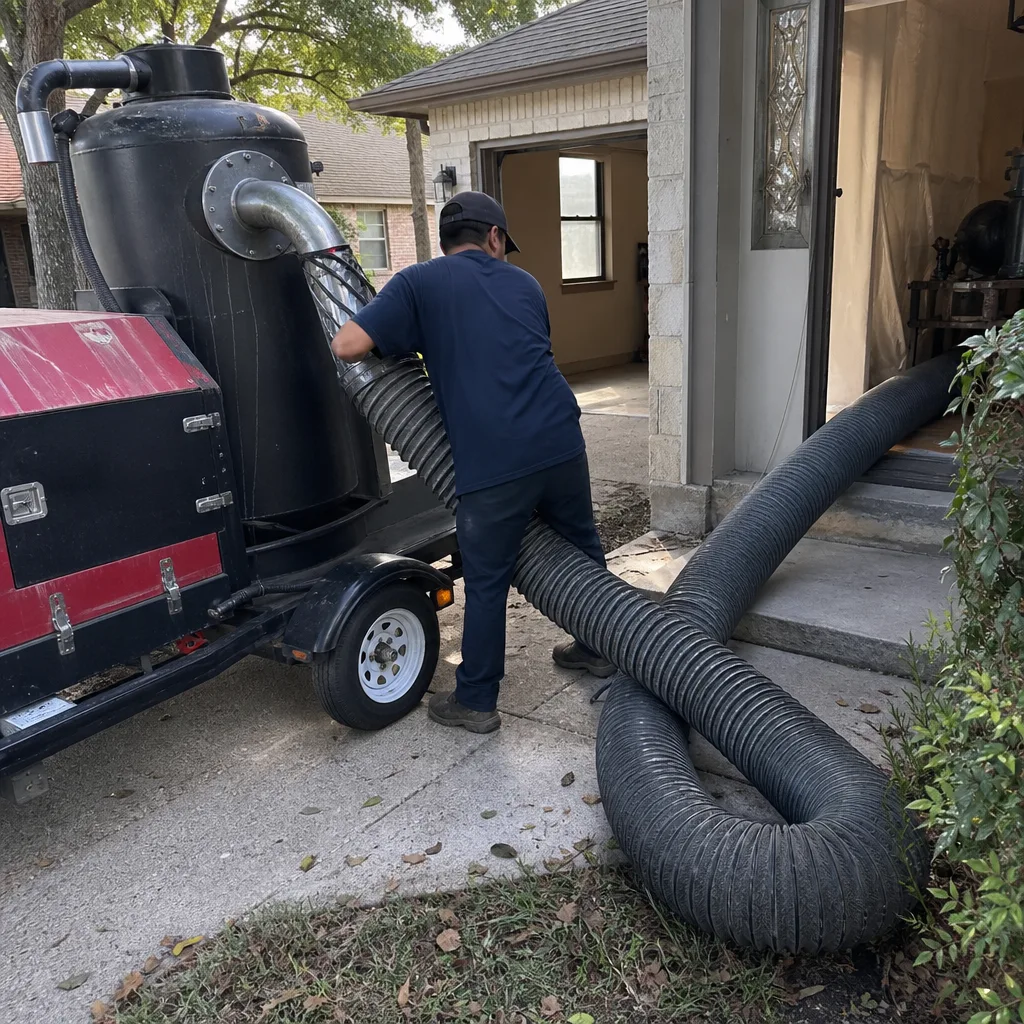
The October switch from cooling to heating in Schertz is more than a thermostat adjustment. It’s a system restart that exposes conditions that developed during five months of minimal heating operation. The inspection priorities are specific and differ from spring and summer checks.
First: heat exchanger proximity to duct openings. Gas furnaces common in Schertz homes produce combustion byproducts that must be completely separated from supply air. The heat exchanger - the metal barrier between flame and airflow - can develop cracks or separations during summer thermal cycling. When heating begins, these defects allow carbon monoxide into supply ducts. We don’t test for CO with a duct camera; we inspect the physical condition of the exchanger and the seal integrity at the plenum connection. But the duct inspection is where we often find evidence of problems: soot staining on supply duct walls near the furnace, or abnormal thermal patterns on infrared inspection.
Second: pest activity during the off-season. Schertz’s warm fall extends rodent and insect activity into November. We’ve found snake skins in return plenums, wasp nests in unused duct runs, and rodent droppings at register boots in homes with no other pest evidence. The fall inspection catches these before heating air distributes particles throughout the home.
Third: filter and media condition after summer. Many homeowners run the same filter from May through October, assuming light use means light loading. In Schertz, summer dust - caliche soil, construction debris from ongoing development, wildfire smoke from distant burns - loads filters differently than pollen. The debris is finer and more abrasive. We’ve cut open filters that appeared clean but showed significant pressure drop from embedded mineral dust.
Fall inspection checklist:
- Visual heat exchanger assessment through access panel
- Plenum seal and tape condition at furnace connection
- Register boot and grille fastener integrity
- Filter media replacement with winter-rated pleated media
- Humidifier pad or media inspection, if equipped - Aprilaire and Honeywell units are common in this market
- Thermostat heat anticipator or cycle verification
The October-November window is also when we recommend scheduling any needed cleaning before the holiday hosting season. Ductwork disturbed in December distributes debris during the period when homes are most occupied.
How to Build a Schertz-Specific Maintenance Calendar
Generic advice says clean ducts every three to five years. That interval ignores what actually enters Schertz ductwork and when. A calendar based on your home’s documented findings is more useful and more economical. For a detailed look at pricing factors, see our Air Duct Cleaning Cost Breakdown: The Schertz Homeowner’s Reference for 2026.
Start with a baseline inspection. A professional camera inspection of every duct run establishes what’s actually present: debris type, depth, location, and any mechanical issues. This isn’t a cleaning. It’s documentation. The photo record becomes your reference point for all future decisions.
From that baseline, build intervals based on what the camera showed:
| Finding | Recommended Action | Timing |
|---|---|---|
| Light coating, no layering, intact flex duct | Filter upgrade, re-inspect in 18 months | Post-spring, after pollen sequence |
| Visible stratification (2+ pollen seasons) | Full cleaning with photo documentation | Late May, before summer baking |
| Flex duct liner degradation or separation | Duct repair or replacement, then cleaning | October, before heating season |
| Pest evidence or moisture staining | Remediate source, then full cleaning | Immediate, regardless of season |
| Post-renovation debris (construction dust) | Full cleaning before occupancy | After final cleanup, before move-in |
Filter replacement should follow its own calendar, unrelated to cleaning intervals. In Schertz, we recommend:
- December 1: Install fresh MERV 11 pleated media
- January 15: Inspect, replace if loaded
- March 1: Inspect after cedar season, replace regardless of appearance
- May 1: Inspect after oak season, replace if loaded
- September 1: Install fresh media before fall restart
Homes with multiple occupants, pets, or located near construction zones - common in developing Schertz areas like the FM 3009 corridor - should inspect filters monthly and clean more frequently based on visual evidence rather than calendar.
The key principle: let the photo record drive decisions. If the March inspection shows clean ductwork, you don’t need cleaning. If the May inspection shows significant buildup, schedule before summer. For a seasonal task framework, see our Air Duct Cleaning Maintenance Checklist for Schertz Homeowners. No contractor’s preferred interval should override your documented conditions.
Equipment and Filter Choices for Schertz Conditions
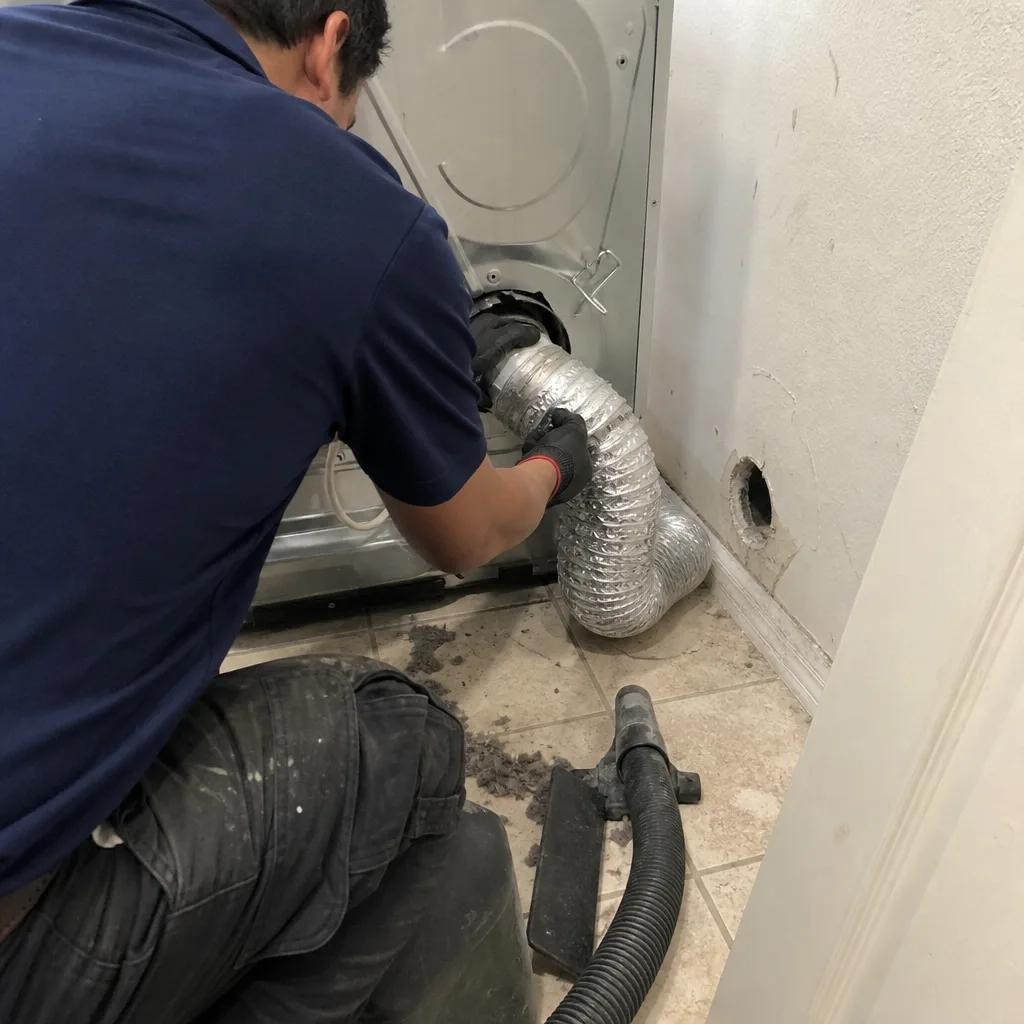
The equipment used for duct cleaning and the filters installed afterward both affect outcomes. Schertz’s specific conditions - high pollen loads, extreme attic temperatures, caliche dust - reward certain choices and penalize others.
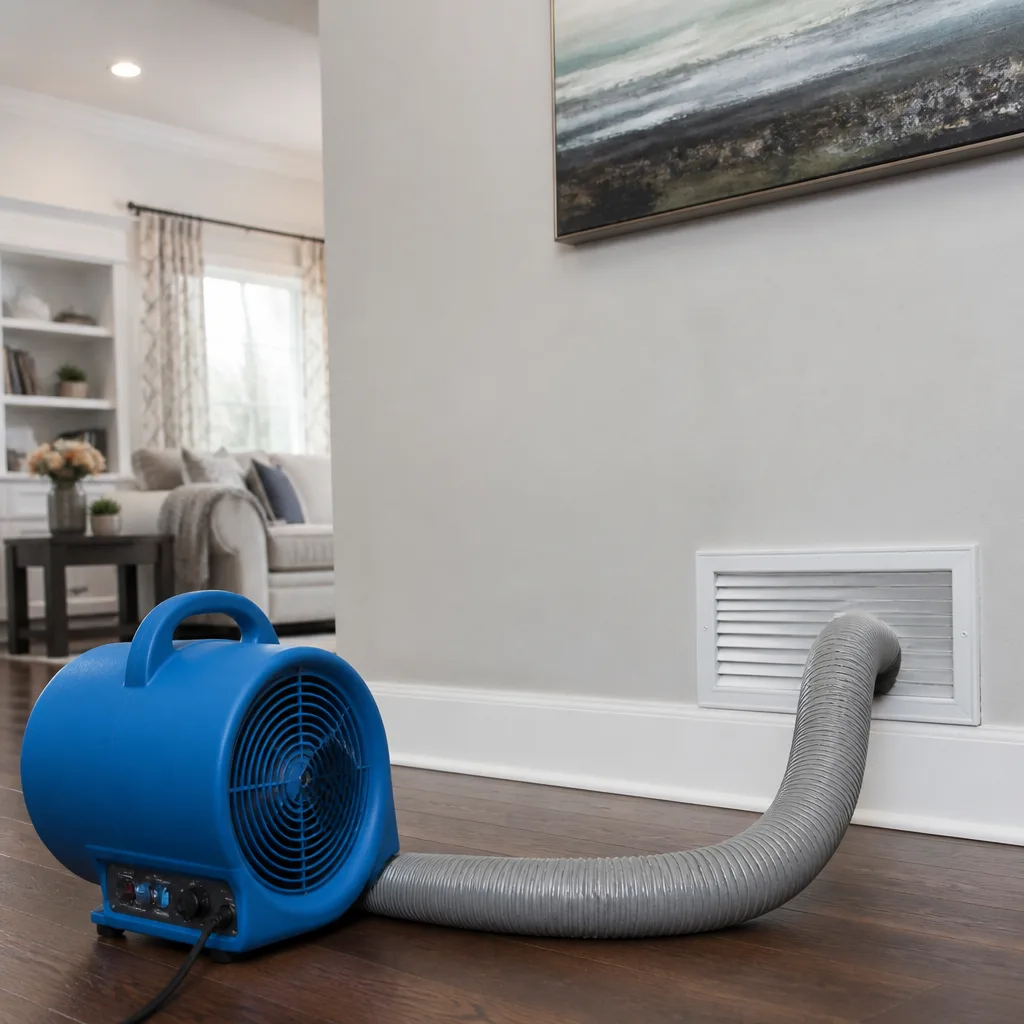
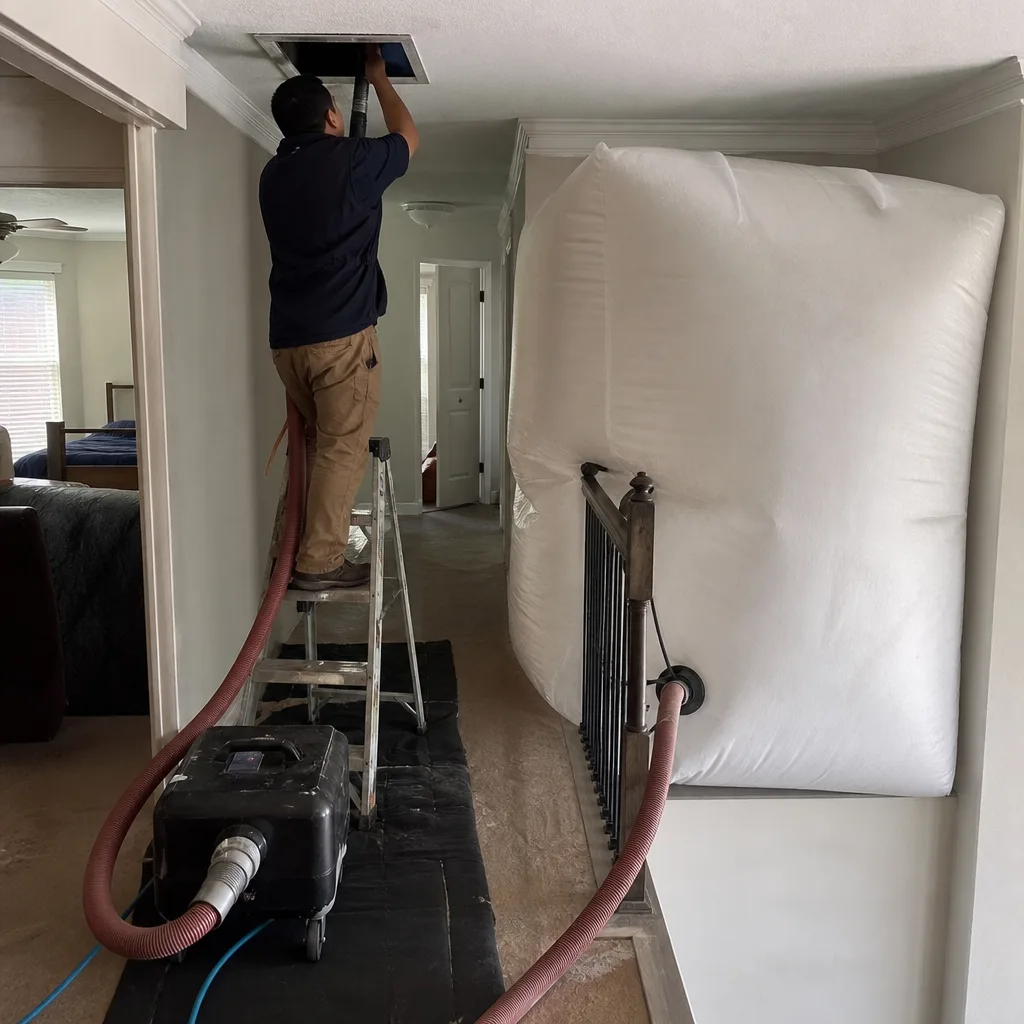
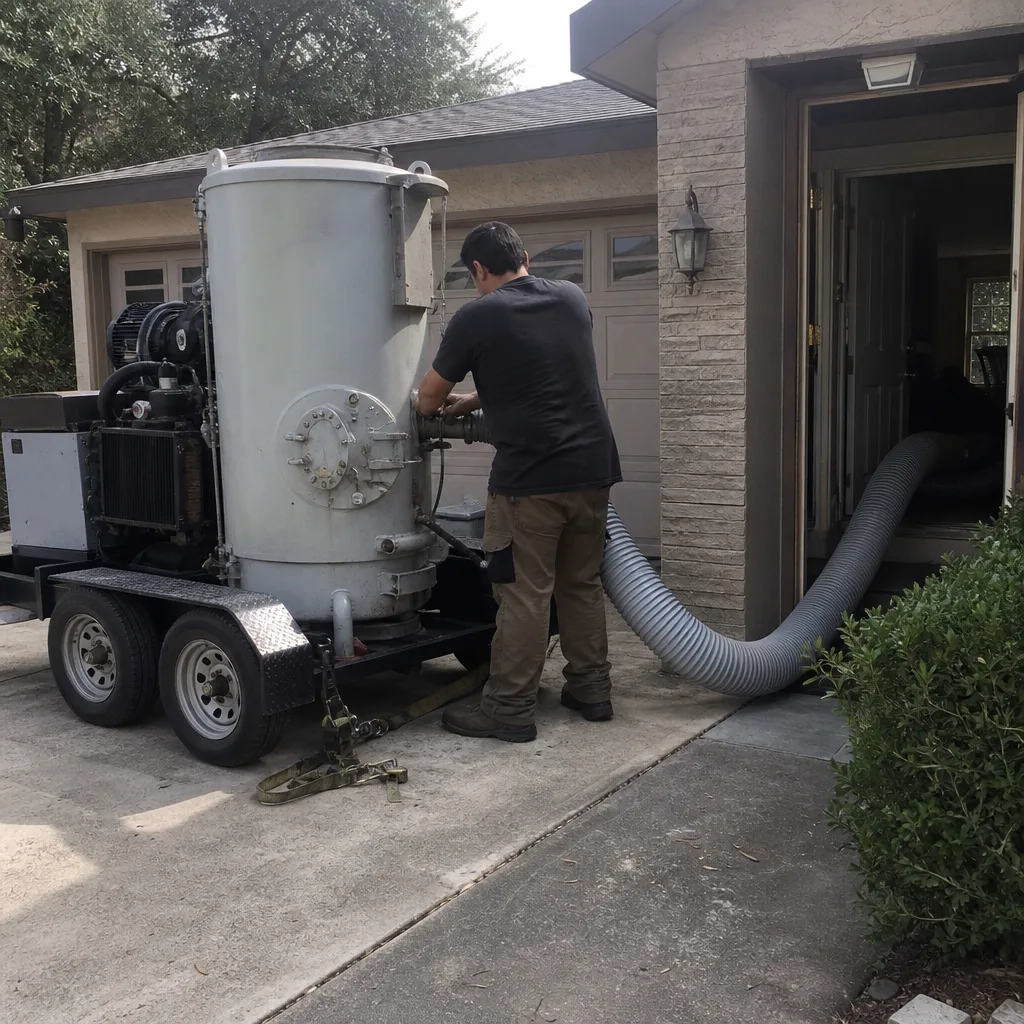
For professional cleaning, negative-pressure extraction is the standard method. A vacuum unit, typically mounted on a truck or portable unit, creates suction at the duct system while agitation tools loosen debris. The brand matters less than the technique, but equipment capability does vary. We use Nikro portable units for homes where truck access is limited, and Rotobrush contact vacuum systems for heavy debris removal in lined ductwork. Abatement Technologies HEPA filtration on exhaust air prevents redistribution of fine particles during cleaning.
For filters, the Schertz pollen load makes the case for higher MERV ratings than national guidance suggests. MERV 8, the common default, captures less than 50% of particles in the 1-3 micron range - the size of cedar pollen. MERV 11 captures 85% or more. MERV 13 captures over 90% but may require system modification to handle the increased pressure drop.
Filter types we specify for Schertz conditions:
- Pleated media, 2-inch or 4-inch depth if the filter slot accommodates - greater surface area extends service life
- Electrostatic enhancement for homes with high pet dander or occupancy
- Carbon or potassium permanganate layer for homes near industrial or highway sources - less common in Schertz but relevant for some I-35 corridor properties
Electronic air cleaners, including Honeywell and Aprilaire whole-house units, supplement rather than replace media filtration. They reduce particle load on filters but require maintenance - cell washing every 3-6 months in Schertz conditions. We’ve found many installed units non-functional due to neglected maintenance. An inspection should verify operation, not just presence.
UV-C germicidal lamps address microbial growth, not particulate debris. They’re useful in Schertz homes with documented moisture issues or where evaporator coil cleanliness is problematic. They don’t reduce pollen loading and shouldn’t be marketed as a substitute for cleaning.
Common Mistakes to Avoid
- Waiting for visible dust at registers. By the time debris reaches supply registers, the duct system is heavily loaded. The camera shows problems at the plenum and first elbows long before register evidence appears.
- Scheduling cleaning in October because “that’s when you think about heating.” Fall cleaning in Schertz means disturbing debris right before the highest-occupancy season. Spring cleaning removes the pollen sequence before summer bakes it in place.
- Using the cheapest filter that fits the slot. Fiberglass panel filters - the blue or green mesh type - are structural protection for the coil, not air cleaning devices. In Schertz pollen conditions, they’re essentially decorative after two weeks.
- Ignoring flex duct condition during cleaning. A system with degraded liner can’t be cleaned effectively. Debris trapped in separated liner pockets will release after the crew leaves. The inspection must assess mechanical condition before cleaning begins.
- Accepting “blow and go” service without documentation. Without before-and-after photos of every duct run, you have no evidence the work occurred. The CleanRun Air Duct Cleaning Schertz home page explains our documented photo record standard.
- Assuming new construction means clean ducts. We’ve photographed construction debris - drywall dust, wood shavings, fastener fragments - in Schertz homes less than two years old. Builder cleanup doesn’t include ductwork.
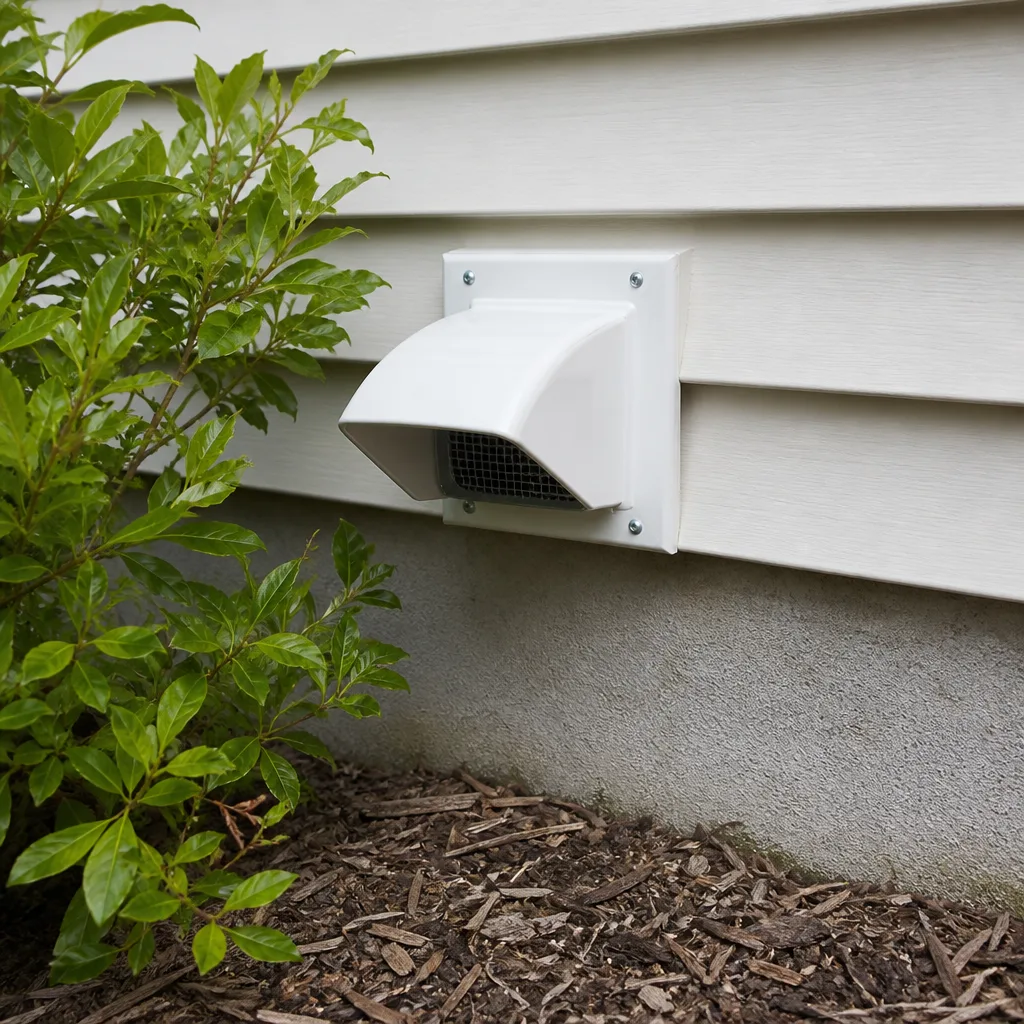
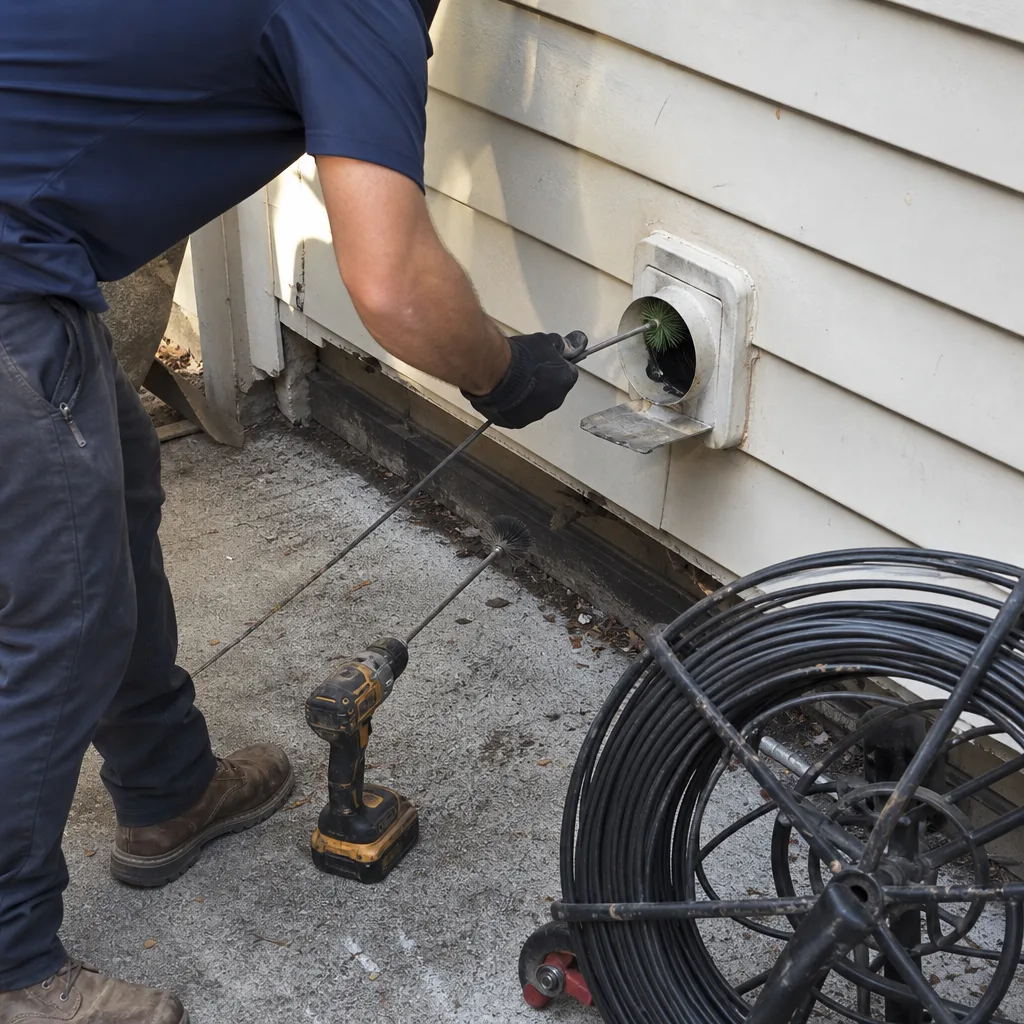
- Neglecting dryer vent cleaning in the seasonal calendar. Lint accumulation peaks in winter when heavier fabrics are dried more frequently. The Dryer Vent Cleaning in Schertz page covers timing specific to local conditions.
When to Call a Professional
Some conditions require immediate professional assessment regardless of calendar position. Call for inspection if you notice uneven airflow between rooms, musty odors when the system starts, visible mold on registers or in the return grille, or debris expelled from supply vents. These symptoms indicate active problems that worsen with delay.
Also call after any event that could introduce contamination: renovation work, roof leaks, pest remediation, or water damage. The duct system is connected to every room. Contamination in one area distributes throughout.
CleanRun Air Duct Cleaning Schertz offers free estimates in Schertz. Every estimate includes a written price before any work begins, under Haven Standard Clause 1, and a documented photo record of every duct run is included as standard on every job. For more guides & resources, visit our blog. Call (830) 402-5110 to schedule.
Frequently Asked Questions
Whole-system air duct cleaning in Schertz typically ranges from $450 to $850 for a standard single-system home, depending on duct configuration, accessibility, and contamination level. CleanRun provides a written price before any work starts - no per-vent pricing, no add-ons once the truck arrives. Call (830) 402-5110 for an exact quote; estimates are free.
The $79-$149 coupon offers typically cover a brief vacuuming of accessible register boots, not full-system cleaning. The full scope - negative-pressure extraction of every duct run, before-and-after photo documentation, and mechanical inspection - requires proper equipment and time. We’ve been called to homes in Schertz where a “cheap” service left debris intact in the plenum and flex duct runs. Haven Standard Clause 1 requires written upfront pricing so you know the full scope before work begins.
Demand a documented photo record of every duct run, before and after. CleanRun has delivered this on every job since 2013 - it’s part of the standard job record, not an upgrade. If a contractor can’t show you the inside of your ducts, you can’t verify the work occurred.
Every 2-4 years for most homes, but the interval should be driven by documented findings, not calendar. Homes under heavy oak canopy, near construction, or with multiple pets may need annual inspection. Homes with minimal tree exposure and excellent filtration may extend to 5 years. The baseline inspection establishes your specific interval.
Consumer-grade equipment can’t achieve negative-pressure extraction or reach past the first few feet of ductwork. More importantly, disturbing debris without proper containment and HEPA filtration redistributes particles throughout your home. For register and grille surface cleaning, a homeowner can do this safely. For the duct system itself, professional equipment and technique are required for effective results.
Moderately, in specific conditions. A heavily loaded duct system increases static pressure, which reduces airflow and makes the blower work harder. Cleaning restores design airflow. However, the efficiency gains are typically 5-15% in affected systems, not the dramatic savings sometimes claimed. The primary benefit is air quality and system longevity, not utility bill reduction.
The Bottom Line
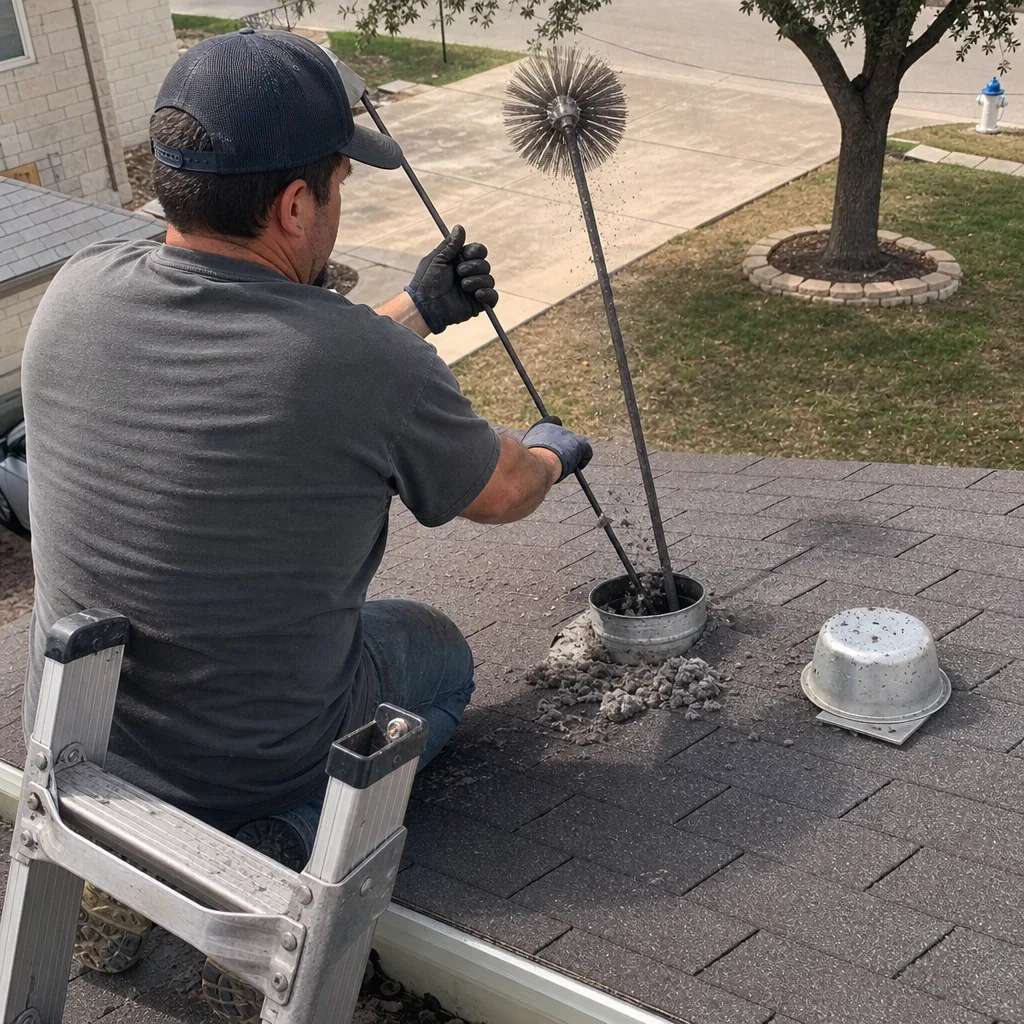
Schertz’s climate creates a predictable sequence of duct contamination: cedar base layer in winter, oak and grass layering in spring, summer heat baking it all in place, fall restart exposing mechanical issues. A maintenance calendar built around these actual conditions - February inspection after cedar, May cleaning before baking, October mechanical check before heating - outperforms any generic interval. Start with a baseline camera inspection. Let the photo record drive your decisions. And demand documentation on every service, because evidence is the only protection against an industry that too often sells noise instead of results.
Written by Tomas Reyes, Owner at CleanRun Air Duct Cleaning Schertz, serving Schertz since 2013.