
Last updated September 23, 2026
Whole-system duct and dryer vent check with before-and-after photos - you see exactly what came out of your vents
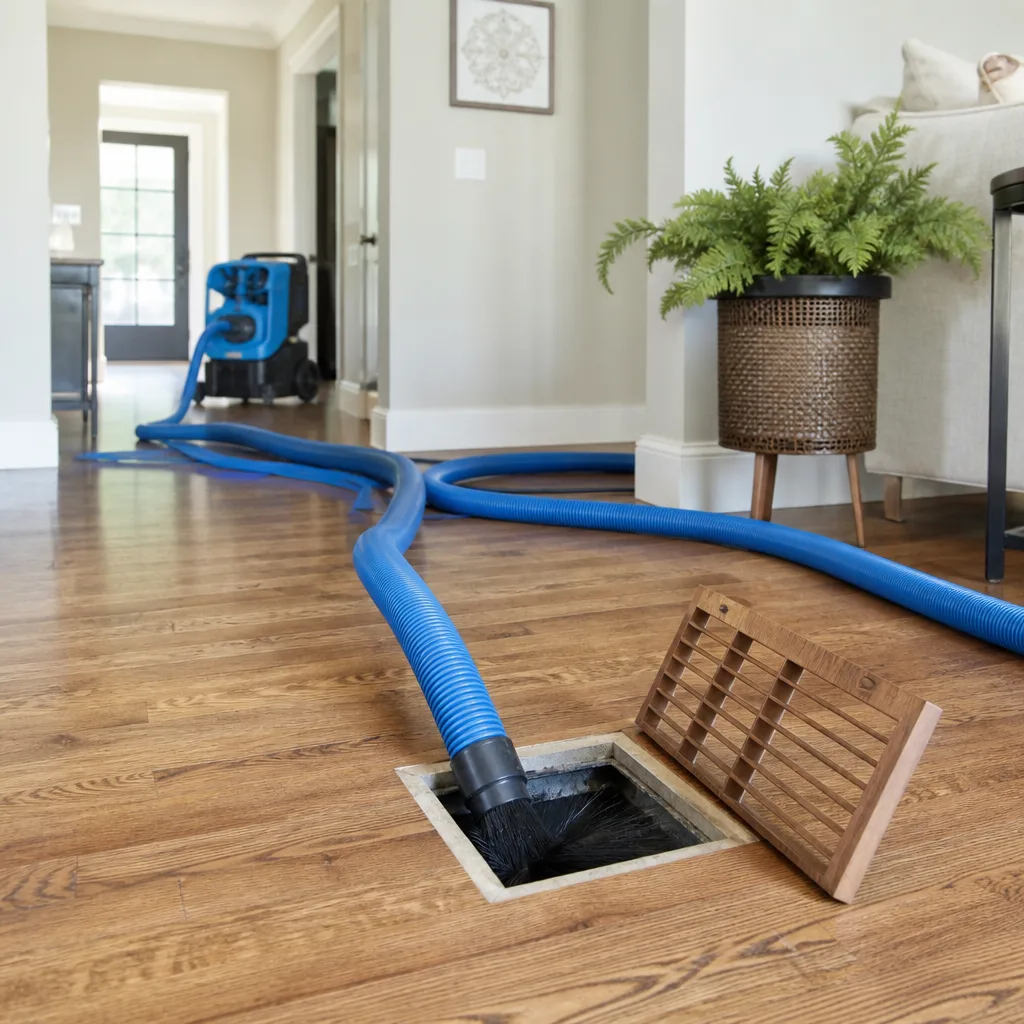
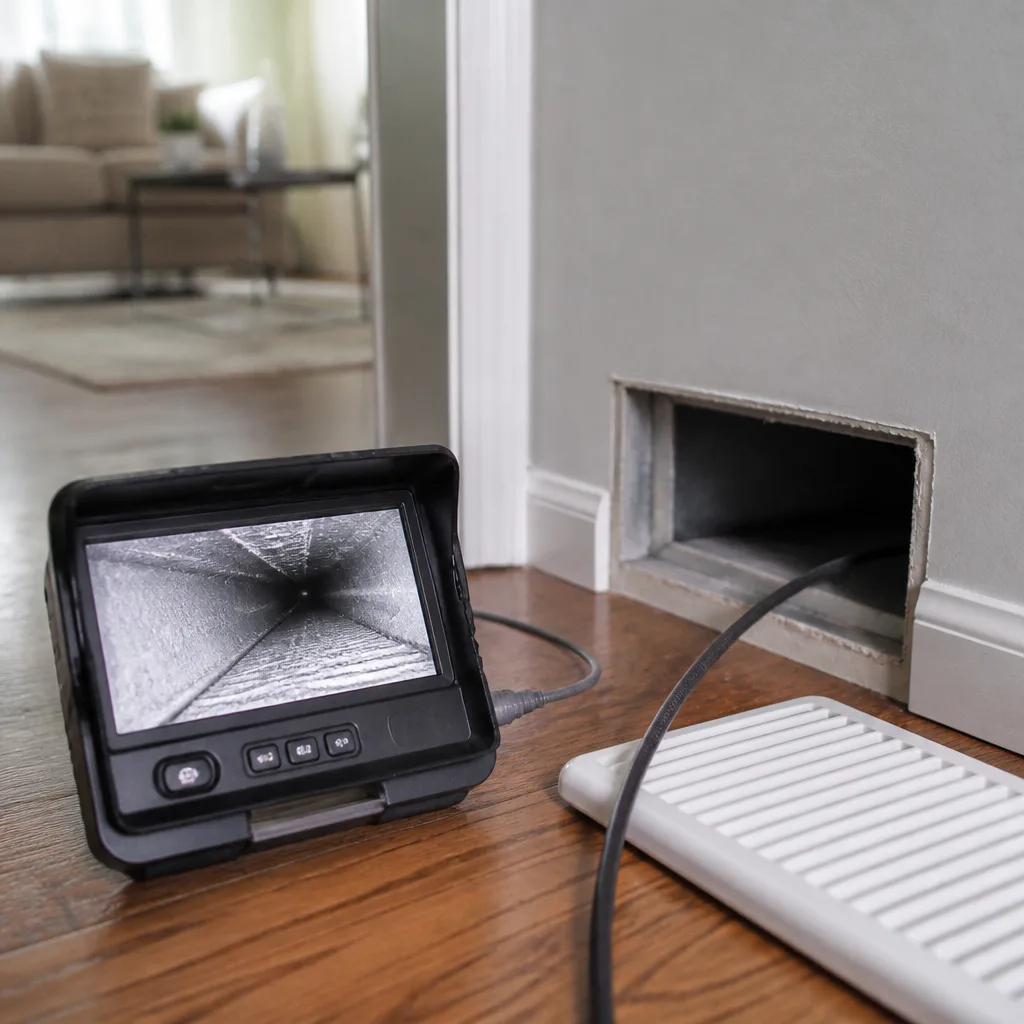
That "$99 whole-house special" is a bait ad - the real number appears once they are in your hallway, or the "clean" is a shop-vac at the register. We photograph the inside of your ducts before and after instead.
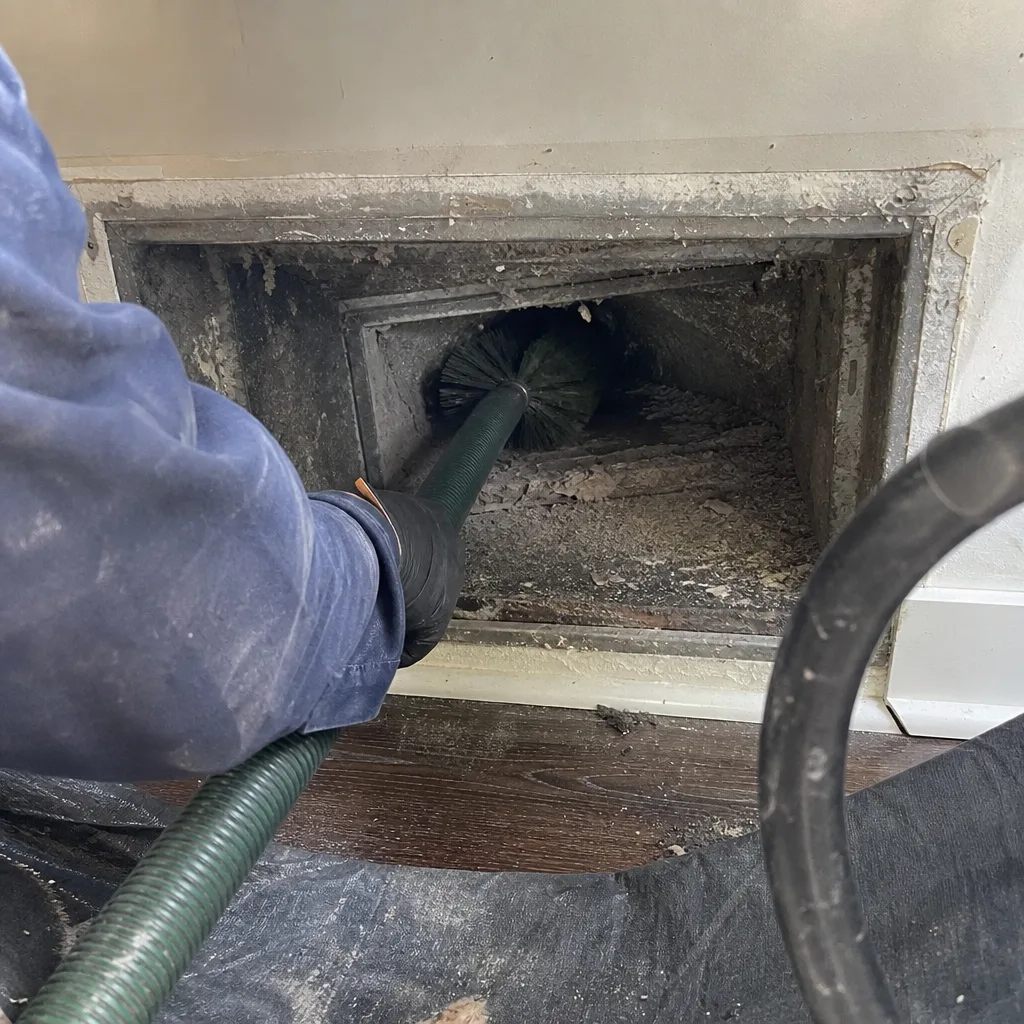 Before
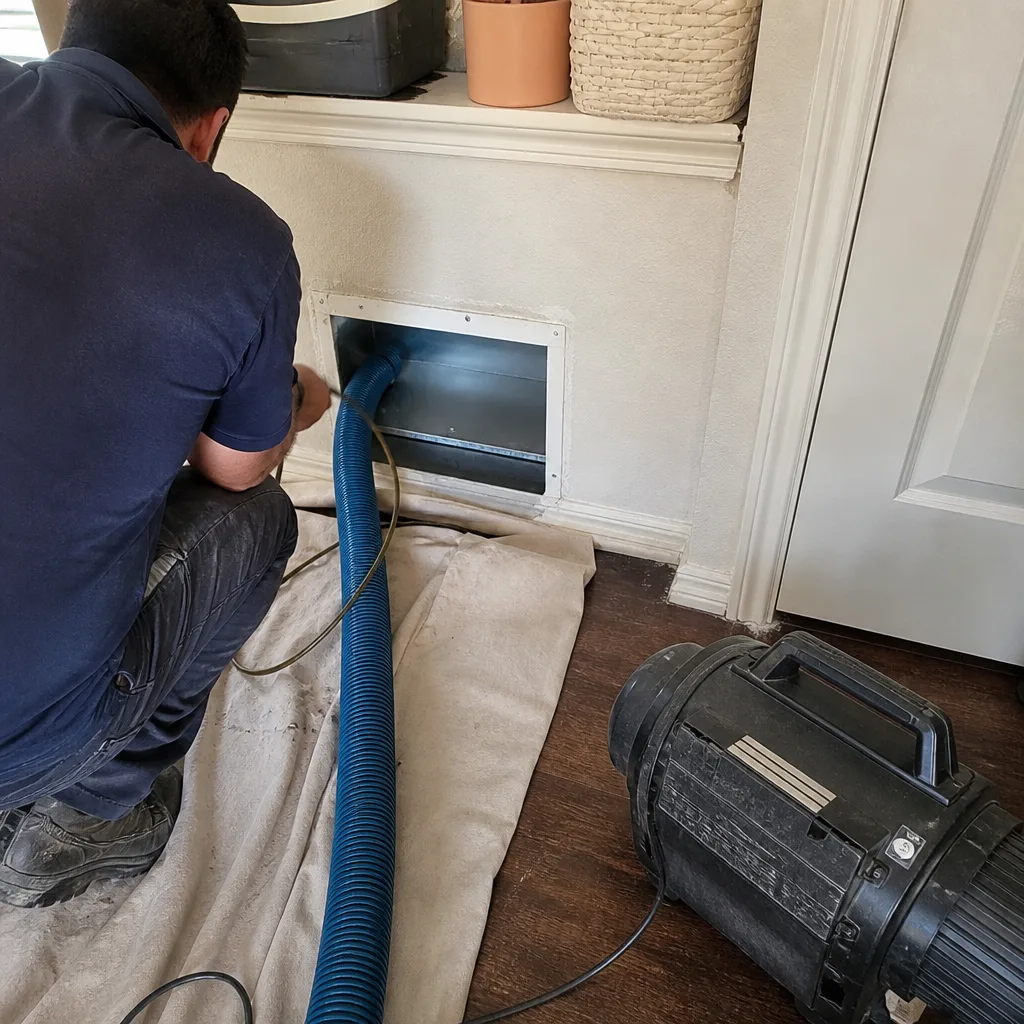 After
After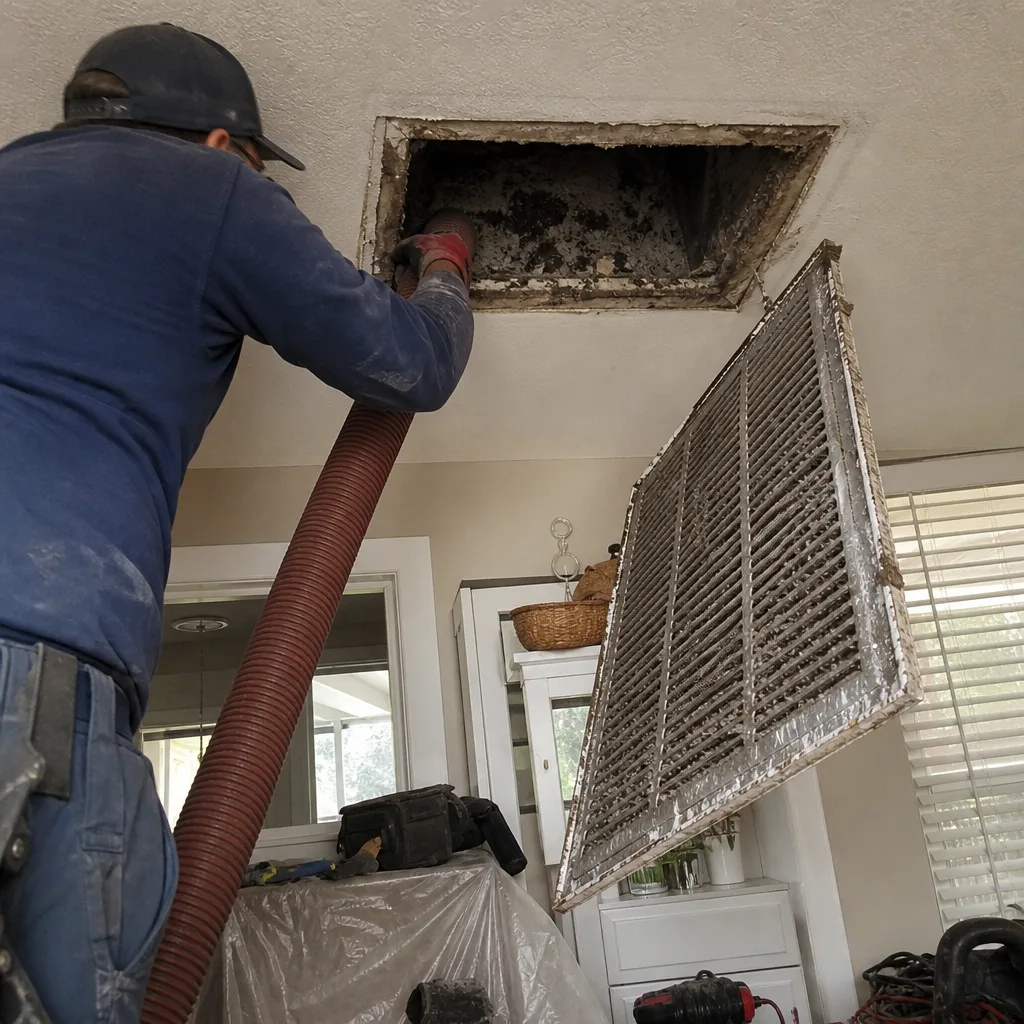 Before
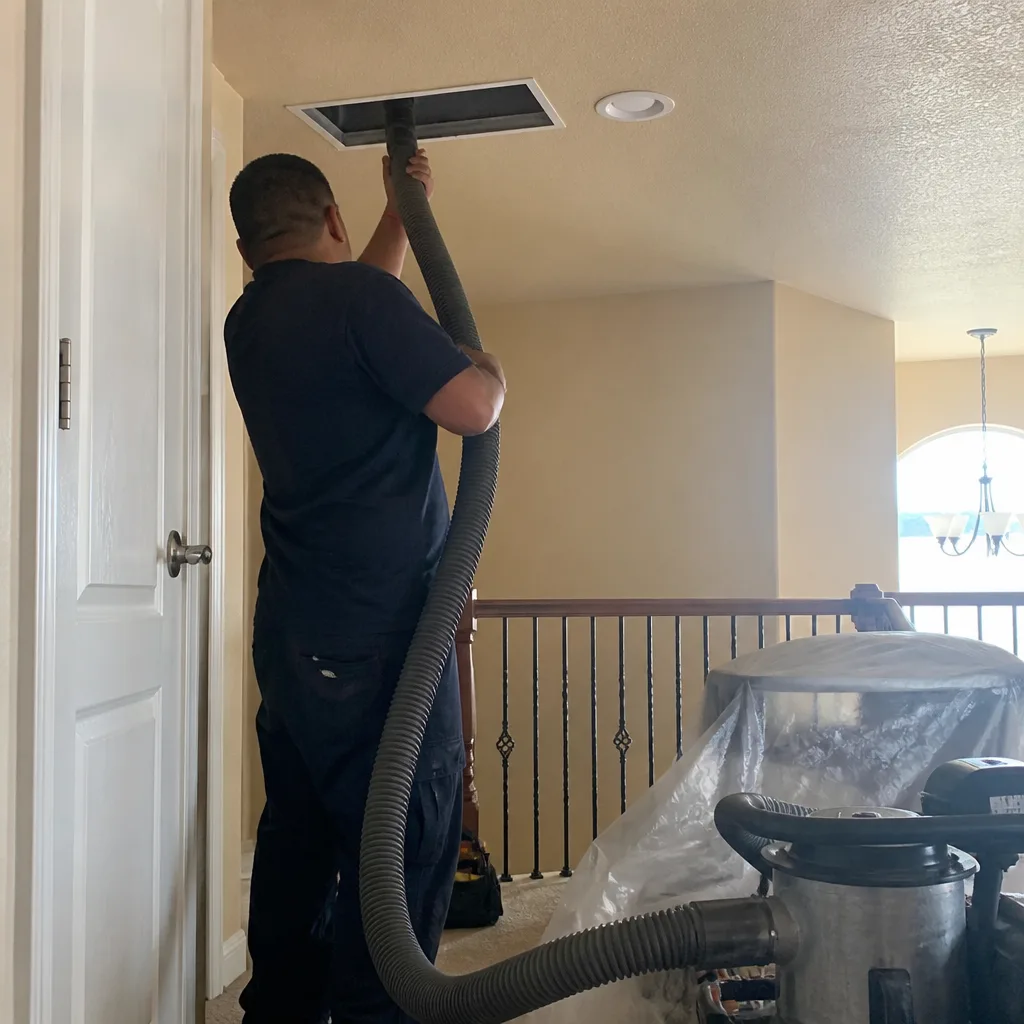 After
After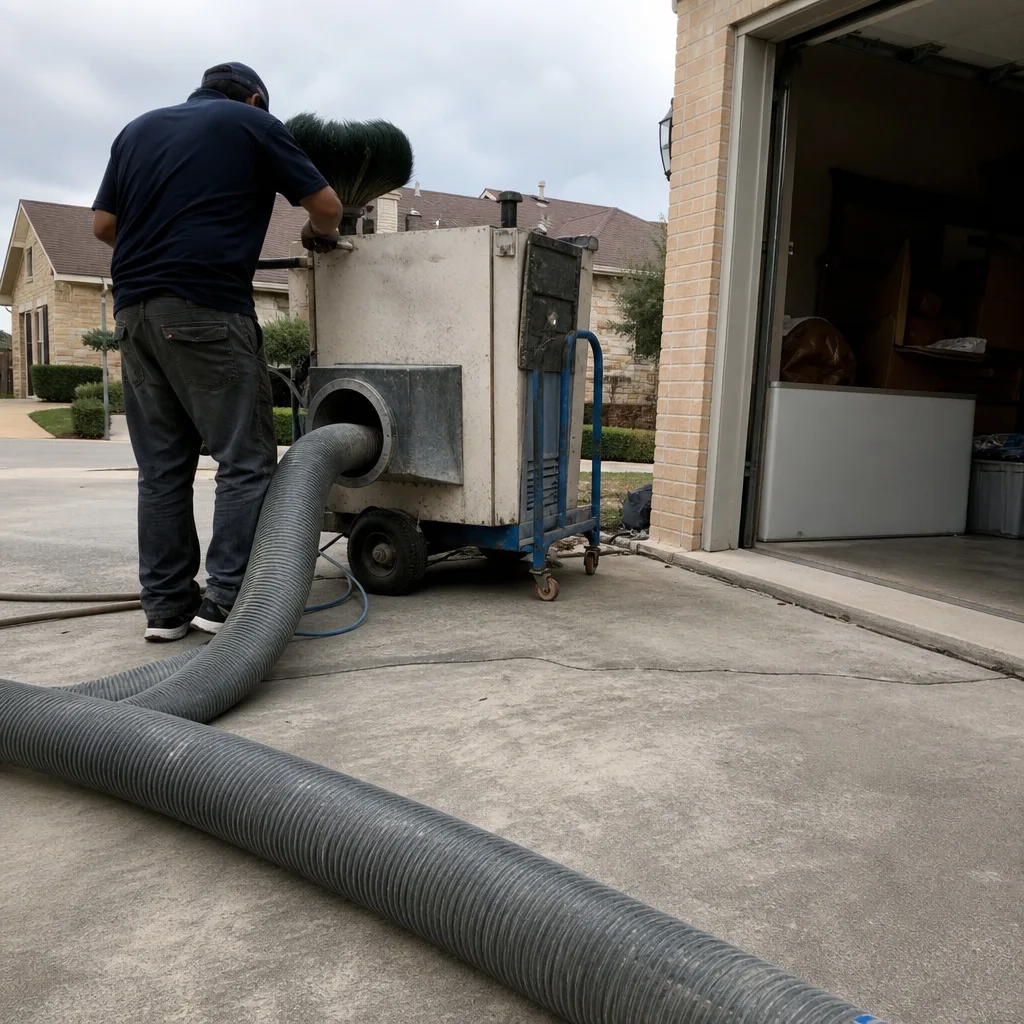 Before
 After
AfterAir Duct Cleaning Warning Signs: A Schertz Homeowner’s Reference Guide
Most Schertz homeowners who call us describe the same problem four different ways: “the house smells weird when the AC runs.” But a musty smell when the compressor kicks on is not one warning sign. It is at least four distinct problems, two of which have nothing to do with your ducts at all. Lumping them together is how people pay for duct cleaning when they actually need a condensate drain cleared or an evaporator coil treated. In The Complete Guide to Air Duct Cleaning in Schertz, we will show you how to separate the symptoms that point to dirty ductwork from the ones that point elsewhere, so you can describe what you observed with enough precision that a technician can form a hypothesis before opening the first register cover.
Quick Answer
The warning signs that actually indicate Air Duct Cleaning services are needed in a Schertz home include: visible dust blasting from supply registers when the system cycles; persistent musty or organic odors that intensify only when the blower runs; uneven room temperatures combined with low airflow at distant registers; and confirmed debris buildup visible during a camera inspection of the duct runs. Smells that persist when the system is off, electrical odors, or temperature differences that shift with outdoor conditions typically point to non-duct issues.
Table of Contents
- How to Differentiate Duct Odors: Musty, Dusty, Acrid, and Organic
- Visible Dust at Registers: Normal Settling vs. Active Redistribution
- Uneven Room Temperatures in Schertz: Duct Leakage, Damper Failure, or Undersized Runs
- Post-Renovation Particulate: What Drywall Dust and Insulation Fiber Look Like Inside Ducts
- Dark Ghosting Around Supply Registers: What It Reveals About Airflow and Filtration
- Confirmed Pest Evidence: The Warning Sign That Requires Immediate Action
- Common Mistakes to Avoid
- When to Call a Professional
- Frequently Asked Questions
BeforeAfterHow to Differentiate Duct Odors: Musty, Dusty, Acrid, and Organic
Not every smell that travels through your ducts originates in your ducts. The location of the odor source determines whether cleaning will solve the problem or waste your money. Here is how to tell them apart.
Musty Odors
A musty smell that intensifies when the blower starts but fades within minutes usually indicates microbial growth on the evaporator coil or in the condensate pan, not the ducts themselves. In Schertz, where summer humidity regularly pushes dew points above 70°F, coil pan overflows and drain line clogs are common from May through October. The smell is carried into living spaces through the supply ducts, so homeowners naturally blame the ducts. But cleaning the duct runs without treating the coil and clearing the drain line leaves the source intact. We see this misdiagnosis regularly in homes near the Cibolo Creek watershed, where higher water tables keep basements and utility rooms damp year-round.
True duct-source mustiness comes from moisture that entered the duct system itself, usually through a disconnected return duct in a crawl space or attic. The liner inside sheet metal ducts, a fibrous insulation layer bonded to the interior surface, holds moisture and supports mold growth when humidity exceeds 60% for extended periods. The smell builds while the system is off and releases in a concentrated wave when the blower restarts. If the smell is strongest at the first cycle of the day and weakens with continuous operation, suspect the liner, not the coil.
Dusty or “Heated Dust” Odors
This is the smell of accumulated particulate being disturbed. It is most common at the first heating cycle of fall or after a period of system inactivity. The odor is dry, slightly metallic, and short-lived. If it persists beyond the first few cycles, the dust load in the ducts is substantial enough to require cleaning. In our experience across Schertz homes built during the 2015-2022 construction boom, we find elevated dust accumulation in homes where the HVAC contractor used flex duct with rough interior surfaces that trap particulate more aggressively than smooth sheet metal.
Acrid or Electrical Odors
Never attribute an acrid, sharp, or electrical smell to dirty ducts. This indicates overheating components, failing blower motors, or compromised wiring. Shut the system off and call an HVAC technician. Duct cleaning will not address this and delays necessary electrical repair.
Organic or Decomposition Odors
A smell of decay, urine, or animal waste that strengthens near specific registers indicates pest activity inside the duct system. This is the one warning sign that always requires immediate professional inspection. We cover this in detail below, but the key distinction is localization: organic duct odors are strongest at the register closest to the nest or entry point, and they persist regardless of whether the system is running.
Key distinction: Note whether the smell changes when the system cycles. Coil and drain problems intensify with blower operation. Duct-liner mustiness releases at startup then fades. Pest odors are constant and localized. Electrical odors demand immediate shutdown.
Visible Dust at Registers: Normal Settling vs. Active Redistribution
Dust on your register covers is normal. Dust blasting from your registers when the system cycles is not. The difference is whether the particulate is settling from room air or being propelled from inside the duct system.
How to Test for Active Redistribution
- Clean a supply register cover thoroughly with a damp cloth and dry it completely.
- Do not run the system for at least four hours, preferably overnight.
- Place a white sheet of paper directly beneath the register, folded to catch any falling debris.
- Start the system and observe the register during the first full cycle.
If fine particulate, hair, or insulation fragments appear on the paper within the first two minutes of blower operation, the dust source is inside the duct run, not the room. This is active redistribution. The debris is being pulled from the duct interior and delivered into your living space.
Normal settling produces a gradual, even coating on horizontal surfaces over days or weeks. Active redistribution produces visible ejection during system cycles, often with larger particles like carpet fiber, insect fragments, or construction debris that could not have originated from normal room air.
What the Debris Tells You
The composition of expelled debris indicates the source:
- Fine gray dust with paper fiber: Likely drywall particulate from original construction or renovation, common in Schertz homes built 2015-2022.
- Black, greasy streaks: Indicates return duct leakage pulling air from garage, attic, or crawl space where combustion byproducts or automotive particulate enter.
- Fibrous, itchy material: Insulation fiber from damaged flex duct or deteriorated duct liner, requires repair before cleaning.
- Uniform household dust with pet hair: Normal accumulation in an older system; cleaning will reduce but not eliminate this source, as room air continuously reintroduces particulate.
We document this with our Air Duct Cleaning in Schertz service using a photo record of the first register inspection, so homeowners see exactly what debris type is present before any work is priced.
Uneven Room Temperatures in Schertz: Duct Leakage, Damper Failure, or Undersized Runs
A room that runs three to five degrees warmer in summer is one of the most common complaints we hear in Schertz, particularly in two-story homes in the Willow Grove and Pasadera communities where builders specified minimum-code duct sizing during the 2017-2020 construction period. But uneven temperatures have multiple causes, and duct cleaning addresses only one of them.
Duct Leakage
When supply ducts run through unconditioned attics in Schertz’s 115°F summer peak, leakage at joints and seams dumps cooled air into the attic before it reaches the register. The room receives insufficient airflow and warms. You can identify this pattern by comparing temperatures at the register face versus the room center: if the register air is appropriately cool but the room never reaches setpoint, the air is leaking before arrival. We verify this with a pressure pan test during our inspection, measuring static pressure at each register against the design specification for that duct run.
Damper Failure
Zone systems and some single-zone installations use manual or motorized dampers to balance airflow. A stuck or failed damper can starve one branch while over-supplying another. The diagnostic clue is sudden onset: a room that previously conditioned properly now does not. Duct leakage develops gradually. Damper failure appears abruptly, often after a season change when the system transitions between heating and cooling modes.
Undersized Supply Runs
In Schertz’s newer subdivisions, we regularly find 6-inch supply ducts serving 150-square-foot rooms with south- and west-facing windows. The duct run is simply too small to deliver sufficient CFM (cubic feet per minute) to offset the solar heat gain. No amount of cleaning will fix this. The solution is duct modification or augmentation, which we price separately under our HVAC Cleaning in Schertz service scope.
The Diagnostic Sequence
Before calling any contractor, perform this three-step check:
- Verify that the room’s return air path is unobstructed. A blocked return, even a partially closed door without a transfer grille, creates pressurization that reduces supply airflow.
- Check the register face velocity with a simple tissue test: hold a tissue against the register. If it barely adheres or falls, airflow is inadequate for the room load.
- Note whether the temperature differential is consistent or varies with outdoor conditions. Duct leakage worsens as attic temperature rises. Undersized runs struggle at peak load but may perform adequately mornings and evenings.
Bring these observations to your technician. A specific description saves diagnostic time and prevents unnecessary cleaning when the problem is mechanical.
Post-Renovation Particulate: What Drywall Dust and Insulation Fiber Look Like Inside Ducts
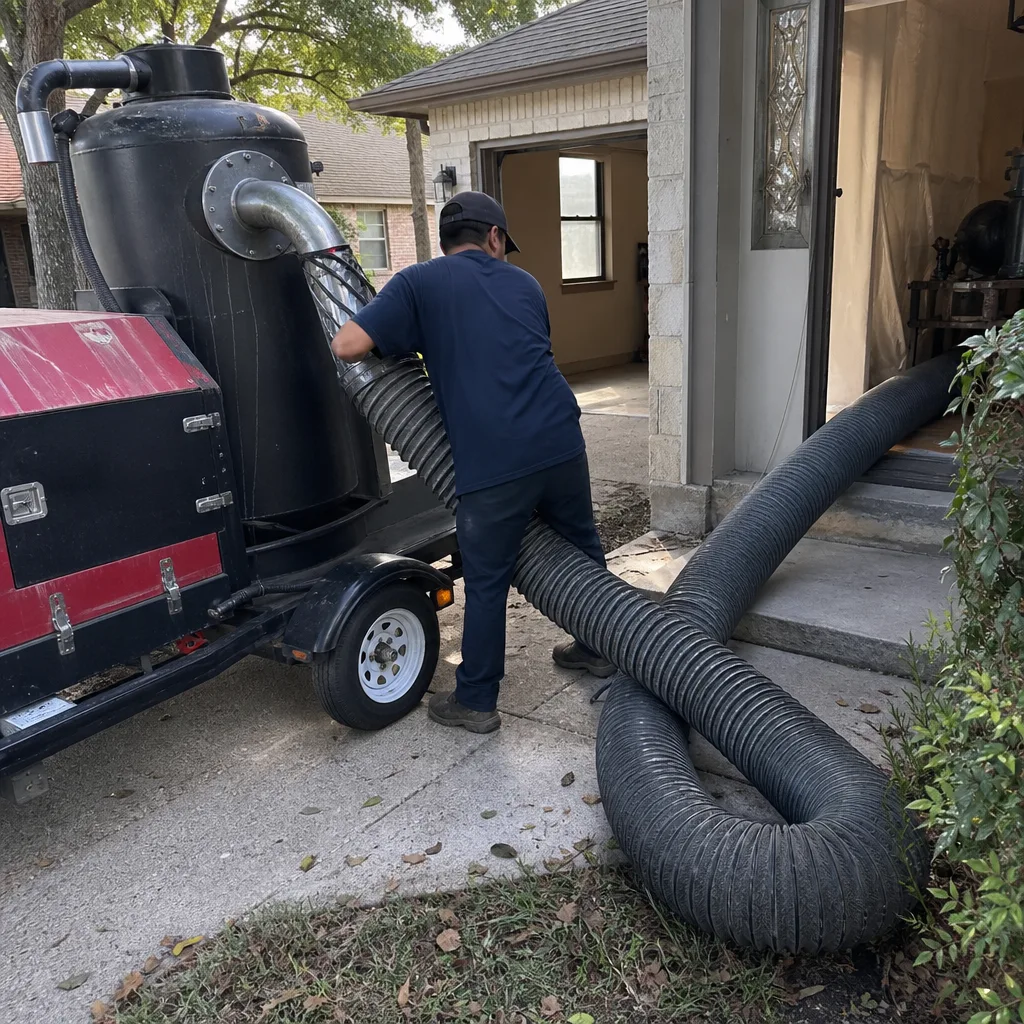
Schertz’s growth corridor has produced thousands of homes with recent renovation history: kitchen expansions, primary suite additions, and full-gut remodels in established neighborhoods like Live Oak and Schertz Parkway. Every renovation that occurred while the HVAC system was active introduced construction particulate into the ductwork, and the type of debris determines the cleaning approach.
Drywall Dust
Drywall compound dust is fine, white to gray, and electrostatically charged. It adheres to duct interiors, particularly flex duct with ribbed walls, and resists passive airflow removal. The danger is not the dust itself but its interaction with moisture: gypsum dust becomes a nutrient source for microbial growth when humidity exceeds 55%. In Schertz’s spring and fall shoulder seasons, when systems cycle between heating and cooling and humidity fluctuates, we find elevated microbial activity in ducts with heavy drywall dust loads.
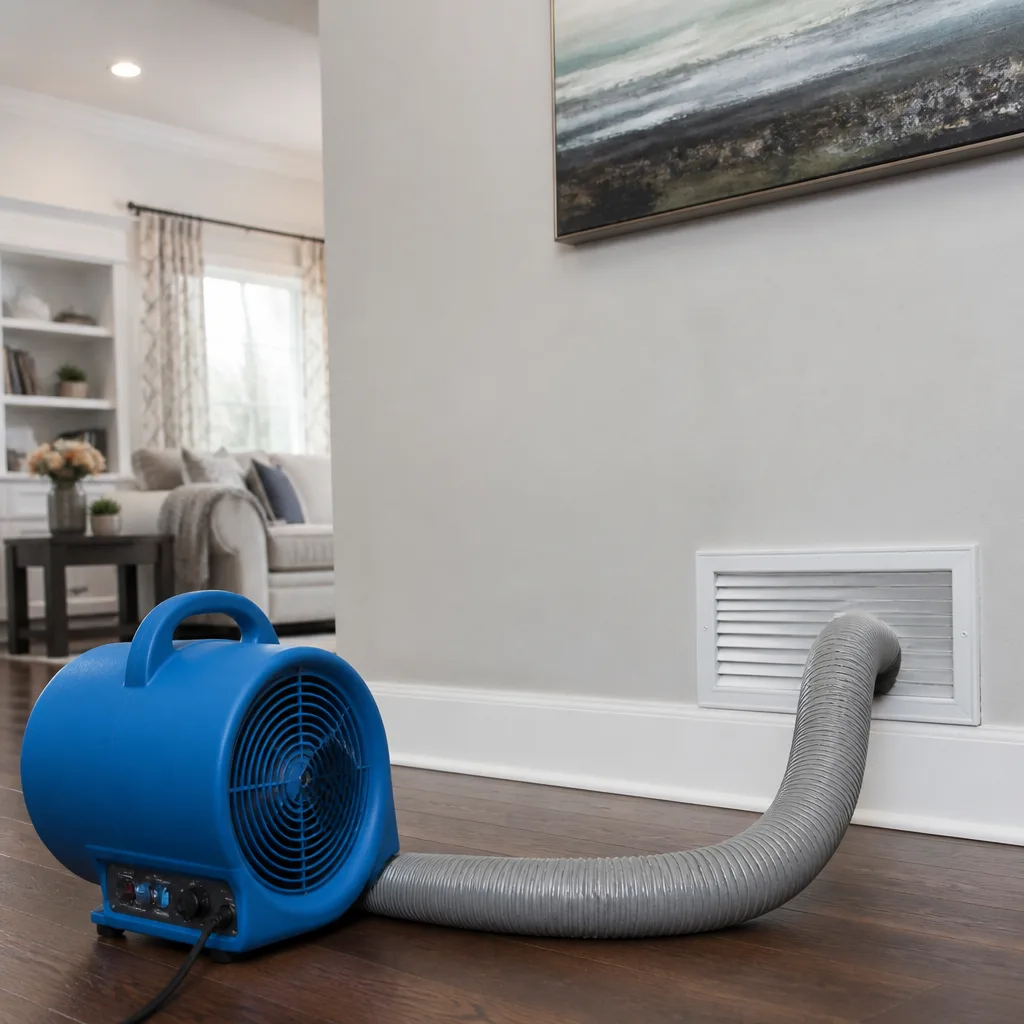
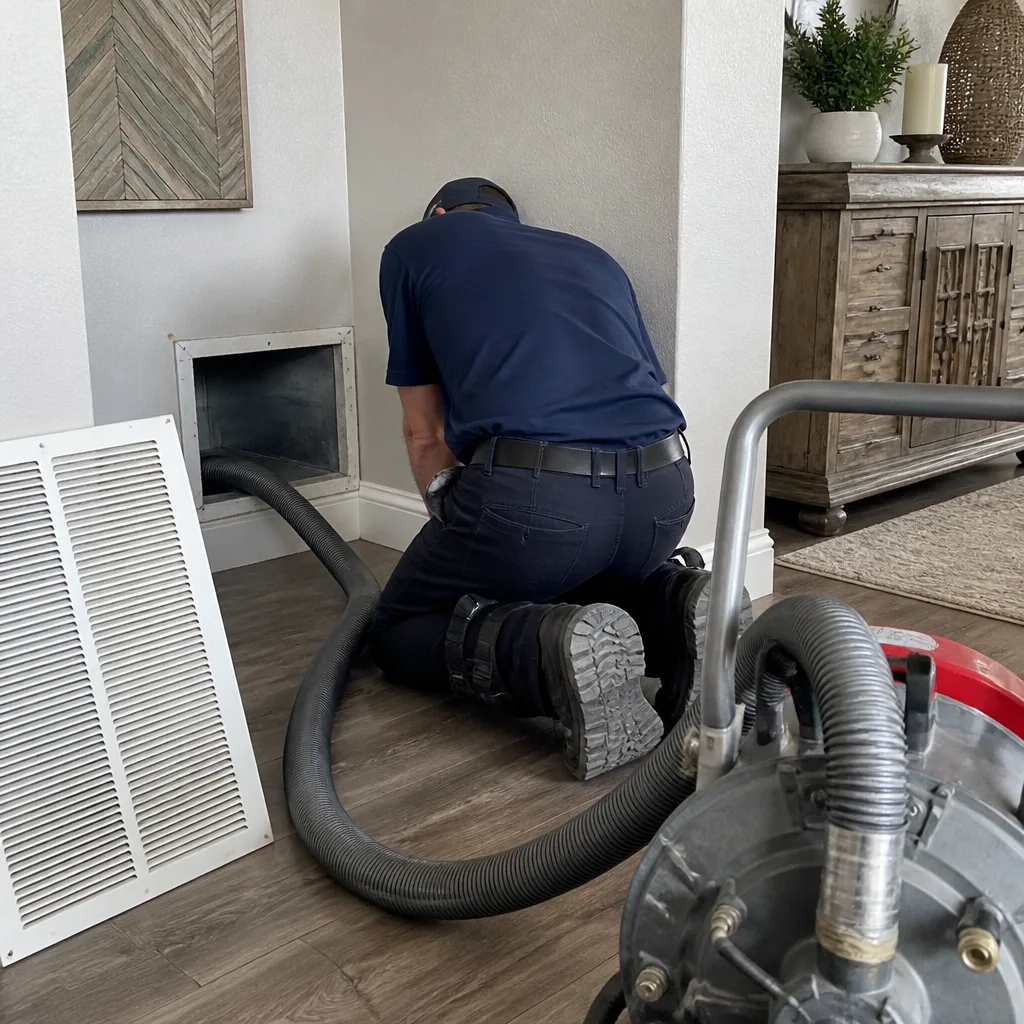
Drywall dust requires negative-pressure extraction with agitation, not simple vacuuming. Our crews use Rotobrush systems with powered brush heads that contact the duct wall directly, dislodging adhered material for capture by the Nikro HEPA-filtered collection unit. The photo record shows the difference: pre-cleaning images display a uniform gray coating; post-cleaning shows the original duct surface.
Insulation Fiber
Fiberglass insulation fiber from attic work or wall demolition appears as shiny, irritant strands in the duct debris. This material does not respond to standard cleaning alone. If the fiber load is substantial, it indicates that insulation has entered the duct system through a breach, usually where a flex duct was disturbed during attic work. Cleaning without sealing the breach recontaminates the system within weeks.
We price this as a repair-plus-cleaning scope: locate and seal the breach under Haven Standard Clause 1’s written pricing, then clean the affected duct runs. The photo record documents both the breach location and the cleaned interior.
Wood Particulate
Sawdust from trim work, flooring installation, or framing modifications is coarse and recognizable. It rarely adheres to duct walls and often accumulates at low points and elbows. Wood particulate is the easiest renovation debris to remove but the most likely to harbor moisture and support mold if left in place. We find this most often in homes where the return duct was not sealed during flooring installation, pulling sawdust directly from the work area.
The critical distinction: organic wood particulate decomposes and releases VOCs (volatile organic compounds) when heated. A supply duct with significant wood dust load can produce a “hot wood” smell during heating cycles that homeowners mistake for a furnace problem.
Dark Ghosting Around Supply Registers: What It Reveals About Airflow and Filtration
Dark streaking or “ghosting” on ceiling and walls around supply registers is often mistaken for mold or dirt infiltration. It is actually a filtration phenomenon with specific implications for your duct system.
When supply air carries fine particulate and the register face velocity is high, the air jet creates a pressure differential at the wall surface. Particles too small to be captured by the HVAC filter deposit on the wall, attracted by electrostatic forces and the slight vacuum created by the turbulent airflow. Over months, this produces the characteristic dark rectangular pattern framing the register.
What Ghosting Indicates
Ghosting tells you three things with reasonable certainty:
- Your filter is underspecified for your particulate load. A MERV 8 pleated filter captures particles down to 3 microns. The particles causing ghosting are smaller, passing through the filter and depositing at the register. Upgrading to MERV 11 or 13, with verified system compatibility, reduces ghosting over time.
- Register face velocity is excessive. High velocity increases the pressure differential that drives particle deposition. This occurs when a duct run is undersized for the airflow volume, or when a register is partially closed in an attempt to balance temperatures.
- The duct system is dirty enough to supply the particulate. Clean ducts with proper filtration do not produce ghosting. The particulate source may be internal (dust accumulation) or external (return leakage pulling unfiltered air).
In Schertz homes with hard water, we occasionally see ghosting compounded by mineral dust from evaporative humidifiers or poorly maintained whole-house humidification systems. The deposits are white to gray and slightly gritty, distinct from the black or brown ghosting of carbon-based particulate.
Ghosting itself is not a health hazard, but it is a reliable indicator that your filtration and duct cleanliness are mismatched. Addressing it requires both: cleaning the particulate source and upgrading filtration to prevent recurrence. We specify the appropriate filter upgrade as part of our written scope, using Honeywell and Aprilaire media that match the system’s airflow capacity.
Confirmed Pest Evidence: The Warning Sign That Requires Immediate Action
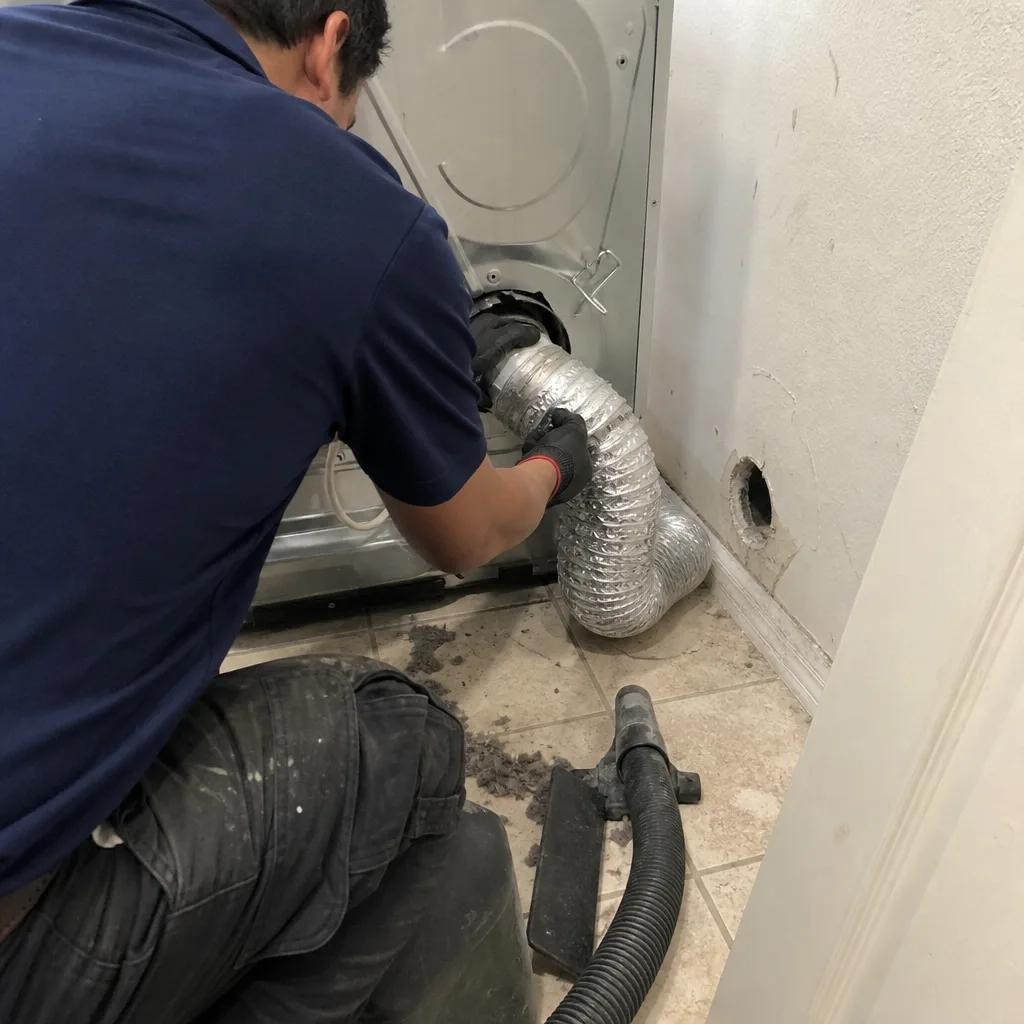
There is one warning sign that overrides every other diagnostic consideration: confirmed rodent, bird, or insect activity inside the duct system. This is not a cleaning decision. It is a containment and remediation decision, and delaying it exposes your home to documented health risks.
What Confirms Pest Activity
Visual confirmation of any of the following:
- Droppings or urine staining on duct interior surfaces visible through a register or inspection camera
- Nesting material: shredded paper, insulation, vegetation, or fabric packed in a duct run
- Insect casings, egg masses, or dead insects concentrated at a register or in a duct low point
- Entry damage: chewed or displaced duct connections, particularly where flex duct enters a wall or floor cavity
- Audible activity: scratching or movement in ducts, confirmed to persist when the system is off
Why Cleaning Alone Is Insufficient
Removing debris without sealing entry points is documented waste. Rodents re-enter through gaps as small as one-quarter inch. We have cleaned ducts in Schertz homes where the homeowner paid for cleaning twice in eighteen months because the entry point, a gap where the furnace platform meets the wall in a garage utility closet, was never sealed.
The proper sequence, which we specify in writing under Haven Standard Clause 1:
- Identify and photograph all entry points and internal damage
- Coordinate with pest control for active infestation elimination if live animals are present
- Seal all entry points with rodent-resistant materials: galvanized steel mesh, concrete patch, or metal flashing
- Remove and replace damaged duct sections, particularly flex duct with interior contamination
- Clean remaining duct runs with HEPA-filtered negative-pressure extraction
- Apply sanitizer registered for HVAC use, with documentation of product and concentration
- Deliver photo record showing entry seals, replaced sections, and cleaned interiors
The 365-Day Done Right Promise applies specifically here: if pest re-entry occurs through a seal we installed, we return and reseal at no charge. This is a written guarantee, not a policy subject to manager approval.
We have held this protocol since our first job in 2013. In 52,000+ homes served, every documented pest remediation has included the photo record as a standard deliverable, so the homeowner has evidence of what was sealed and what was cleaned.
Common Mistakes to Avoid
- Scheduling duct cleaning for a smell that persists when the system is off. This almost always indicates a source outside the duct system: a plumbing trap, dead animal in a wall, or mold in a crawl space. Cleaning the ducts leaves the source active and the homeowner disappointed.
- Accepting per-vent pricing. This pricing model incentivizes rapid, superficial work. A 15-vent system priced at $29 per vent receives the same rushed attention as a 6-vent system. We price per system, with the scope defined by square footage, duct configuration, and contamination level, not by a count that rewards the contractor for speed.
- Ignoring the return side. The return duct system, which pulls air from your rooms back to the air handler, is typically dirtier than the supply side because it is unfiltered. Cleaning supply ducts alone addresses less than half the particulate load. Our written scope specifies both sides.
- Assuming new construction means clean ducts. Schertz homes built 2019-2022 have some of the heaviest construction debris loads we encounter. Drywall dust, sawdust, and worker debris accumulate during the months between duct installation and final occupancy. We recommend inspection before the first anniversary of occupancy.
- Treating all odors as duct problems. The condensate drain, evaporator coil, and even a clogged P-trap on the auxiliary drain line produce musty smells that travel through ducts. Cleaning without inspecting these components is misdiagnosis.
- Expecting cleaning to fix mechanical problems. Duct cleaning improves airflow efficiency by reducing friction from debris buildup. It does not repair leaks, replace failed dampers, or correct undersized duct runs. We separate cleaning scope from repair scope in every written estimate.
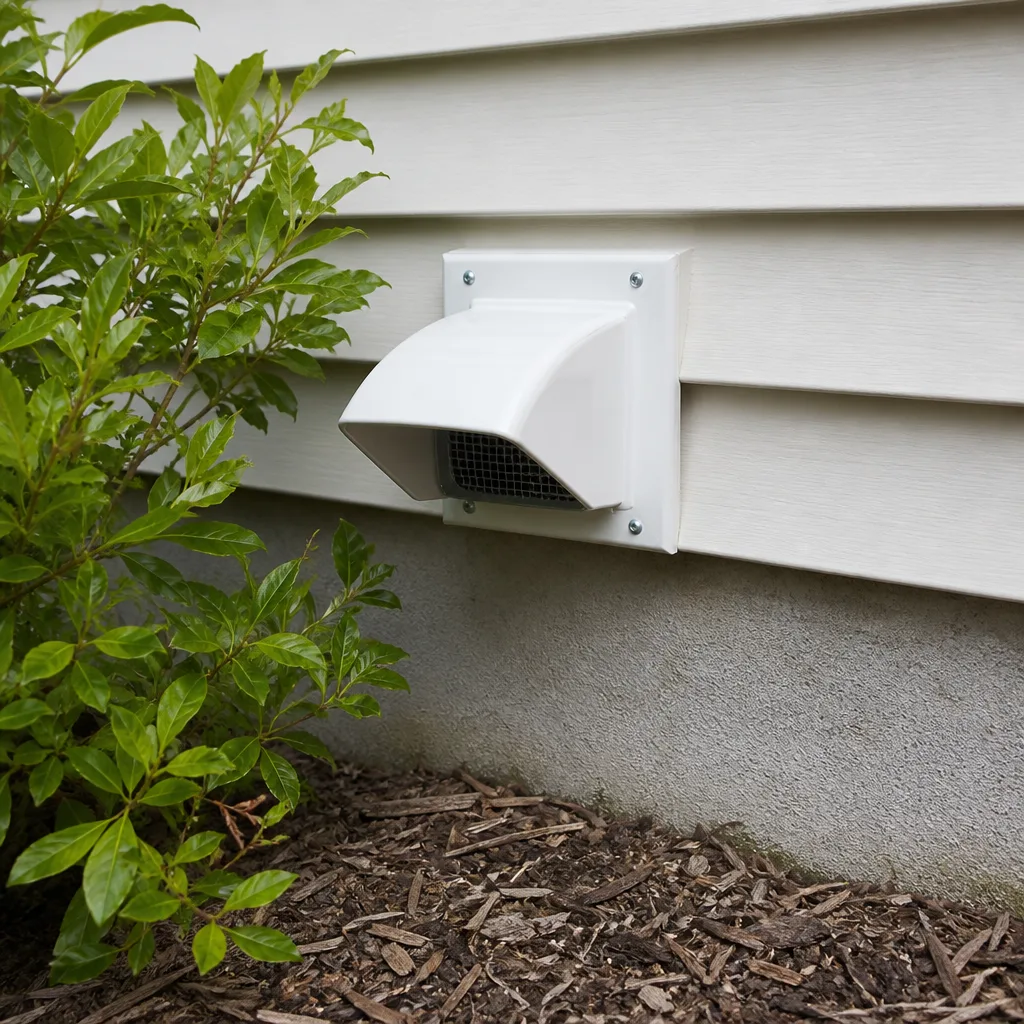
- Neglecting dryer vent inspection. A clogged dryer vent produces lint accumulation in the laundry area and can backpressure lint into the return air path in homes where the laundry and mechanical rooms share space. Our Dryer Vent Cleaning in Schertz service addresses this specifically, and we inspect the laundry-to-HVAC air path as part of our standard evaluation.
When to Call a Professional
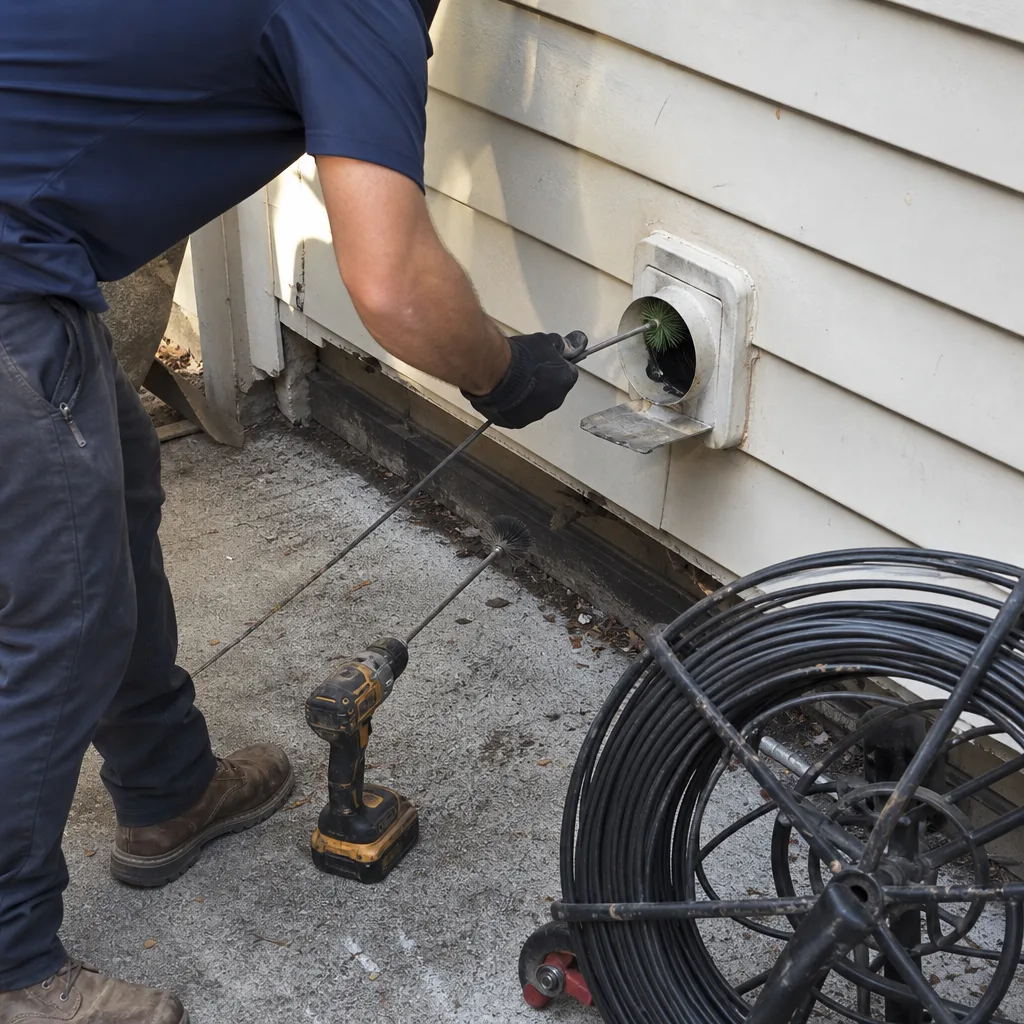
Call for inspection when you observe active dust redistribution from registers, persistent odors that correlate with system cycles, temperature differentials that do not respond to register adjustment, or any confirmed pest evidence. For DIY vs Professional Air Duct Cleaning: The Schertz Homeowner’s Decision Guide, see our comparison. Bring your observations: which registers, which rooms, what the debris looks like, when the problem started. Specificity saves diagnostic time and prevents unnecessary work.
CleanRun Air Duct Cleaning Schertz offers free estimates in Schertz. Every estimate includes a written price before any work begins, under Haven Standard Clause 1, and every job concludes with a Documented Photo Record of every duct run. Call (830) 402-5110 to schedule.
Frequently Asked Questions
Whole-system air duct cleaning for a typical Schertz home ranges from $450 to $850, depending on system size, duct accessibility, and contamination level. This includes supply and return ductwork, the plenum (the main distribution box connected to your air handler), and the register covers. We deliver a written price before any work starts, with no per-vent add-ons or post-arrival upsells. Call (830) 402-5110 for an exact quote - estimates are free.
Low quotes typically reflect limited scope: supply ducts only, no register removal, no photo documentation, and equipment that does not make physical contact with duct walls. A shop vacuum inserted through a register opening removes loose debris near the entry point but leaves adhered contamination intact. Our pricing includes negative-pressure extraction with powered brush agitation, register removal and hand cleaning, and the Documented Photo Record as a standard deliverable. The difference is verifiable.
Our Documented Photo Record shows the interior of every duct run before and after cleaning, delivered as part of the standard job record. You see what was there and what remains. This practice has been standard on every job since 2013. No photo record, no verification.
For most Schertz homes without specific risk factors, every five to seven years is adequate. Homes with indoor pets, recent renovation, or occupants with respiratory sensitivity may benefit from more frequent inspection. We do not recommend routine cleaning on a fixed schedule; we recommend inspection with photo documentation, then cleaning only when the debris load justifies it.
We do not recommend DIY duct cleaning. Residential duct systems contain components that are easily damaged: flex duct tears, duct liner delaminates, and register boots separate from drywall with improper force. More critically, the plenum and air handler cabinet contain electrical components and, in gas systems, combustion elements that present genuine hazards. Our technicians are trained on the equipment roster we deploy - Rotobrush, Nikro, Abatement Technologies - and work under Haven Standard Clause 3: Verified Crews, with background-checked, uniformed technicians identified by name before arrival.
Yes. Schertz’s combination of caliche soil, high spring pollen counts, and extended cooling seasons creates specific contamination patterns. Caliche dust, the fine alkaline particulate from our local limestone-derived soil, is particularly abrasive to duct interiors and adheres more tenaciously than organic dust. The extended cooling season, often from April through October, means more annual blower hours and more particulate transport. We account for these factors in our inspection and scope definition.
The Bottom Line
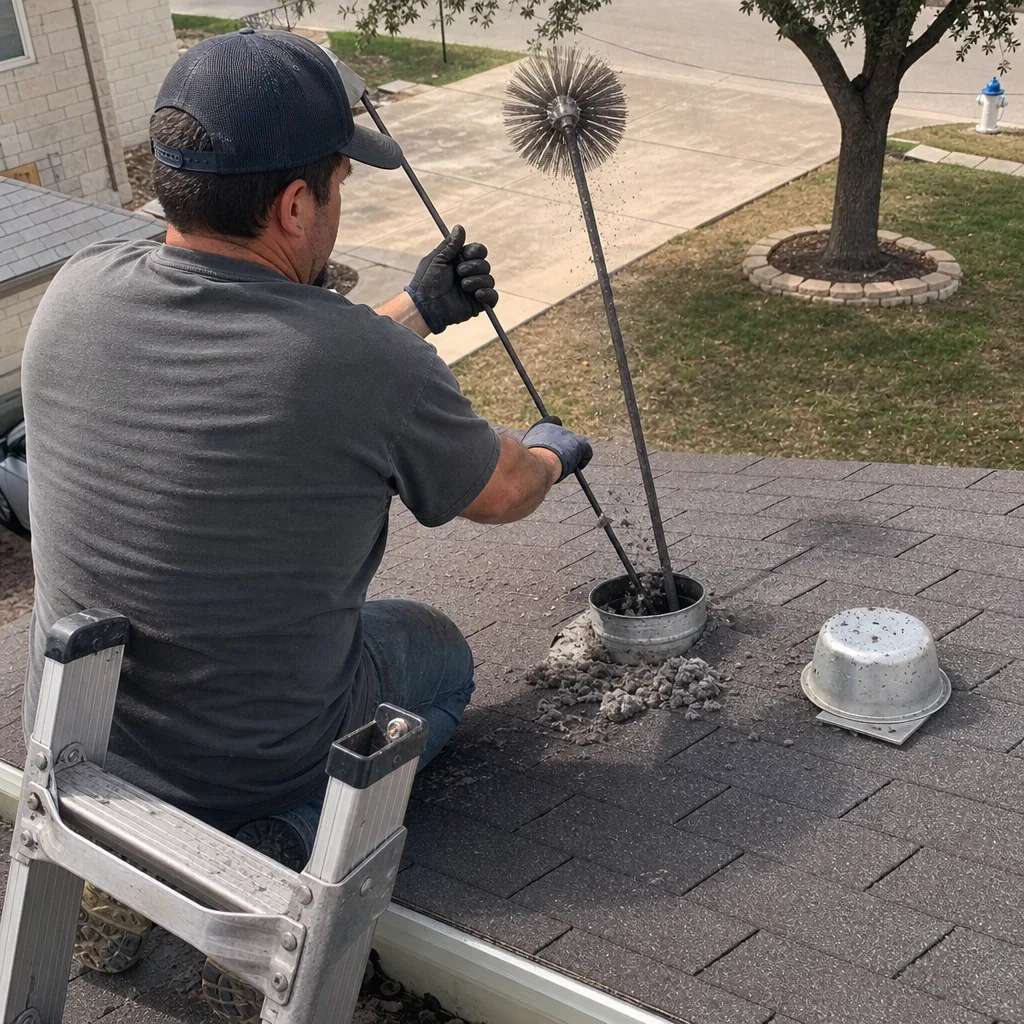
Warning signs are only useful when they point to the right problem. A musty smell in your Schertz home could indicate dirty ducts, a clogged condensate drain, or a failing evaporator coil - and only a precise description of when, where, and how the smell presents will distinguish them. Visible dust at registers is normal; active redistribution during blower cycles is not. Uneven temperatures may require cleaning, repair, or duct modification, and the diagnostic clues are available to any homeowner willing to observe systematically. Post-renovation debris requires cleaning matched to the specific contaminant type. And confirmed pest evidence demands immediate, comprehensive remediation, not cleaning alone.
Bring your observations to a technician who will document what they find before proposing work. At CleanRun, that documentation - the written price, the photo record, the 365-Day Done Right Promise - is not a marketing claim. It is the standard deliverable on every job since 2013.
Written by Tomas Reyes, Owner at CleanRun Air Duct Cleaning Schertz, serving Schertz since 2013.