
Last updated September 23, 2026
Whole-system duct and dryer vent check with before-and-after photos - you see exactly what came out of your vents
That "$99 whole-house special" is a bait ad - the real number appears once they are in your hallway, or the "clean" is a shop-vac at the register. We photograph the inside of your ducts before and after instead.
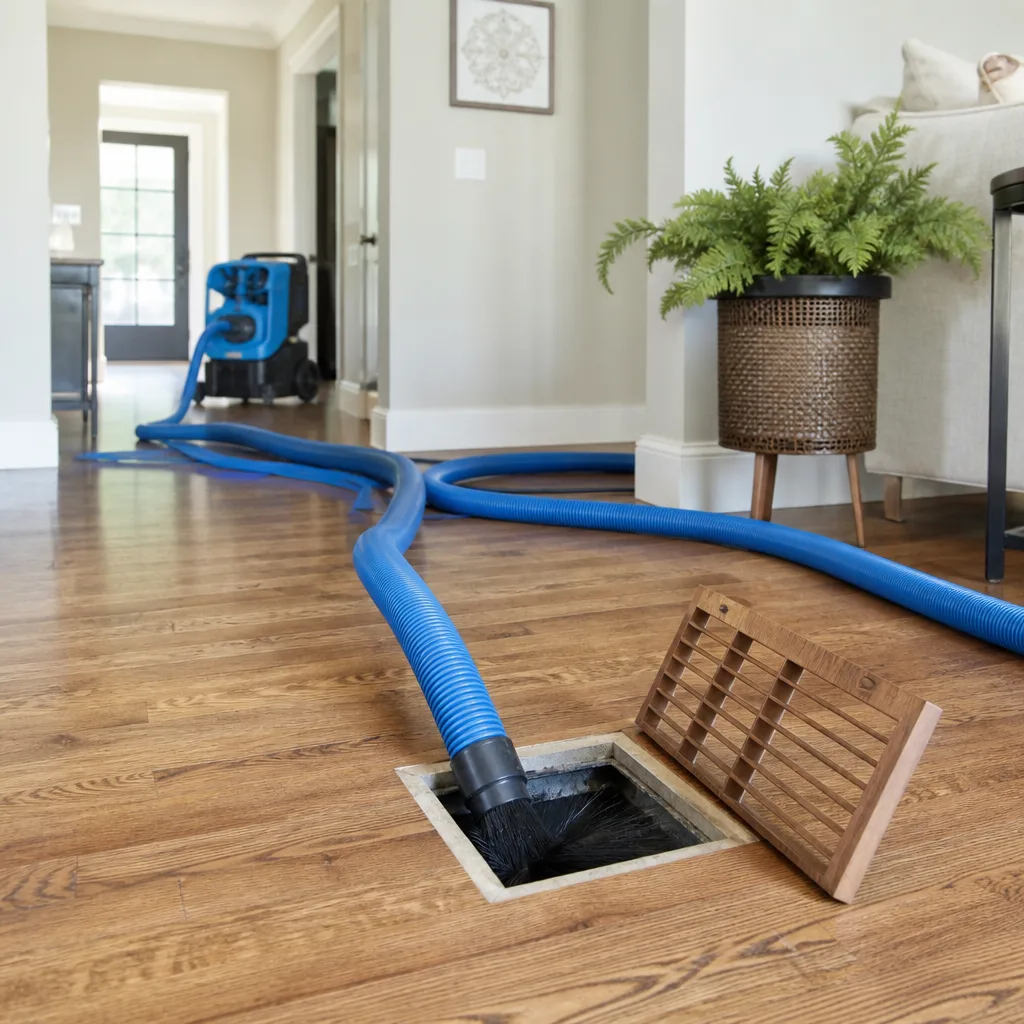
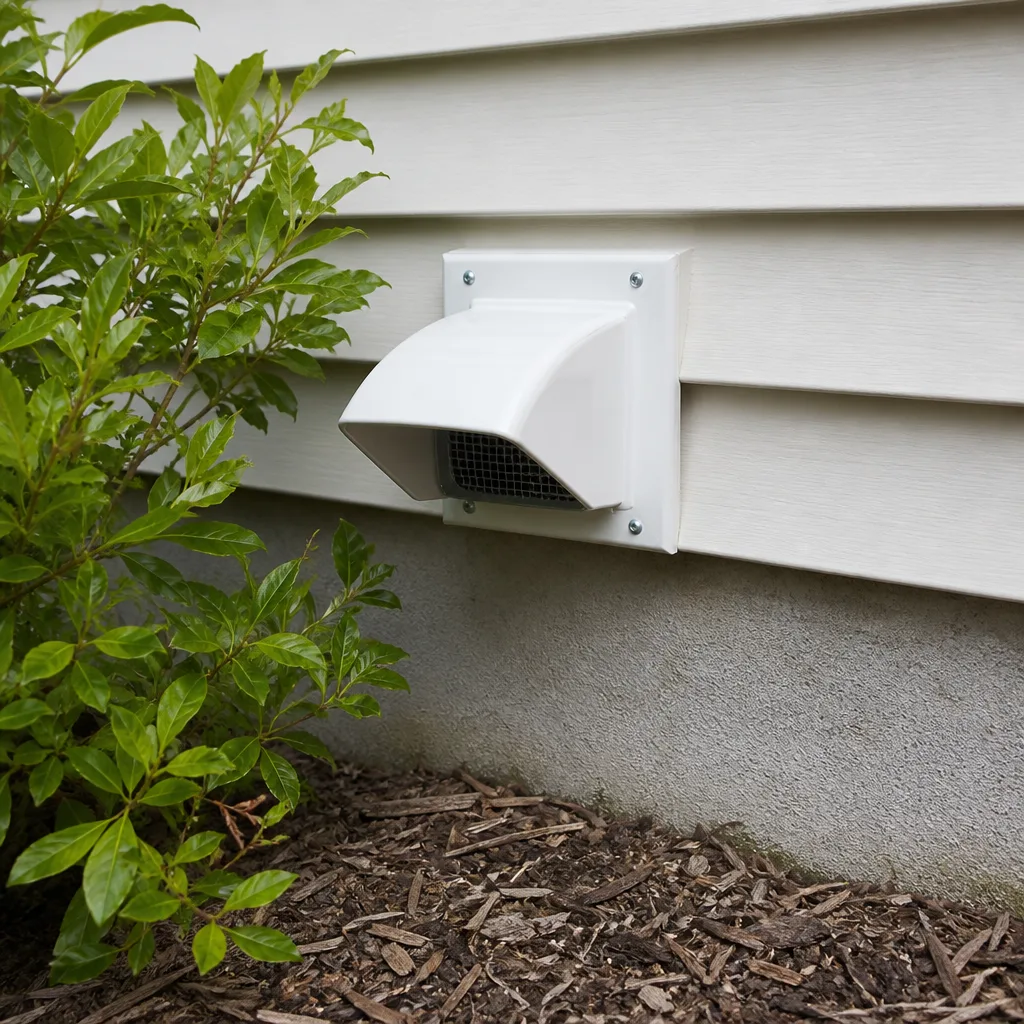
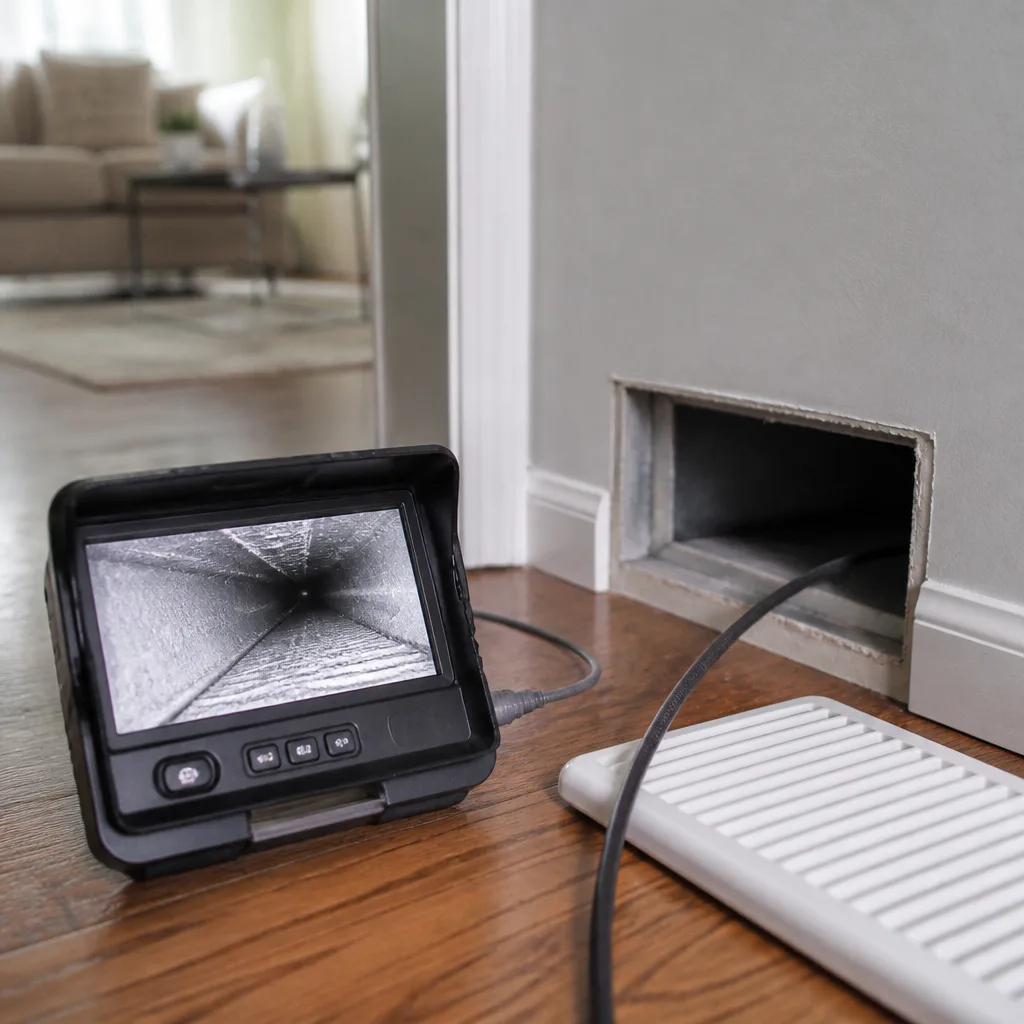
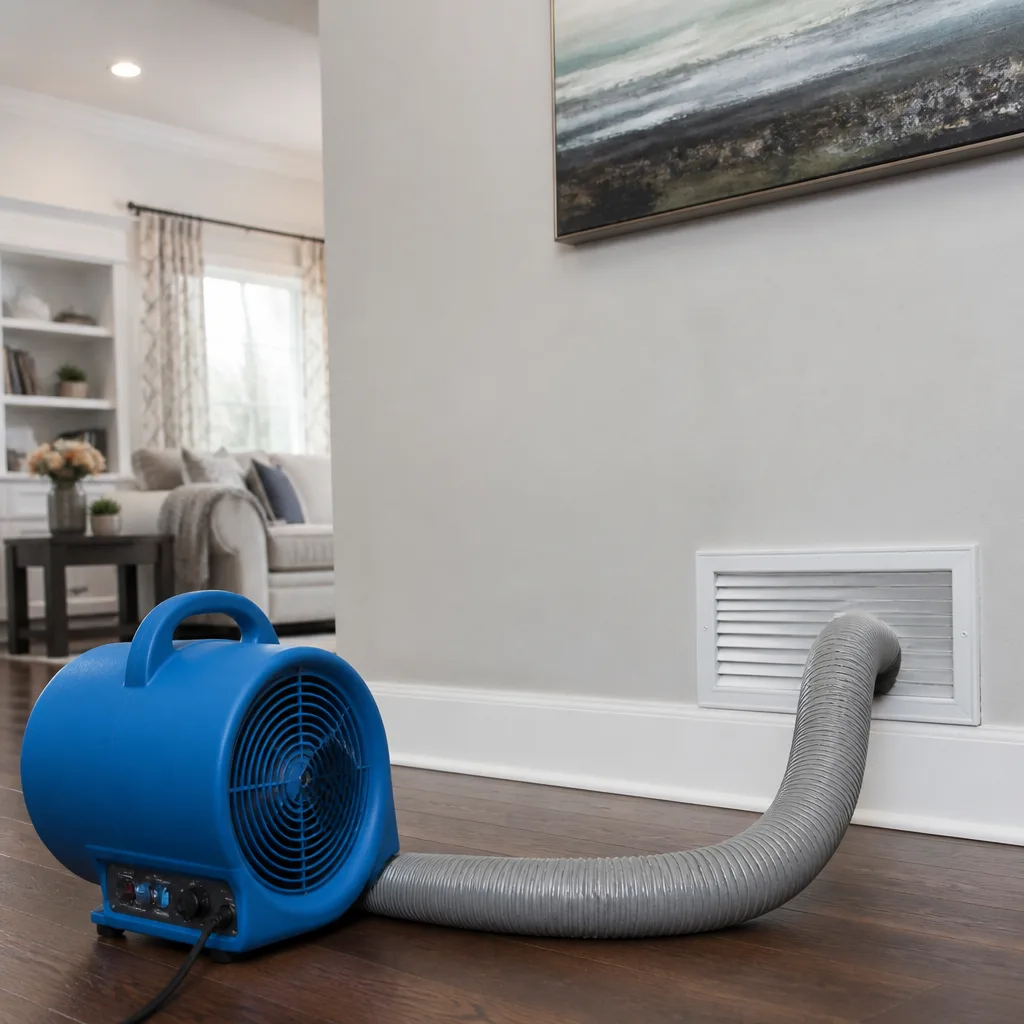
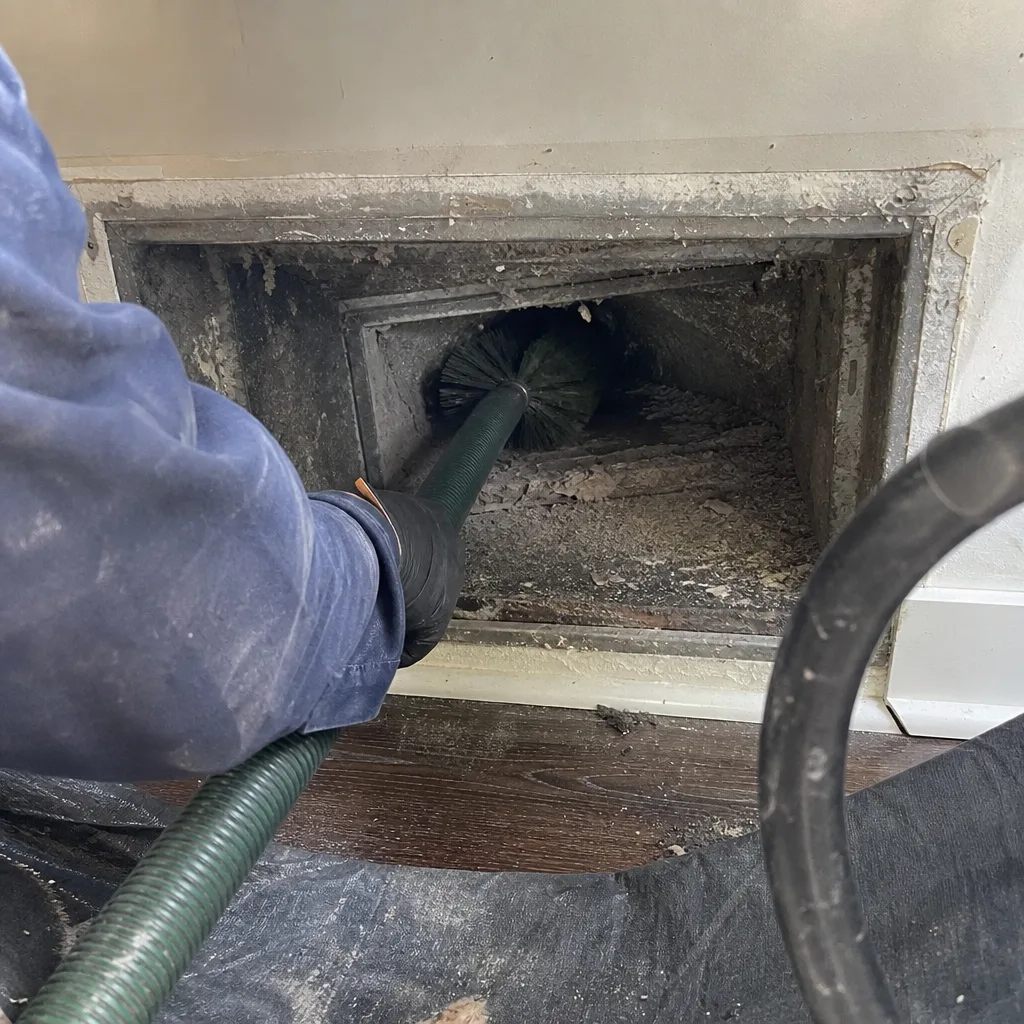 Before
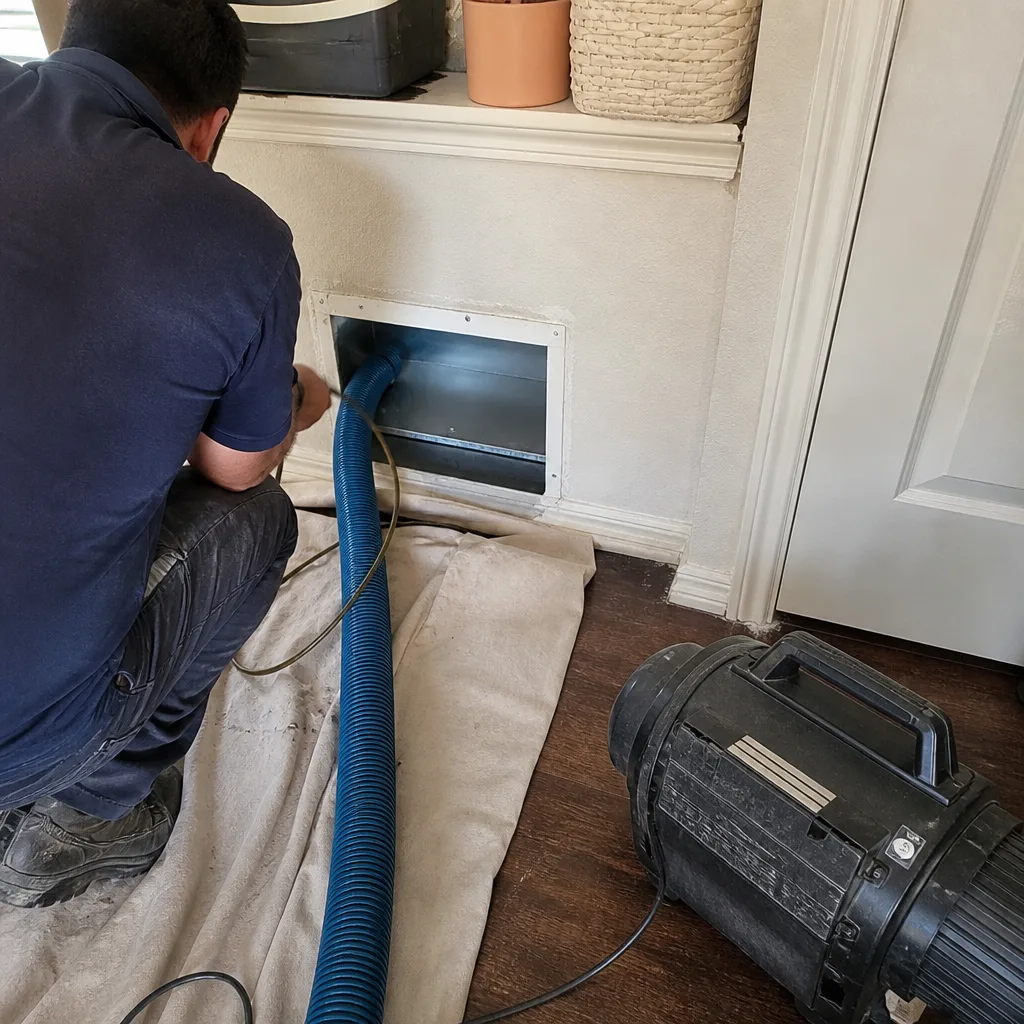 After
After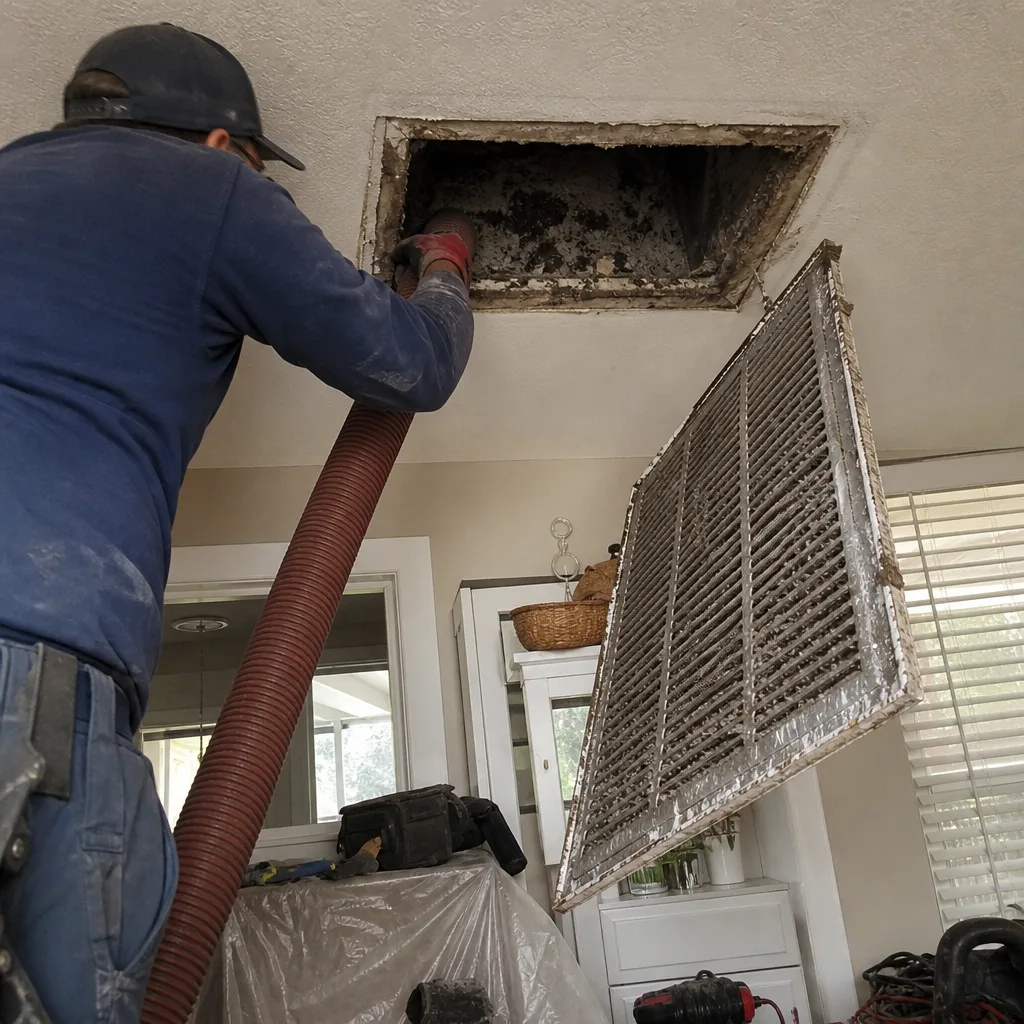 Before
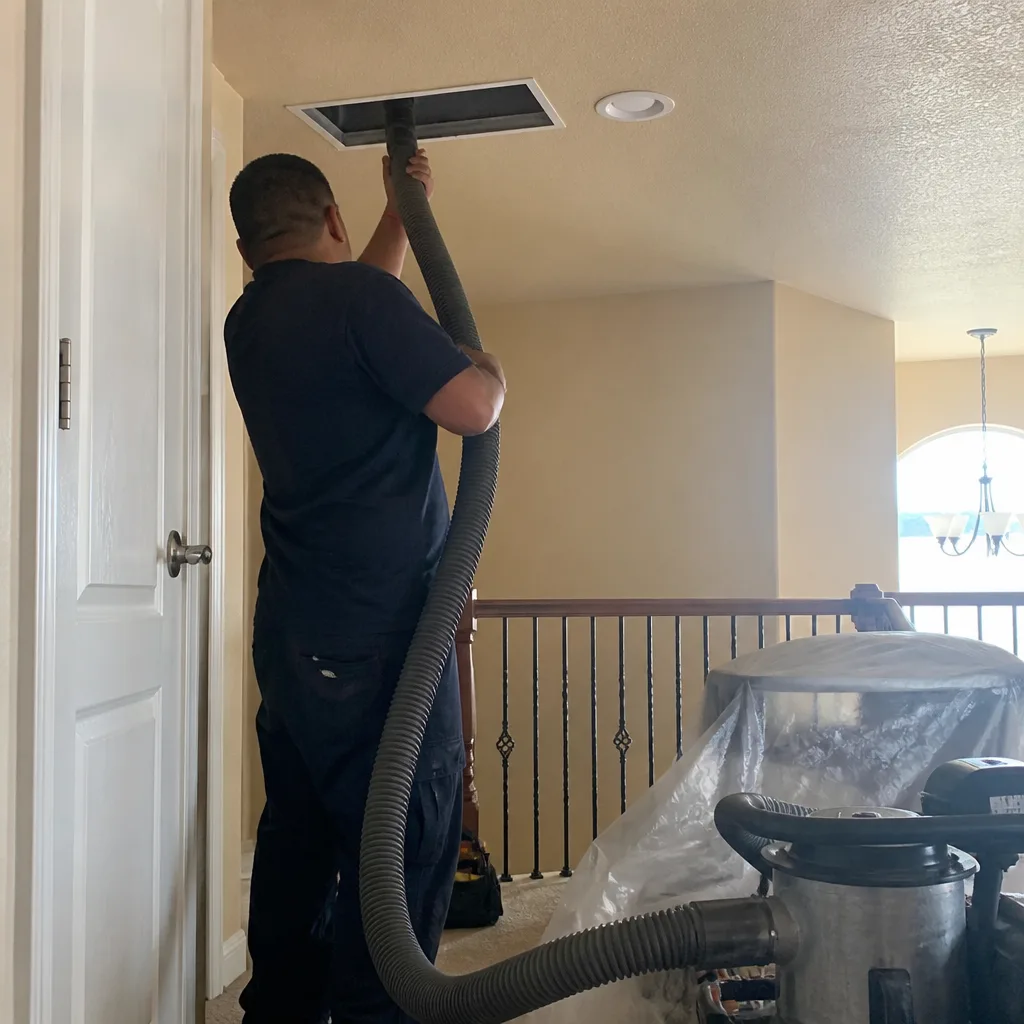 After
After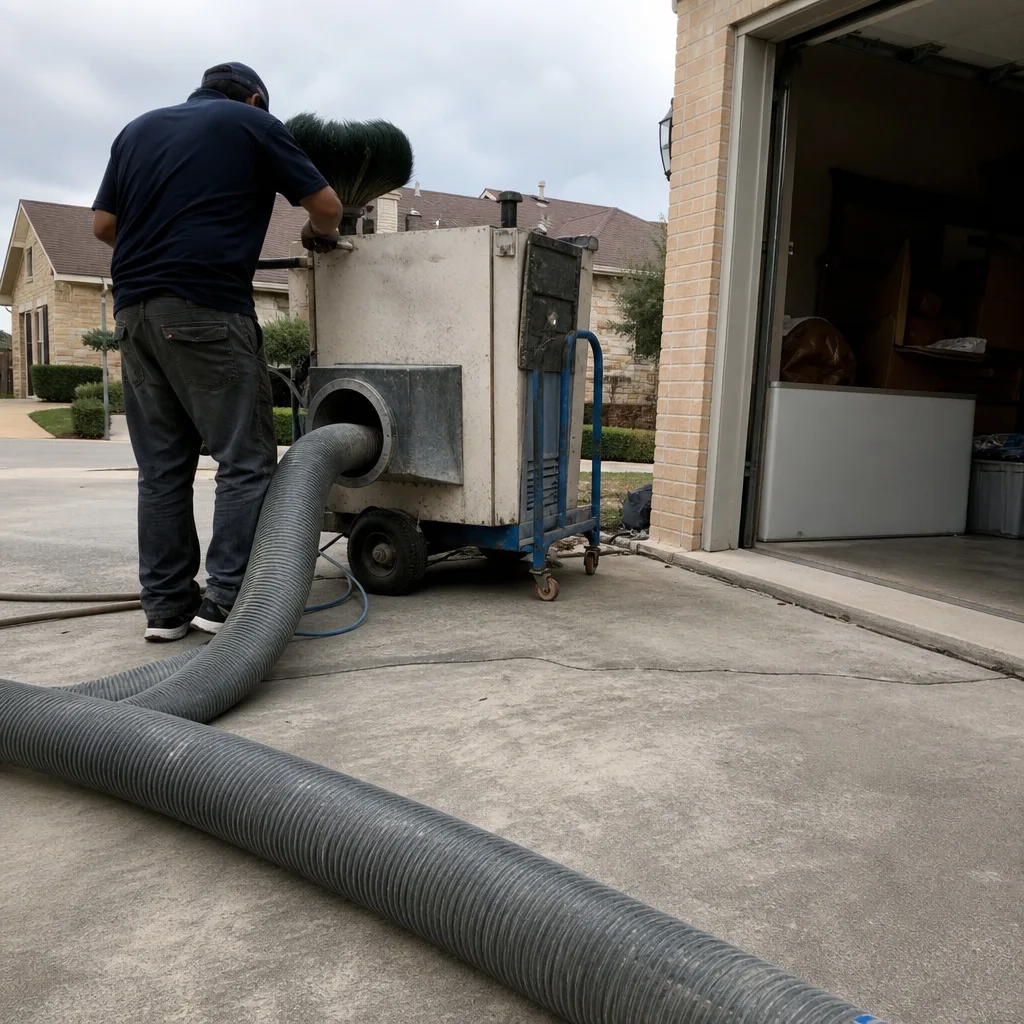 Before
 After
AfterAir Duct Cleaning Permits, Codes & Inspections in TX: What You Need to Know
Here’s the distinction that costs homeowners thousands at closing: a technician cleaning your ducts needs no permit. The same technician sealing a disconnected trunk line, replacing a flex duct run, or cutting a new access panel into your plenum is doing HVAC mechanical work, and in most Texas jurisdictions, that crosses into permitted territory whether or not anyone mentions it. In Schertz, we’ve arrived at jobs where the previous cleaner’s “repair” left a homeowner with unpermitted modifications that showed up on a pre-sale inspection 18 months later. This guide-along with our The Complete Guide to Air Duct Cleaning in Schertz-explains where Texas law draws the line, how Schertz and Guadalupe County enforce it, and what documentation you should keep regardless of who does the work.
Quick Answer
Our Air Duct Cleaning services alone require no permit in Texas. Duct repair, modification, or replacement of any component beyond surface cleaning triggers mechanical code requirements under the IRC provisions adopted by most Texas municipalities, including Schertz. If a contractor finds damage during cleaning and proposes fixes, ask whether a permit is required and request the scope in writing before work begins.
Table of Contents
- Where Duct Cleaning Ends and Mechanical Repair Begins
- The Texas Mechanical Code Threshold: What the IRC Actually Says
- How Schertz and Guadalupe County Handle HVAC Permits
- The Real Cost of Unpermitted Duct Modifications
- What to Ask Any Contractor Who Finds Duct Damage
- The Documentation File Every Homeowner Should Keep
- Pricing: Cleaning vs. Repair Work in the Schertz Market
- Common Mistakes to Avoid
- When to Call a Professional
- Frequently Asked Questions
- The Bottom Line
BeforeAfterWhere Duct Cleaning Ends and Mechanical Repair Begins
The line is clearer than most contractors admit. Cleaning is the removal of contaminants from existing surfaces. Once you alter, replace, or seal any component, you’ve entered mechanical work territory.
Here’s what falls squarely on the cleaning side, no permit needed:
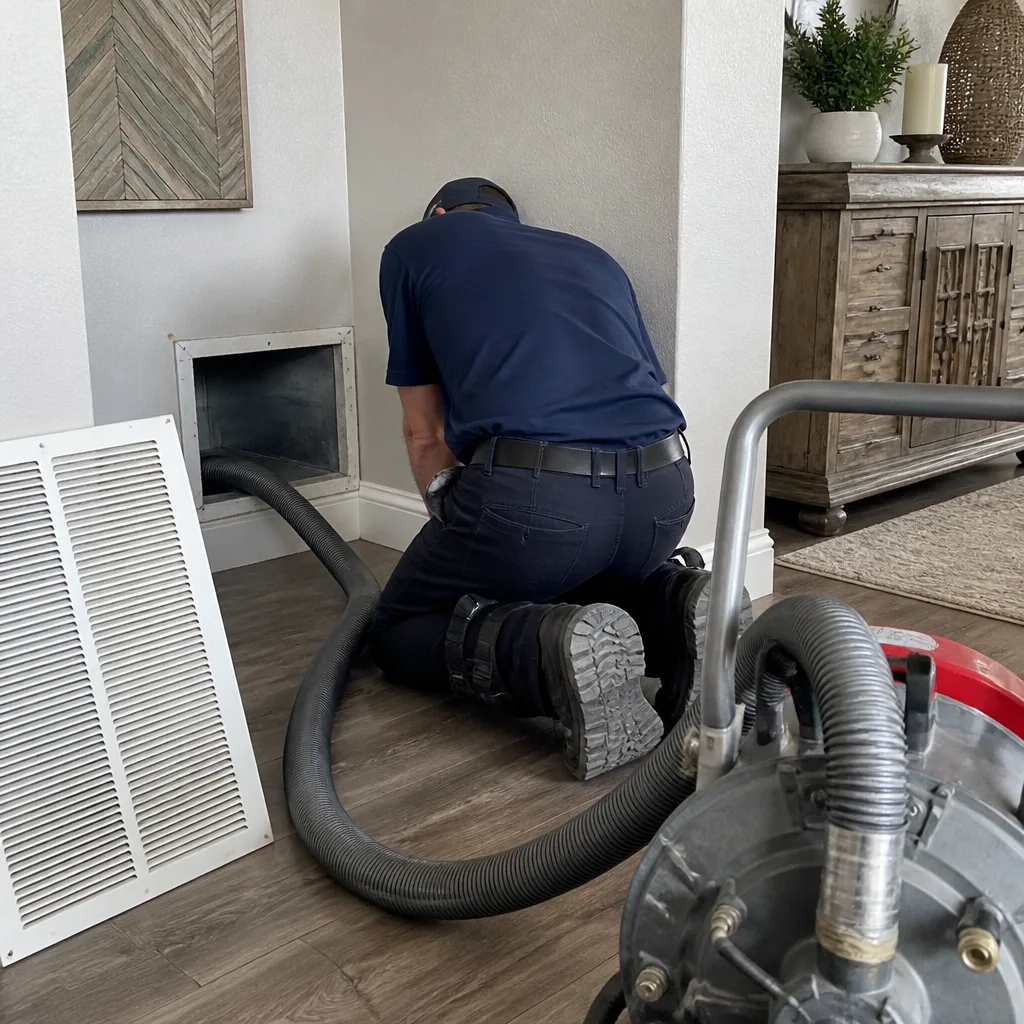
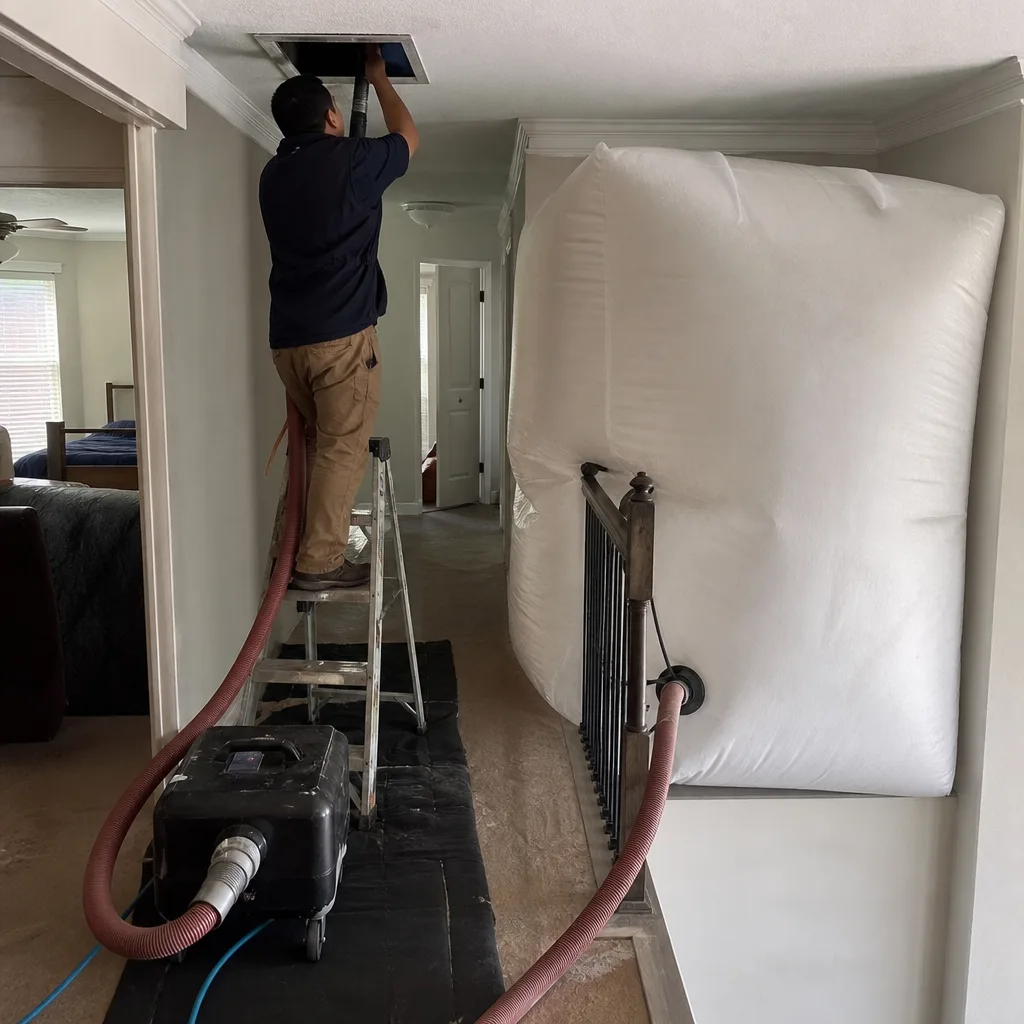
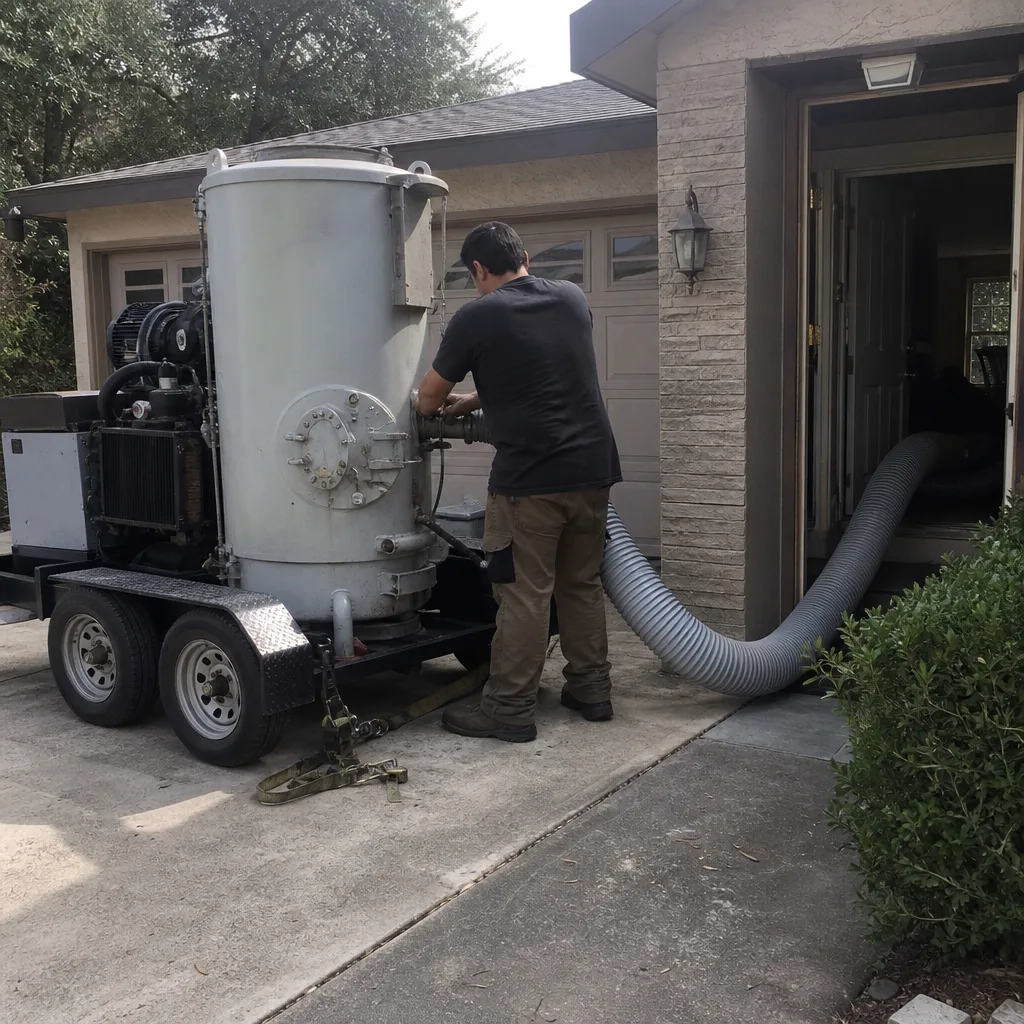
- Negative-pressure extraction of dust and debris from duct runs (the individual pathways from your plenum to each register)
- Agitation brushing of interior duct walls using equipment like Rotobrush or Nikro systems
- Register and grille removal for surface cleaning
- Application of EPA-registered sanitizers to existing duct interiors
- Photographic inspection with scope cameras
The moment a technician crosses into any of the following, mechanical code applies:
- Cutting an access panel into a plenum (the central distribution box where heated or cooled air divides into duct runs)
- Replacing a section of flex duct, fiberglass duct board, or sheet metal trunk line
- Sealing disconnected joints with mastic or tape as a repair, not incidental to cleaning
- Modifying duct sizing or routing to improve airflow
- Installing new dampers, turning vanes, or balancing devices
In Schertz, we see this boundary crossed most often when a cleaning reveals a collapsed flex duct in an attic. The attic temperatures here routinely exceed 130°F in July and August, accelerating flex duct deterioration. A contractor who simply cleans around the collapse and reports it is within the cleaning scope, as detailed in our Air Duct Cleaning Warning Signs: A Schertz Homeowner’s Reference Guide. One who cuts out the damaged section and splices in replacement flex without a permit has done mechanical work illegally in most jurisdictions.
The Air Duct Cleaning in Schertz page details what our standard cleaning scope includes and where we stop to discuss permits if repair is needed.
The Texas Mechanical Code Threshold: What the IRC Actually Says
Texas does not maintain a standalone state mechanical code. Instead, the Texas Administrative Code references the International Residential Code (IRC) mechanical provisions, which individual municipalities adopt and enforce locally. The current adopted standard in most Texas jurisdictions is the 2021 IRC with local amendments.
Chapter 16 of the IRC governs duct systems. The critical provision for homeowners is Section M1601: “Duct systems shall be designed, fabricated, and installed in accordance with this chapter.” The code explicitly requires permits for:
- New duct system installation
- Replacement of existing duct systems or substantial portions thereof
- Alterations to duct systems that affect capacity, routing, or connection to HVAC equipment
- Repair of damaged duct systems where the repair involves replacement of materials
What constitutes “substantial” or “affects capacity” is where interpretation enters. A conservative reading, and the one most building officials apply, is that any replacement of duct material beyond incidental sealing requires permitting. A liberal reading, sometimes offered by cleaners who want to upsell into repair work, holds that minor patching doesn’t count.
The problem for homeowners: if the liberal reading is wrong, you’re the one holding unpermitted work when the inspector arrives.
Key IRC provisions relevant to post-cleaning repairs:
- M1601.1.1 Materials: Duct materials must be labeled with flame spread and smoke developed indices. Unlabeled flex duct, common in older Schertz subdivisions like The Crossvine and Pasadera, cannot be legally installed regardless of permit status.
- M1601.2 Duct sizing: Replacement duct must maintain or exceed original design airflow. A technician who replaces a 10-inch flex run with 8-inch because it’s what the truck carries has violated code even if permitted.
- M1601.4.1 Sealing: All joints and seams must be sealed. This is where cleaning and repair blur: brushing mastic on a leaking joint during cleaning is arguably incidental; applying mastic to a newly fabricated joint during repair is clearly mechanical work.
Guadalupe County, where Schertz sits, enforces the IRC through the Guadalupe County Development Services Department for unincorporated areas, while the City of Schertz Building Division handles permits within city limits. The practical difference matters for homeowners, which we’ll cover next.
How Schertz and Guadalupe County Handle HVAC Permits
Schertz operates its own building division, while properties in the extraterritorial jurisdiction (ETJ) or unincorporated Guadalupe County fall under county inspection. The distinction affects turnaround time, inspection scheduling, and which contractor licenses are verified.
City of Schertz Building Division:
- HVAC mechanical permits required for duct system modification, replacement, or repair involving material replacement
- Permit application requires licensed contractor registration with the city
- Inspection typically scheduled within 2-3 business days of completion
- Final inspection required before cover (drywall, insulation, or ceiling closure)
- Online permit lookup available for verification by homeowners and title companies
Guadalupe County (unincorporated/ETJ):
- Mechanical permits required for same scope of work
- County-contracted inspectors handle field verification
- Longer lead times for inspection scheduling, typically 5-7 business days
- Less aggressive follow-up on permit compliance; more complaints-driven
The ETJ boundary creates genuine confusion. A homeowner in the Schertz ETJ near Cibolo Creek may assume city oversight applies when county rules govern. We’ve serviced homes on Schertz Parkway that were county-jurisdiction surprises for owners who’d lived there six years without knowing.
Schertz’s rapid growth between 2015 and 2025, particularly in master-planned communities along FM 3009 and around the HEB-Plus corridor, means many homes were built during peak construction periods when duct quality was inconsistent. The combination of builder-grade flex duct, attic heat stress, and now-aging systems creates the exact scenario where cleaning reveals repair needs, and repair needs permits.
For HVAC Cleaning in Schertz that stays within the cleaning scope, no permit is required. We document this distinction in our written scope before any work begins.
The Real Cost of Unpermitted Duct Modifications
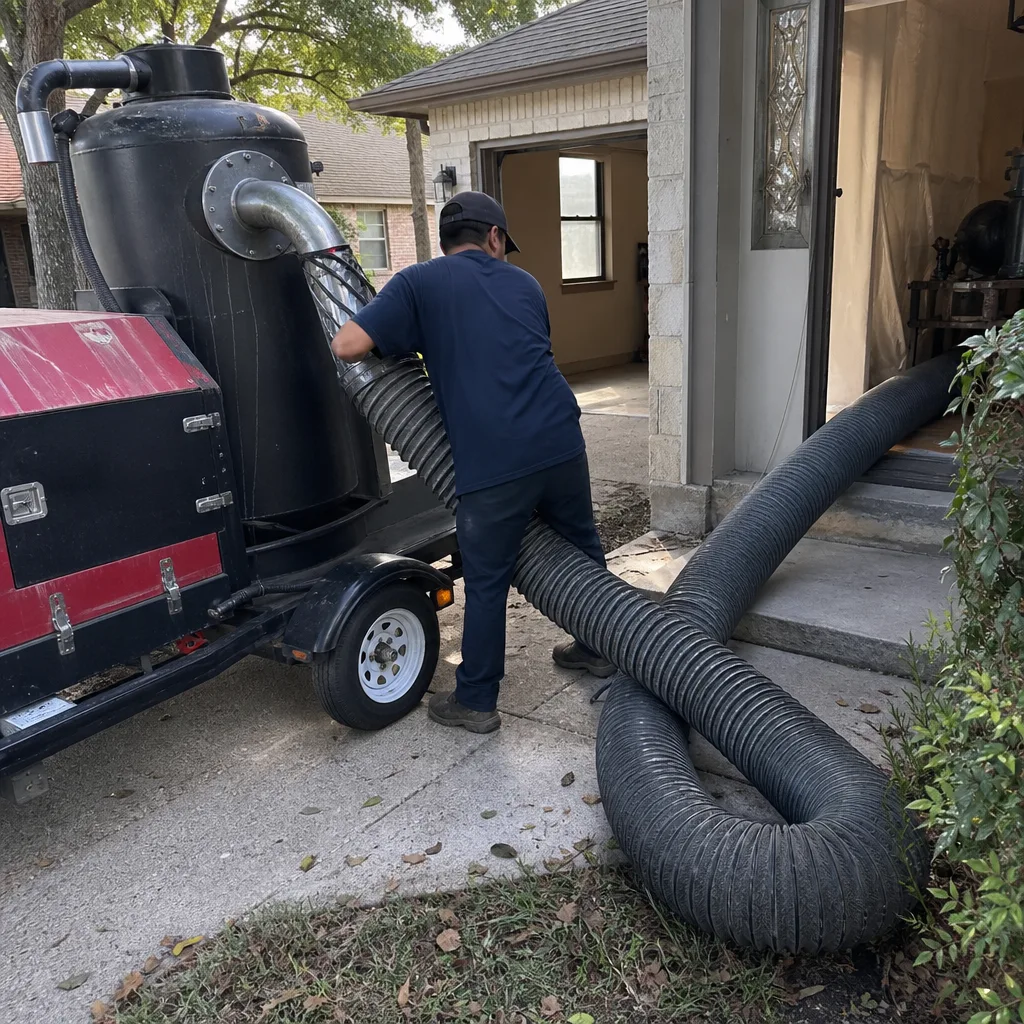
Unpermitted work doesn’t matter until it matters catastrophically. Then it matters in three specific ways: resale, insurance, and liability.
Home sale complications:
Texas sellers must disclose known defects and unpermitted work on the Seller’s Disclosure Notice. A pre-sale inspection that reveals unpermitted duct modifications, even functional ones, triggers one of three outcomes:
- The buyer demands permit retroactivity, requiring the seller to apply for a permit after the fact, open walls or ceilings for inspection, and potentially redo work that was already completed.
- The buyer negotiates a price reduction, often $2,000-$5,000, to assume the permit risk.
- The deal collapses, particularly in Schertz’s competitive market where buyers have alternatives and lenders flag unpermitted HVAC work in appraisal review.
In 2023, a Schertz homeowner in the Willow Grove subdivision contacted us for a second opinion after a pre-sale inspection flagged ductwork a previous cleaner had “repaired.” The work was competent, functional, and would have passed inspection had it been permitted. Without the permit, the seller faced a $3,800 retroactive permit and re-inspection process that delayed closing six weeks.
Insurance claim denials:
Homeowner policies typically cover sudden and accidental damage, not maintenance-related failures. But when a claim involves ductwork, insurers increasingly investigate permit history. A water damage claim traced to a condensate line connected to an unpermitted plenum modification, or a fire claim where flex duct routing was altered without code-compliant clearance from combustion sources, can be denied or reduced based on unpermitted work.
Liability exposure:
If unpermitted work causes injury or property damage to a third party, the homeowner’s liability coverage may be contested. The contractor who did the unpermitted work may be unlicensed, uninsured, or simply gone, leaving the homeowner as the responsible party.
The documentation file we describe later in this guide is your primary defense against these scenarios, but the first defense is knowing when a permit is required and ensuring one is pulled.
What to Ask Any Contractor Who Finds Duct Damage
When a technician shows you scope-camera footage of a disconnected duct, collapsed flex run, or rusted plenum, the conversation that follows determines whether you get a legal repair or a future liability. Here are the specific questions, and what legitimate answers sound like.
Question 1: “Is this repair work that requires a permit?”
Legitimate answer: “Yes, replacing that section of flex duct requires a mechanical permit in Schertz. I can pull it as a licensed contractor, or you can hire another licensed contractor to do so.” Red flag: “Nah, it’s just a quick patch, no permit needed for something this small.”
Question 2: “Are you licensed to pull that permit in this jurisdiction?”
Legitimate answer: “I’m registered with the City of Schertz Building Division [or Guadalupe County], license number [specific number]. You can verify online.” Red flag: “I work under my buddy’s license” or “I don’t need a license for duct cleaning.” (True for cleaning, irrelevant for repair.)
Question 3: “Will the scope of work be in writing before you start?”
Legitimate answer: “Yes, I’ll detail exactly what materials, routing, and connections are involved, and whether this triggers any code requirements for insulation, clearance, or sealing.” Red flag: “I’ll just fix it while I’m here, save you a trip.”
Question 4: “What inspection will this require, and who schedules it?”
Legitimate answer: “Rough inspection before insulation or closure, final inspection after completion. I schedule both as the permit holder.” Red flag: “No inspection needed for this kind of work.”
Question 5: “What documentation will I receive?”
Legitimate answer: “Permit number, inspection sign-off, photos of the completed work, and a written warranty.” Red flag: “Just my word, I’ve been doing this twenty years.”
At CleanRun Air Duct Cleaning Schertz, our written scope under Haven Standard Clause 1 explicitly states whether any proposed work requires permitting, and we encourage homeowners to explore more guides & resources on our blog. If we identify damage during a cleaning, we stop, document it with photos, and present options: permit-required repair by a licensed HVAC contractor we can refer, or a cleaning-only scope with the damage noted for your records. We do not perform unpermitted repairs.
The Documentation File Every Homeowner Should Keep
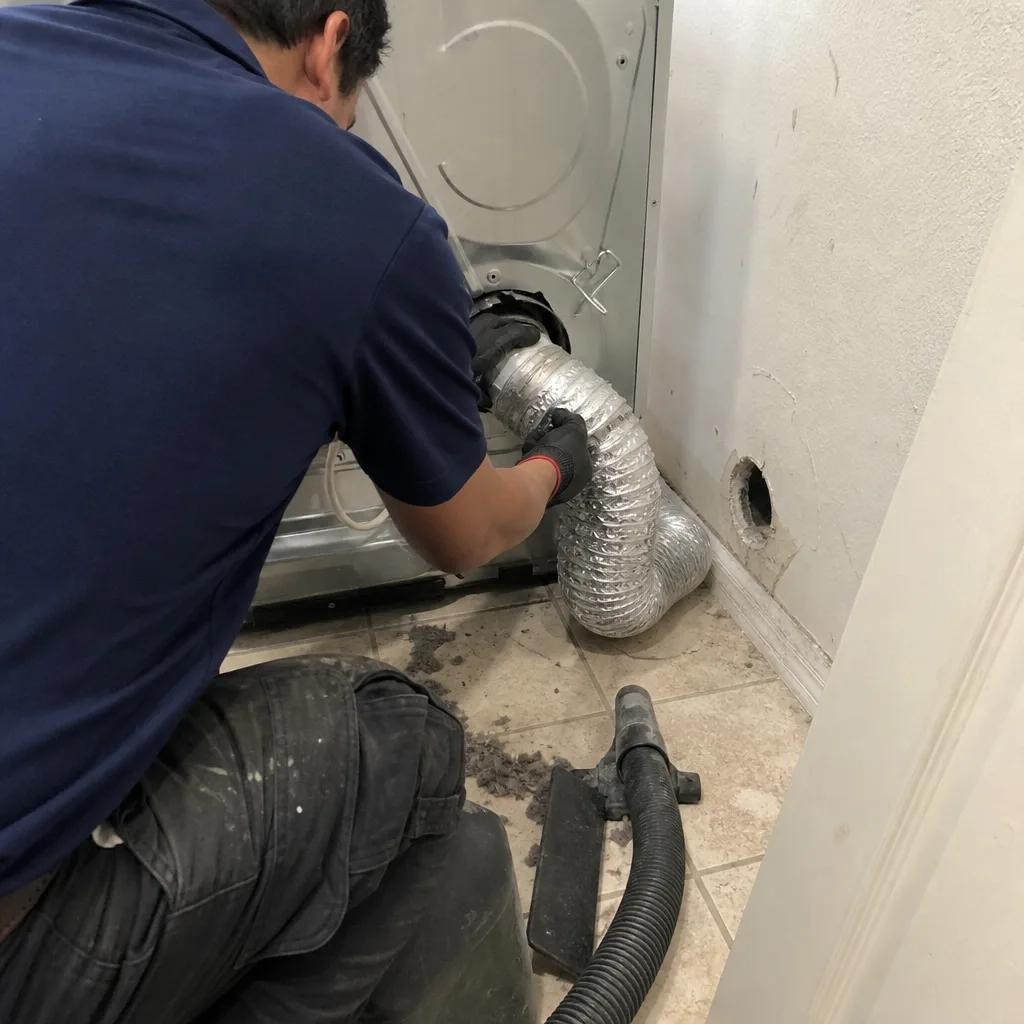
Whether work is permitted or not, the file you maintain is your evidence trail. In Schertz’s active resale market, where homes in neighborhoods like Allison Ranch and Friesenhahn Crossing turn over every 5-7 years, this file travels with the property and protects successive owners.
Required documents for any duct work:
- Written scope of work: What was done, to which duct runs, using what materials. Not an invoice summary, a narrative scope.
- Before and after photographic record: Interior of every duct run accessed, dated, with identifying markers. Our standard deliverable at CleanRun Air Duct Cleaning Schertz includes this as part of every job record.
- Technician name and company: Full name, not “the crew,” with company license information.
- Date of service: Exact date, not month approximation.
- Equipment used: Specific brands and models. “Rotobrush R8” or “Nikro HP20” is verifiable; “professional equipment” is not.
- Permit documentation: If applicable, the permit application, permit number, and inspection sign-offs. If not applicable, a written statement from the contractor explaining why.
- Warranty or guarantee terms: Written, with duration and coverage specifics. Our 365-Day Done Right Promise is documented on every job, not stated verbally.
Where to store it:
Physical file in your home records, digital backup in cloud storage, and a summary note in your homeowner’s insurance file. When we complete a job in Schertz, we provide a PDF job record with all photos embedded, suitable for forwarding to insurers, inspectors, or buyers.
The value of this file is retrospective. Five years after a cleaning, when you’re selling and the buyer’s inspector asks about that access panel in the plenum, your documentation proves the work was done by a identifiable technician, on a specific date, with specific equipment, and whether it was permitted. Without it, you’re explaining mystery work to someone whose default assumption is that it was done poorly and illegally.
Pricing: Cleaning vs. Repair Work in the Schertz Market
Understanding cost ranges helps you distinguish legitimate scope from padded proposals, and helps you budget when cleaning reveals repair needs. These are 2024-2025 market ranges for the Schertz-Guadalupe County area, based on our experience and permit cost schedules.
Air duct cleaning (no permit required):
- Whole-system cleaning, single HVAC unit: $450-$750
- Whole-system cleaning, dual-zone or larger home: $700-$1,100
- Dryer vent cleaning (separate service): $150-$250
Duct repair/modification (permit typically required):
- Single flex duct run replacement: $400-$700 plus permit fees ($85-$150 in Schertz)
- Plenum access panel installation: $350-$600 plus permit
- Trunk line repair/replacement (sheet metal): $800-$1,500 plus permit
- Whole-system duct replacement: $3,500-$7,000 plus permit and inspection fees
Permit and inspection fees (Schertz specific):
- Mechanical permit base fee: $85-$125 depending on project value
- Inspection fees: included in permit for standard schedule; $50 re-inspection if failed
- Guadalupe County fees: comparable, with longer scheduling lead times
The critical pricing principle: one flat price per system, agreed in writing before work starts. Haven Standard Clause 1 requires this. We do not quote per-vent prices, which incentivize contractors to find “extra” vents. We do not offer teaser rates that balloon on arrival. The price we write is the price you pay, and it specifies whether the scope includes cleaning only or cleaning plus permitted repair.
For Dryer Vent Cleaning in Schertz, which rarely triggers permit requirements but has its own safety considerations, pricing is similarly flat-rate and documented upfront.
Common Mistakes to Avoid
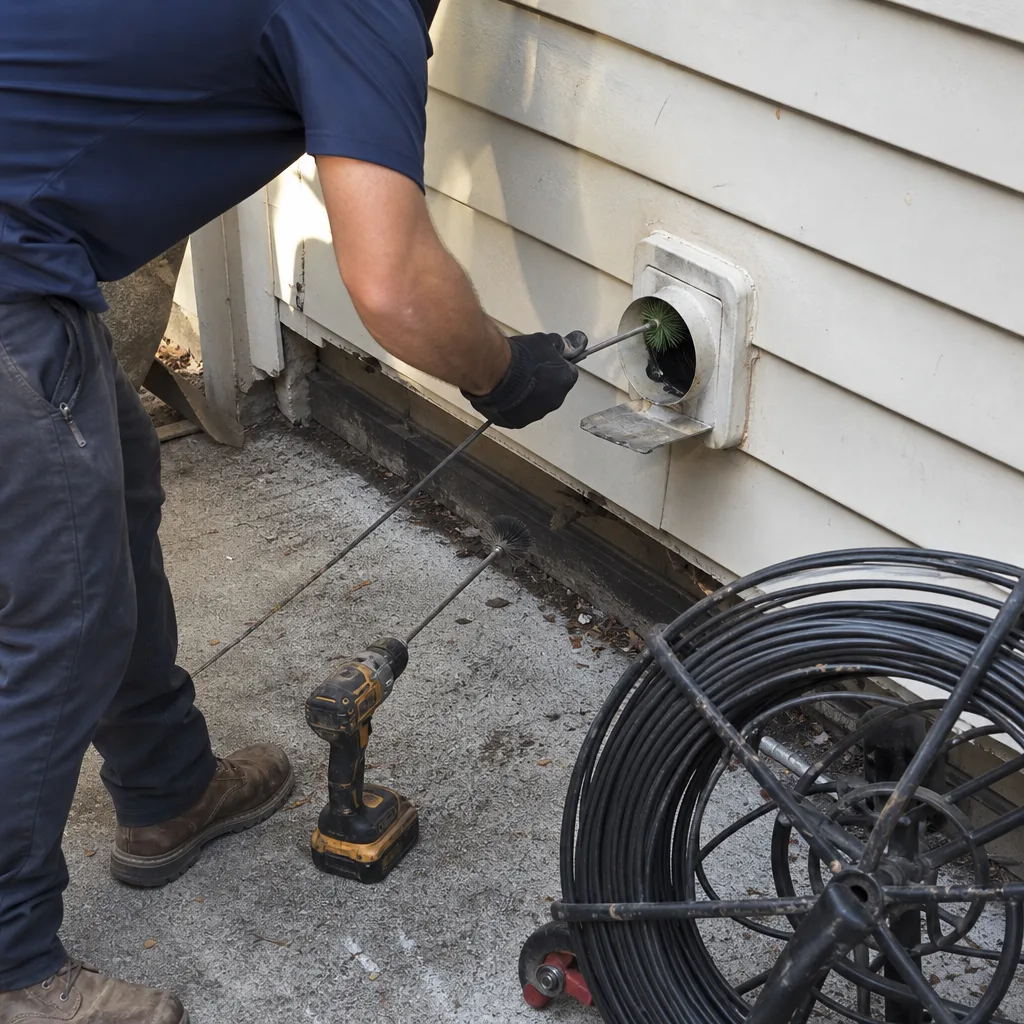
- Assuming “duct cleaning” covers everything the technician does. The industry term is narrow. Ask explicitly whether proposed work beyond debris removal requires permitting.
- Accepting verbal assurances about permits. A contractor who says “I’ll take care of it” but doesn’t show you the permit application is a contractor who hasn’t pulled one. Verify online through Schertz or Guadalupe County permit lookup.
- Paying for repair work before inspection sign-off. In Schertz, final payment should follow final inspection, or be structured with holdback until permit closure. Contractors demanding full payment before inspection are shifting risk to you.
- Discarding documentation after “routine” cleaning. The cleaning that seems unremarkable today becomes evidence of pre-existing condition when damage is discovered later. Keep every job record.
- Hiring based on lowest price without verifying permit compliance. The $79 coupon cleaner who finds $2,000 of “necessary” repair and does it unpermitted has cost you more than the $600 cleaner who documented everything properly.
- Ignoring ETJ boundaries. Your mailing address says Schertz, but your property may be county jurisdiction. The permit requirements differ, and assuming wrong delays projects.
- Failing to disclose prior unpermitted work at sale. Texas disclosure law is strict. Documented permitted work is an asset; discovered unpermitted work is a liability that kills deals.
When to Call a Professional
Call a licensed, permitted contractor when scope-camera inspection reveals duct damage, when airflow testing shows pressure imbalances that suggest disconnected runs, or when you’re preparing to sell and need to verify that all prior work is documented and permitted. In Schertz’s climate, with attic temperatures that degrade flex duct and seasonal humidity that corrodes metal connections, cleaning often reveals conditions that require professional evaluation beyond the cleaning scope.
CleanRun Air Duct Cleaning Schertz offers free estimates in Schertz. Call (830) 402-5110. Every estimate includes a written scope, equipment specification, and explicit statement of whether permitting applies. Our technicians are background-checked and uniformed under Haven Standard Clause 3: Verified Crews, and we identify each technician by name before arrival.
Frequently Asked Questions
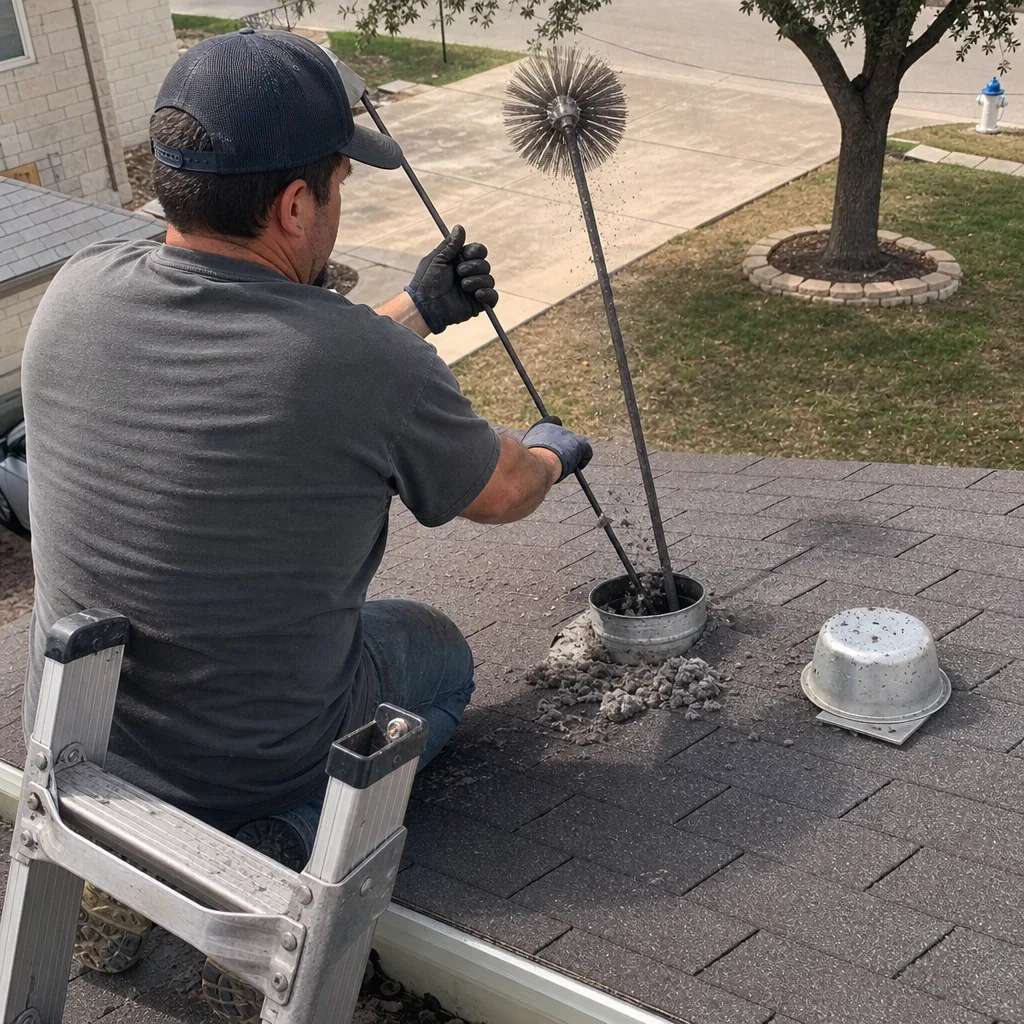
No. Air duct cleaning, defined as the removal of contaminants from existing duct surfaces through negative-pressure extraction, agitation, or vacuuming, requires no permit anywhere in Texas. The moment a contractor proposes replacing, modifying, or sealing duct components beyond surface cleaning, permitting may be required depending on your jurisdiction. Call (830) 402-5110 for a free estimate that specifies whether your job is cleaning-only or includes permitted repair work.
Check your property tax statement for taxing entities, or search your address on the Guadalupe County Appraisal District website, which displays jurisdiction. City of Schertz water customers are generally within city limits; well water or CTEC customers may be county. When in doubt, call the Schertz Building Division at (830) 402-5110 with your address. We’ve serviced homes on both sides of the boundary in the same Schertz neighborhood.
The buyer’s lender or insurer may require permit retroactivity before closing, meaning you pay for a permit application, expose the work for inspection, and potentially redo non-compliant portions. Alternatively, the buyer may negotiate a price reduction or walk away. The only protection is documentation proving when work was done, by whom, and whether it was permitted, or a retroactive permit obtained before listing.
Some companies hold both cleaning and HVAC mechanical licenses; many do not. In Texas, duct repair requires a TDLR Air Conditioning and Refrigeration Contractor license for work on the distribution system. A duct cleaning company without this license must subcontract repair work or refer you to a licensed contractor. At CleanRun Air Duct Cleaning Schertz, we clean under our service license and refer repair work to licensed HVAC contractors we trust, with permit compliance verified.
Base mechanical permits in Schertz run $85-$125 for typical residential duct repair, with inspection included. Guadalupe County charges comparable fees. Re-inspection after failure is $50 in Schertz. These fees are minor compared to the cost of unpermitted work discovered at sale. We include permit costs explicitly in any repair estimate we facilitate.
Document what you know, photograph visible work, and consider a scope-camera inspection to assess condition and compliance. If you’re planning to sell, consult a licensed HVAC contractor about retroactive permitting, which is often simpler than buyers discovering it during inspection. If the work is functional and accessible, retroactive permits are usually obtainable without full replacement.
We do not perform unpermitted repair work. If our inspection reveals damage requiring repair, we document it with photos, provide a written scope, and refer you to a licensed HVAC contractor who will pull the required permit. Our cleaning work is documented with before-and-after photos of every duct run, included as a standard deliverable, so the condition we found is on record for any subsequent contractor or inspector.
The Bottom Line
Air duct cleaning in Texas is unregulated and unpermitted, which is why the industry attracts operators who blur into repair work without the licensing or permits that repair requires. The homeowner’s protection is knowledge: knowing where cleaning ends and mechanical work begins, knowing your jurisdiction’s permit requirements, knowing what questions to ask, and knowing what documentation to keep. In Schertz’s growing market, where homes built during the 2015-2025 boom are now showing their first duct system failures, this knowledge translates directly to protected resale value and avoided liability. Get every scope in writing, verify every permit, and keep every record.
Written by Tomas Reyes, Owner at CleanRun Air Duct Cleaning Schertz, serving Schertz since 2013.