
Whole-system duct and dryer vent check with before-and-after photos - you see exactly what came out of your vents
That "$99 whole-house special" is a bait ad - the real number appears once they are in your hallway, or the "clean" is a shop-vac at the register. We photograph the inside of your ducts before and after instead.
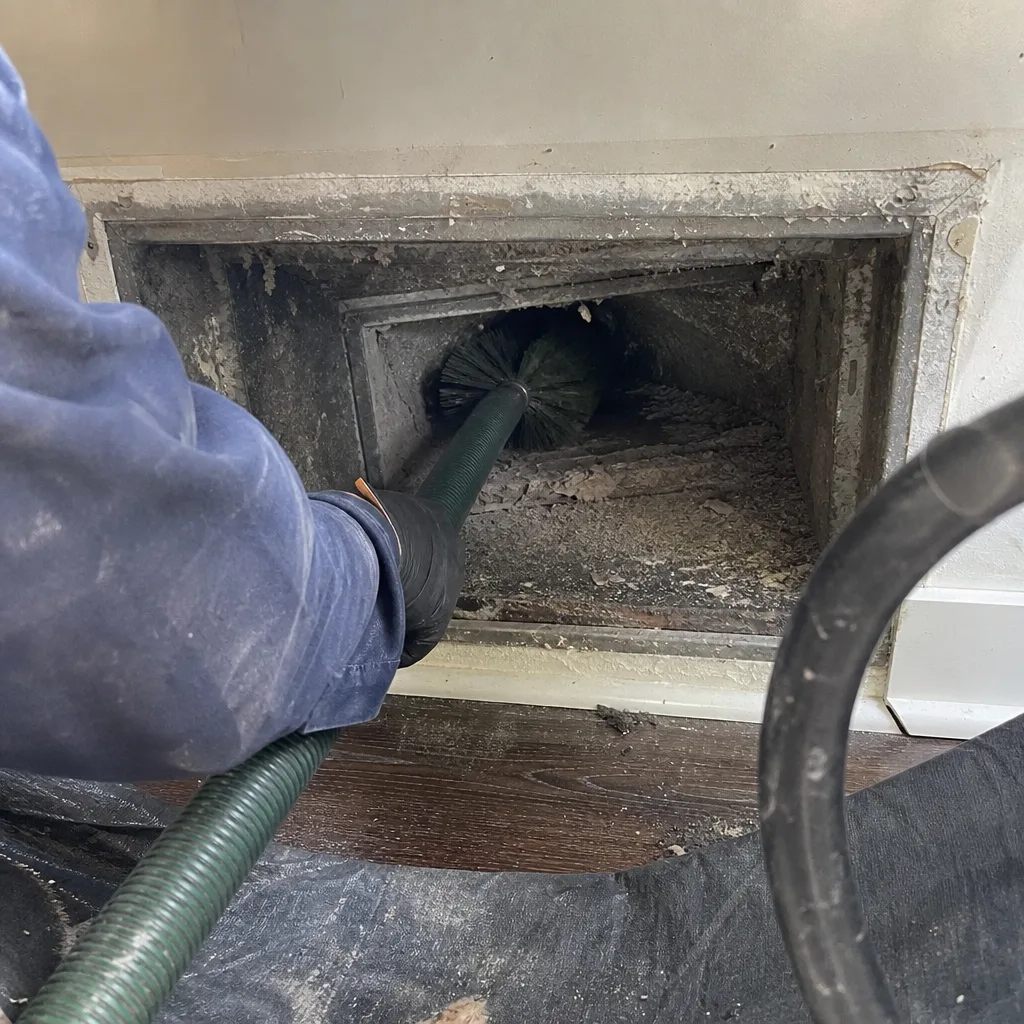 Before
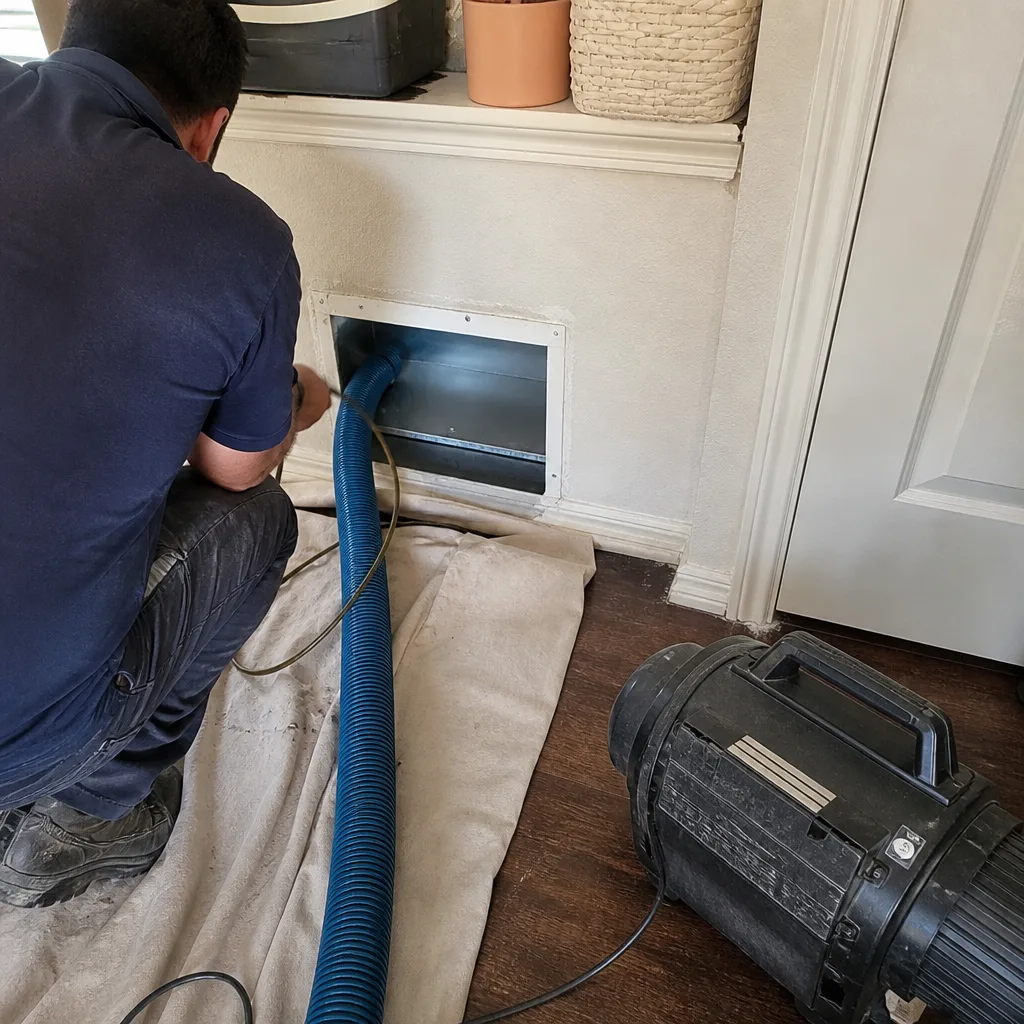 After
After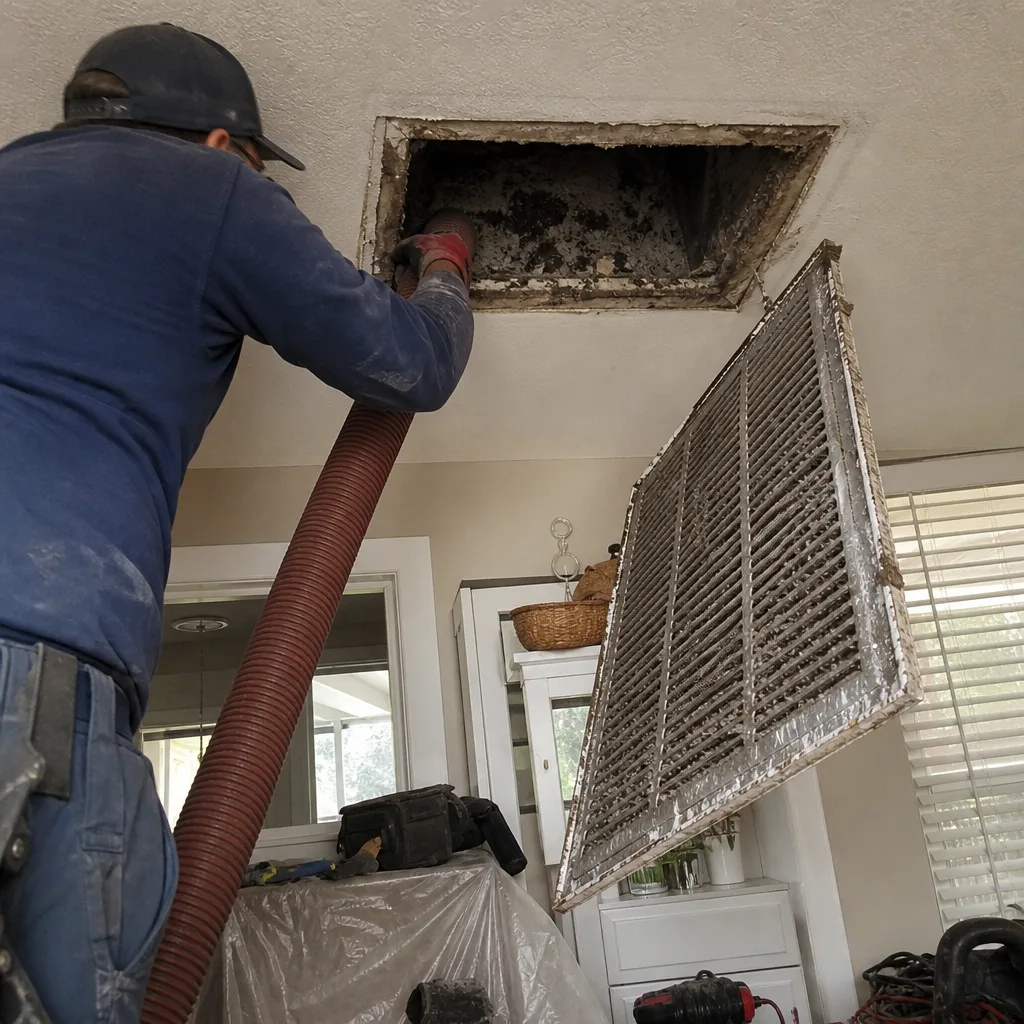 Before
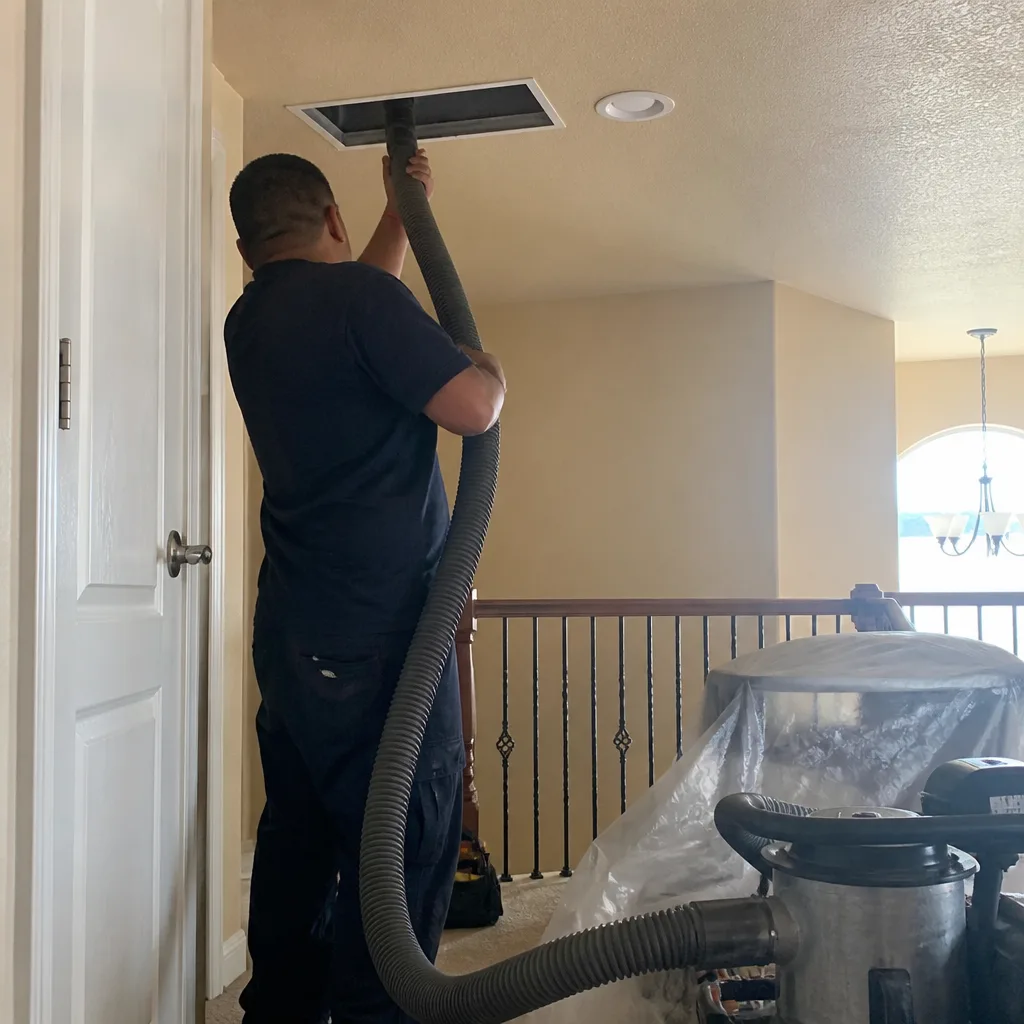 After
After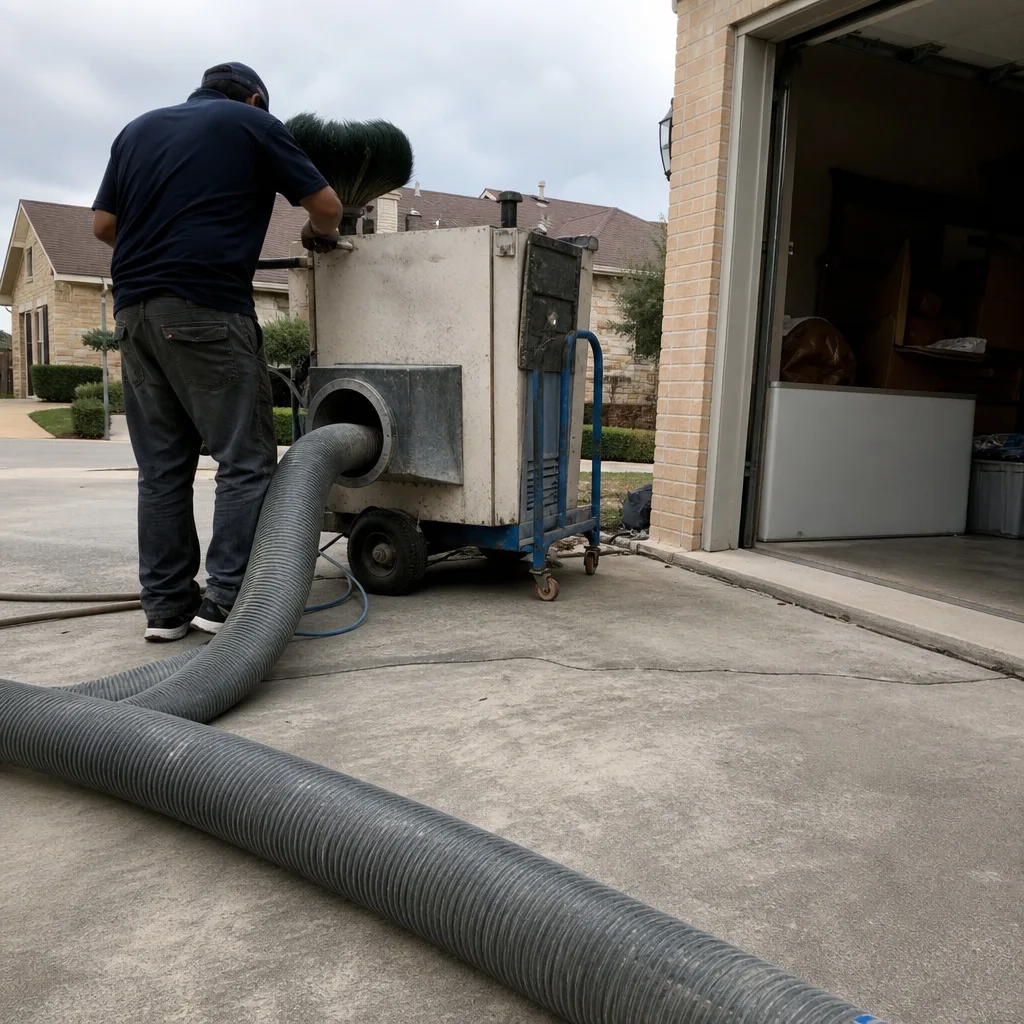 Before
 After
AfterDryer Vent Inspection in Schertz, TX
A dryer vent inspection in Schertz, TX typically runs $79-$149 and takes 30 to 60 minutes, depending on vent length and accessibility. CleanRun Air Duct Cleaning Schertz inspects the full vent run – from the dryer cabinet connection to the exterior termination cap – using a camera, airflow meter, and visual check of every transition and elbow. Every inspection concludes with a written price for any recommended work and a photo record of what the camera found, delivered to you before we ask for a decision.
If your dryer has been taking two cycles to dry a full load, or you haven’t had the vent looked at in more than two years, a professional inspection is the right starting point. Our Dryer Vent Cleaning in Schertz page covers the full cleaning side of this service. This page explains what an inspection actually involves, what we check, and what it costs.
To schedule or get a written price before committing to anything, call us at (830) 402-5110. A live person answers every call – no voicemail, no callback queue.
Why Schertz Homes Specifically Need Dryer Vent Inspections
Schertz sits in a humidity band where warm, moist air coming off the Guadalupe River corridor combines with summer heat that rarely drops below 90 degrees from June through September. That matters for dryer vents because lint doesn’t just accumulate inside the duct – it absorbs ambient moisture and compresses into a dense, slow-burning mass at elbows and transitions. A duct that looks passable on a visual check from the laundry room can have a near-complete blockage three feet into the run, behind a wall or inside a floor joist cavity.
Neighborhoods in Schertz with slab construction – which covers most homes built in Schertz since the early 2000s, including large tracts in Northcliffe, Elbel Road corridor homes, and newer developments near FM 1518 – often route the dryer vent horizontally through interior walls before it turns upward. Every horizontal run and every elbow is a potential lint trap. We see it on camera more often than homeowners expect.
The other factor specific to this area: many Schertz homes were built during the 2004-2016 construction boom with flexible foil or plastic accordion duct, which was legal at the time but is no longer code-compliant under current IRC Section 504 requirements. That type of duct traps lint in its ridges, collapses over time, and presents a measurable fire risk. An inspection identifies this immediately.
When You Need a Dryer Vent Inspection
- Drying time has crept up. A properly flowing vent should let most cotton loads dry in one 45-to-60-minute cycle. If you’re running two cycles or more, restricted airflow is the most common cause – and an inspection tells you whether it’s lint, a crushed duct, or a blocked cap before you spend money on a service call for the dryer itself.
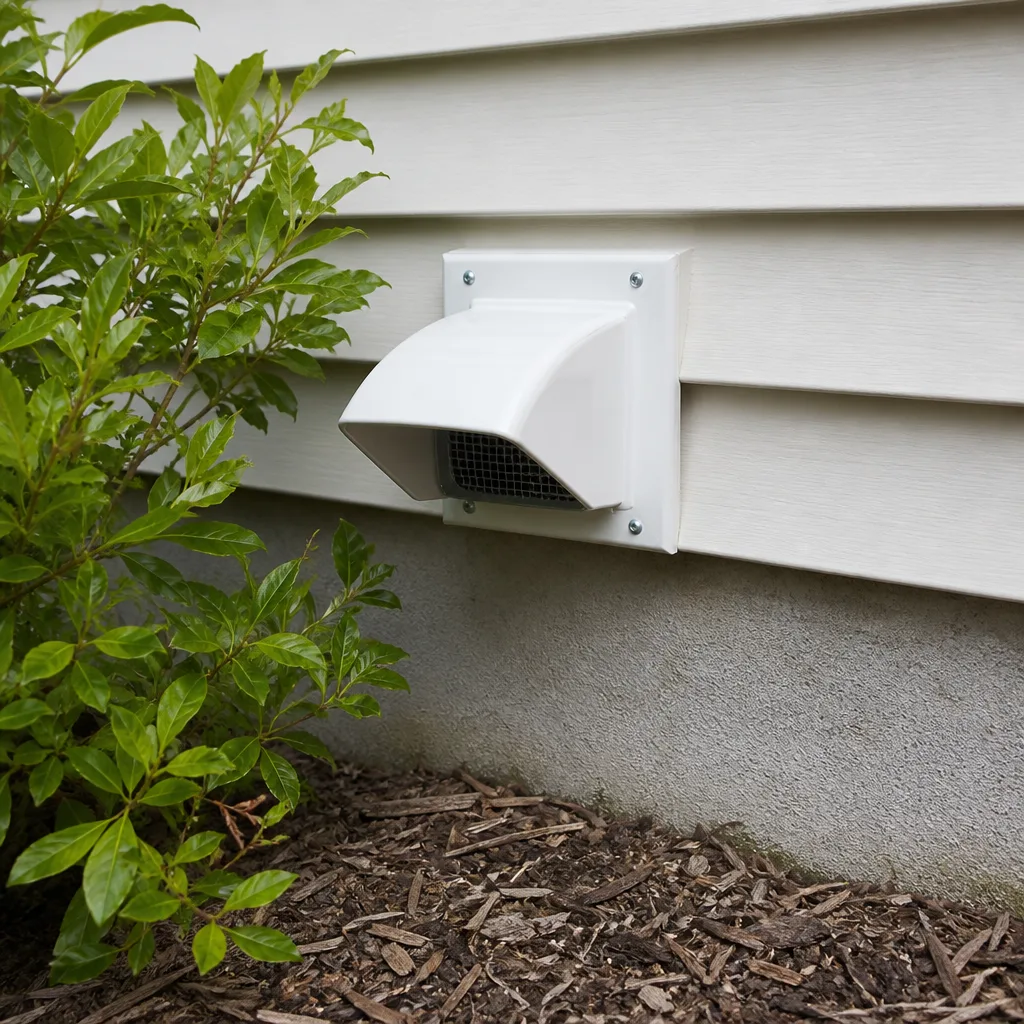
- The exterior cap isn’t opening during a cycle. Step outside while the dryer runs and watch the termination cap. The flap should open fully with visible airflow. If it barely moves, or doesn’t move at all, the duct is partially or fully blocked somewhere between the dryer and the wall.
- The laundry room is noticeably warmer than the rest of the house. When a dryer vent can’t exhaust properly, heat backs up into the room. In a Schertz summer, that difference is especially obvious – a room that should be climate-controlled running five to eight degrees warmer than adjacent rooms is a reliable symptom of vent restriction.
- You’ve never had it inspected – or it’s been more than two years. The National Fire Protection Association recommends annual dryer vent inspection. Most Schertz homeowners we talk to haven’t had one since move-in, if ever. High-volume households – four or more people, frequent large loads – should inspect annually without exception.
- You smell something burning during or after a cycle. A burning smell isn’t always the dryer’s heating element. Lint accumulation inside a hot duct produces a distinct, faintly acrid smell. This situation requires immediate inspection – don’t continue using the dryer until the vent is cleared and verified safe by a trained technician. This is one of the few circumstances where we’ll say directly: stop using the dryer until someone has looked at it.
- A recent renovation touched the laundry room or interior walls. Contractors occasionally disconnect dryer vents and reconnect them incorrectly, or add insulation that compresses a flexible duct without realizing it. If your laundry room or the walls around it were opened in the last two years, a post-renovation inspection is worth doing.
BeforeAfterOur Dryer Vent Inspection Process
The inspection follows a fixed sequence. Nothing is skipped to save time, and nothing gets added to the scope without a written price in your hand first. Here’s exactly what happens.
- Written price, delivered before we begin. Before a panel comes off or a camera goes in, you receive a written price for the inspection itself – and a clear explanation of what the inspection includes. This is Haven Standard Clause 1. There is no “we’ll let you know what we find” ambiguity. The inspection price is fixed.
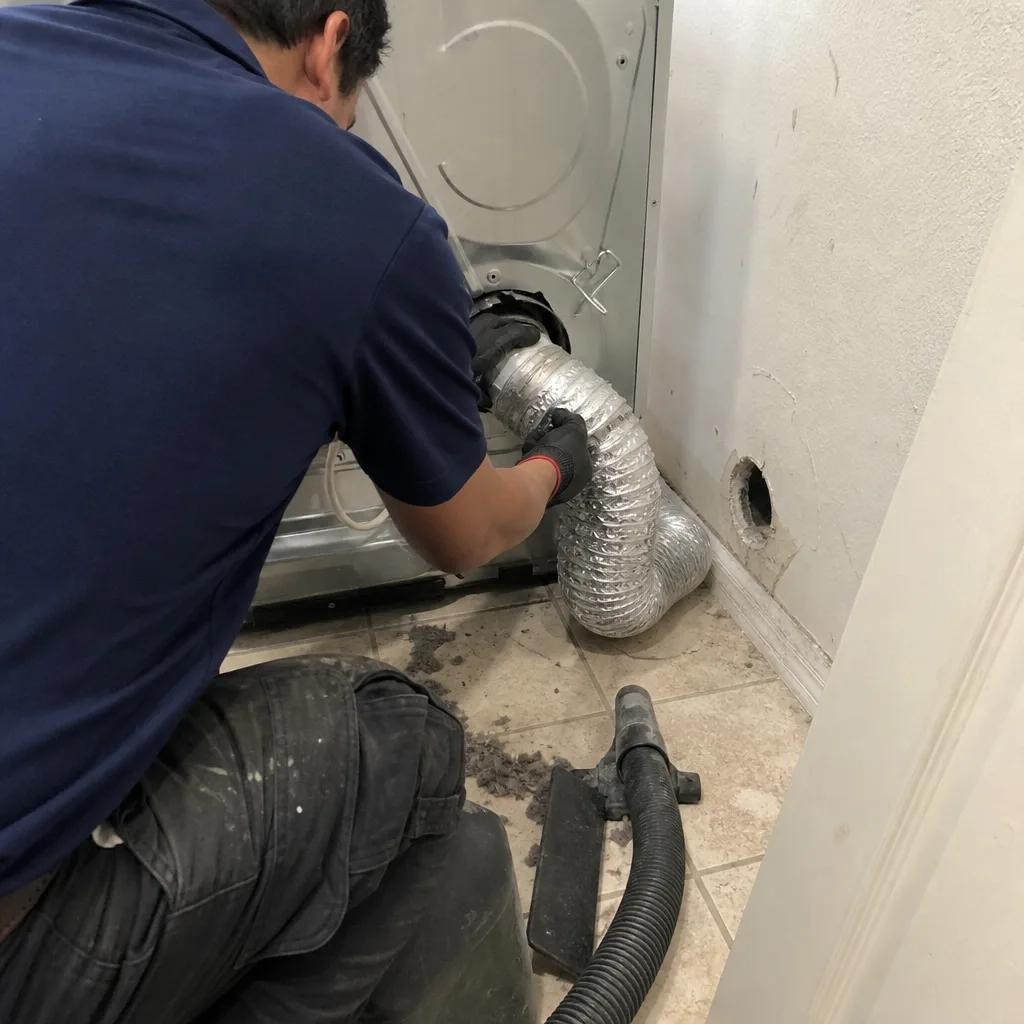
- Visual inspection of the connection point and transition duct. We start at the dryer cabinet. The technician checks the transition duct – the short flexible section between the dryer and the wall – for correct diameter (standard is 4 inches), material compliance (rigid or semi-rigid metal only, under current code), kinks, compression, or improper connections. Foil accordion duct at this connection point gets documented and flagged. It’s a common finding in Schertz homes built before 2010.
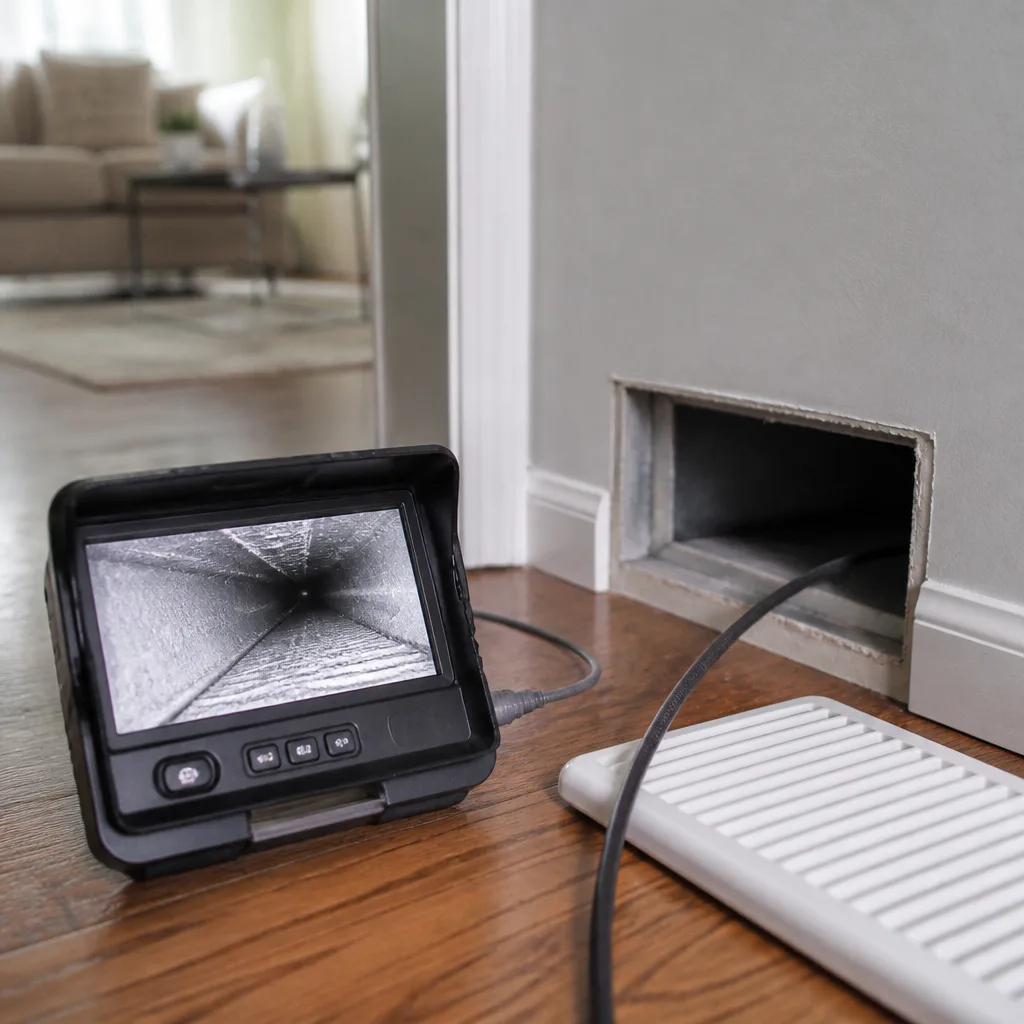
- Camera inspection of the full duct run. A flexible inspection camera travels the entire duct run from the connection point to the exterior termination. The camera records the interior condition at every elbow, joint, and transition. We’re looking at four things: lint accumulation depth (anything over one-quarter inch at an elbow is notable), duct material and condition, joint integrity (separated sections are a common finding in older Schertz homes with multiple elbows), and any signs of moisture or mold growth near the exterior end of the run.
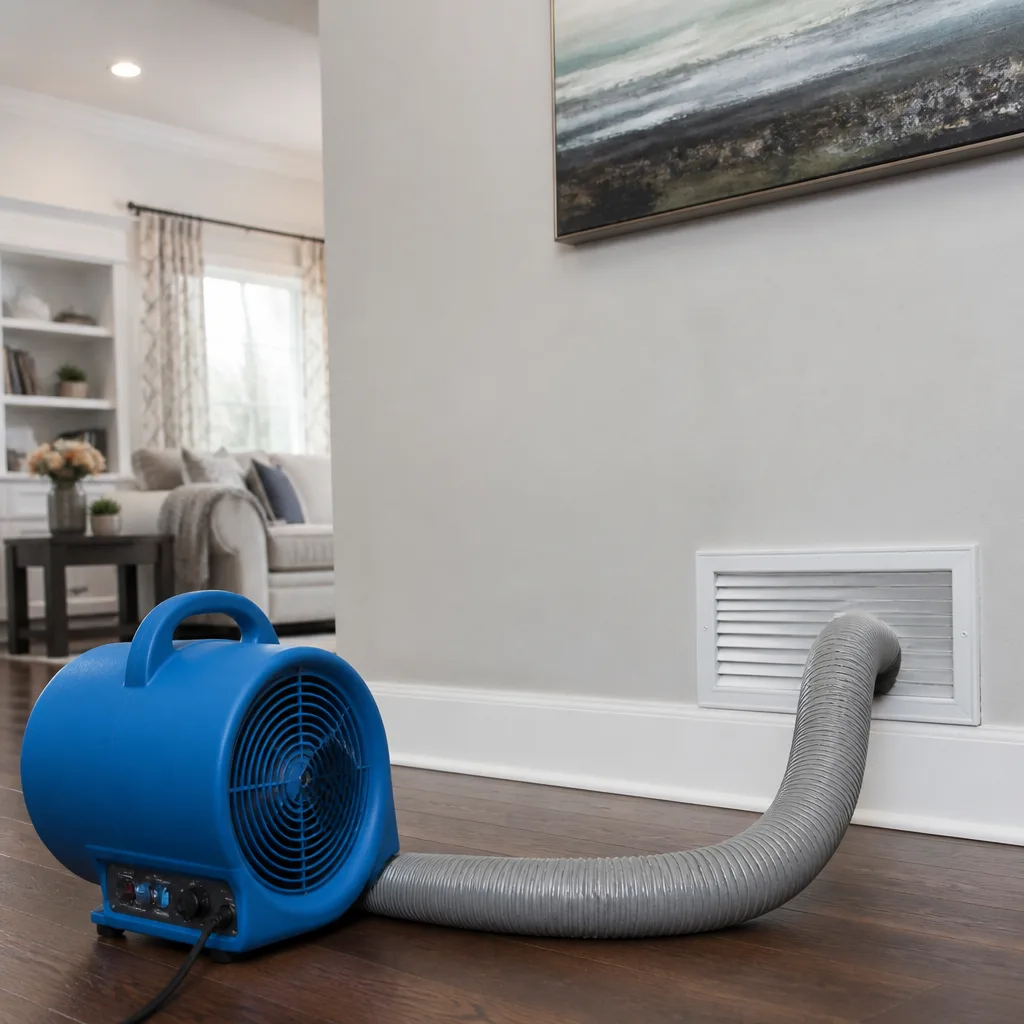
- Airflow measurement at the termination cap. We measure airflow volume at the exterior cap using a calibrated meter. The baseline for a properly functioning 4-inch dryer vent is approximately 100-150 cubic feet per minute (CFM). A reading below 70 CFM indicates meaningful restriction. This gives you a number, not just a technician’s opinion.
- Exterior termination inspection. The cap itself gets checked for bird nests (a frequent issue on Schertz homes with vents terminating under eaves or near landscaping), damaged flaps, improper screening, and correct orientation. A cap fitted with fine mesh screen – sometimes installed by well-meaning pest-control contractors – blocks lint and must be replaced. We document this on camera.
- Written findings report and photo record delivered to you. The inspection closes with a written summary of what the camera found, including the before-condition photos. If we recommend cleaning, repair, or duct replacement, that recommendation comes with a written price attached – not a verbal estimate. You decide what to do with the information. Haven Standard Clause 1 applies to every line of that scope.
Dryer Vent Inspection Pricing in Schertz
How Much Does Dryer Vent Cleaning Cost? (2026 Price Guide) - Schertz, TX: dryer vent inspection in Schertz costs $79-$149 for most residential jobs. Here’s what drives the range.
| Scenario | Typical Price Range |
|---|---|
| Standard single-story home, vent run under 15 feet, one or two elbows | $79-$99 |
| Two-story home, interior vent run, three or more elbows, or laundry room above first floor | $99-$129 |
| Longer runs (15-25 feet), difficult access, or roof termination requiring ladder work | $129-$149 |
If the inspection finds Dryer Vent Cleaning services are needed, the inspection price is credited toward the cleaning cost when you schedule both on the same visit. Cleaning pricing is separate and quoted in writing before any cleaning work begins.
What won’t affect your price: the neighborhood you’re in, how dirty the duct is, or whether we think you’re likely to say yes to additional work. The written price is the price.
To get your written inspection price before booking, call (830) 402-5110. We’ll quote you over the phone based on your home’s layout, no site visit required to get the number.
What CleanRun Finds Most Often in Schertz
After inspecting dryer vents in Schertz since 2013 and across more than 52,000 homes served in this region, a few findings come up repeatedly:
- Foil accordion duct left from original construction. It’s inside the wall, so homeowners have no way of knowing it’s there. The camera shows it clearly. It’s not compliant under current IRC 504, and its ridged interior traps lint at a rate roughly three times higher than smooth rigid metal duct.
- Separated joints mid-run. Homes with multiple elbows and longer runs often have at least one joint that has pulled apart over time. The dryer is venting into the wall cavity, not to the exterior. Lint accumulates inside the wall, and moisture from the exhaust has nowhere to go. We see this in Schertz homes built in the late 2000s and early 2010s, particularly in two-story configurations.
- Blocked exterior caps. Bird nests, wasp nests, and collapsed flaps are the three most common causes of a cap that won’t open under airflow. One home on the Elbel Road corridor had a mud dauber nest packed so densely into the cap that the dryer had been effectively venting into the exterior wall cavity for an estimated two seasons before the homeowner called.
- Lint depth at first elbow exceeding one inch. In high-usage households – families with children, households doing seven or more loads per week – lint at the first elbow inside the wall can reach one to two inches of compacted material within 18 months of the last cleaning.
Equipment We Use for Dryer Vent Inspections
The inspection camera we deploy on dryer vent jobs is a flexible-probe video system built for duct-diameter work – not a general-purpose endoscope. It records to a device that we can share with you on-screen and include in your photo record. For airflow measurement, we use a calibrated CFM meter at the termination point.
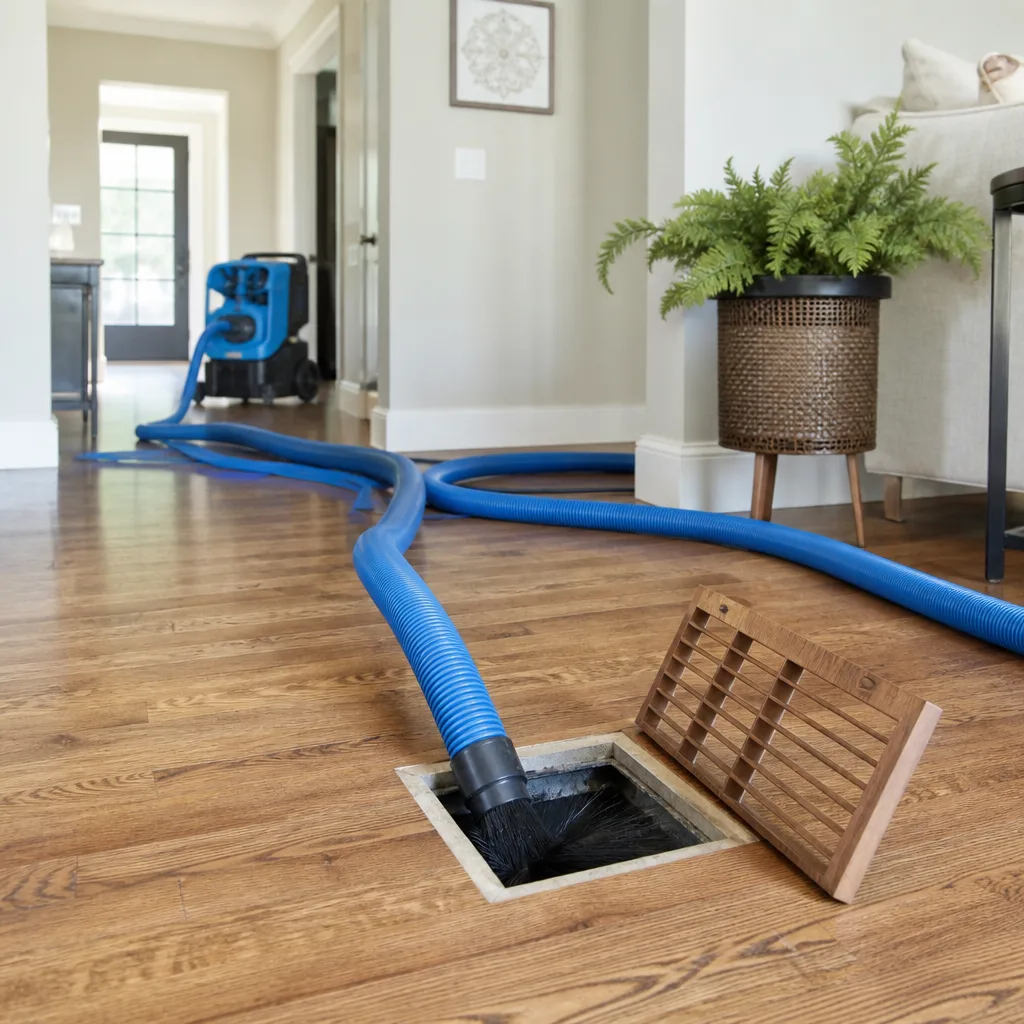
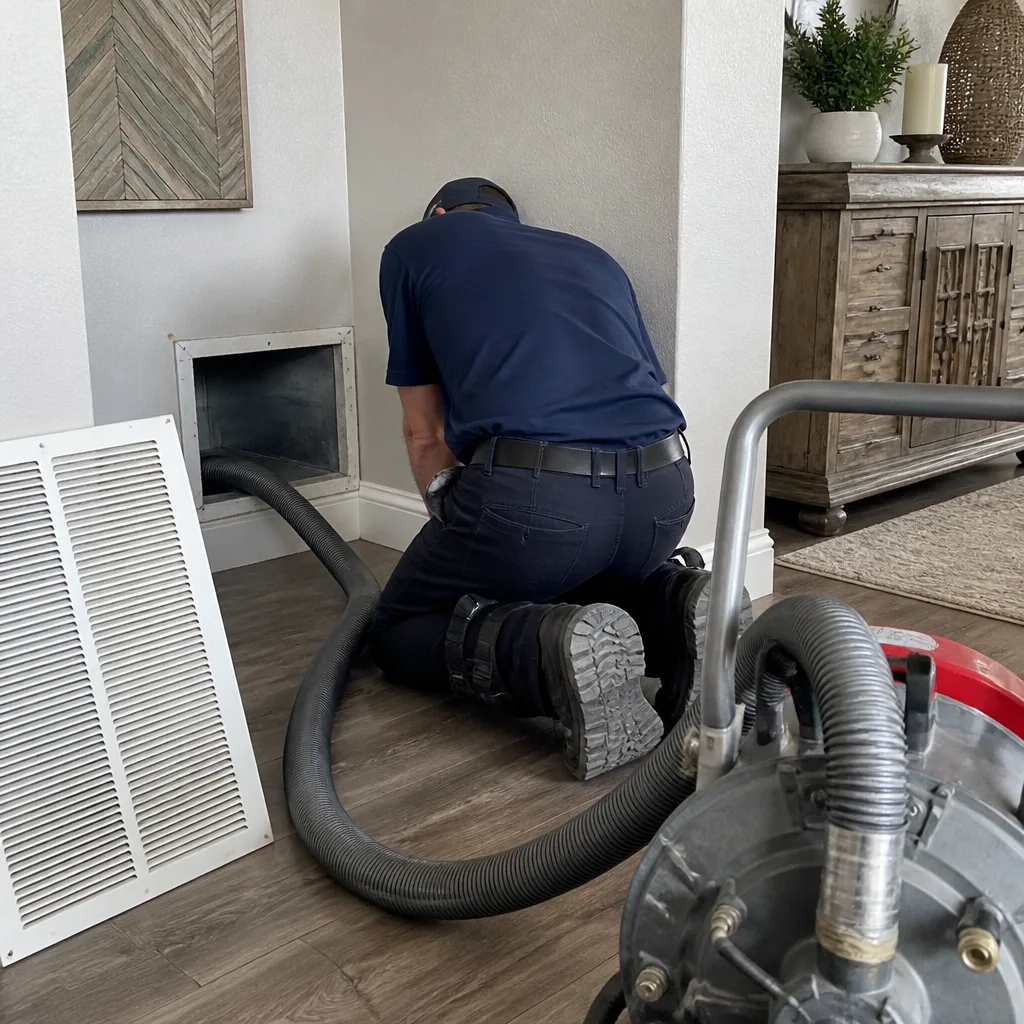
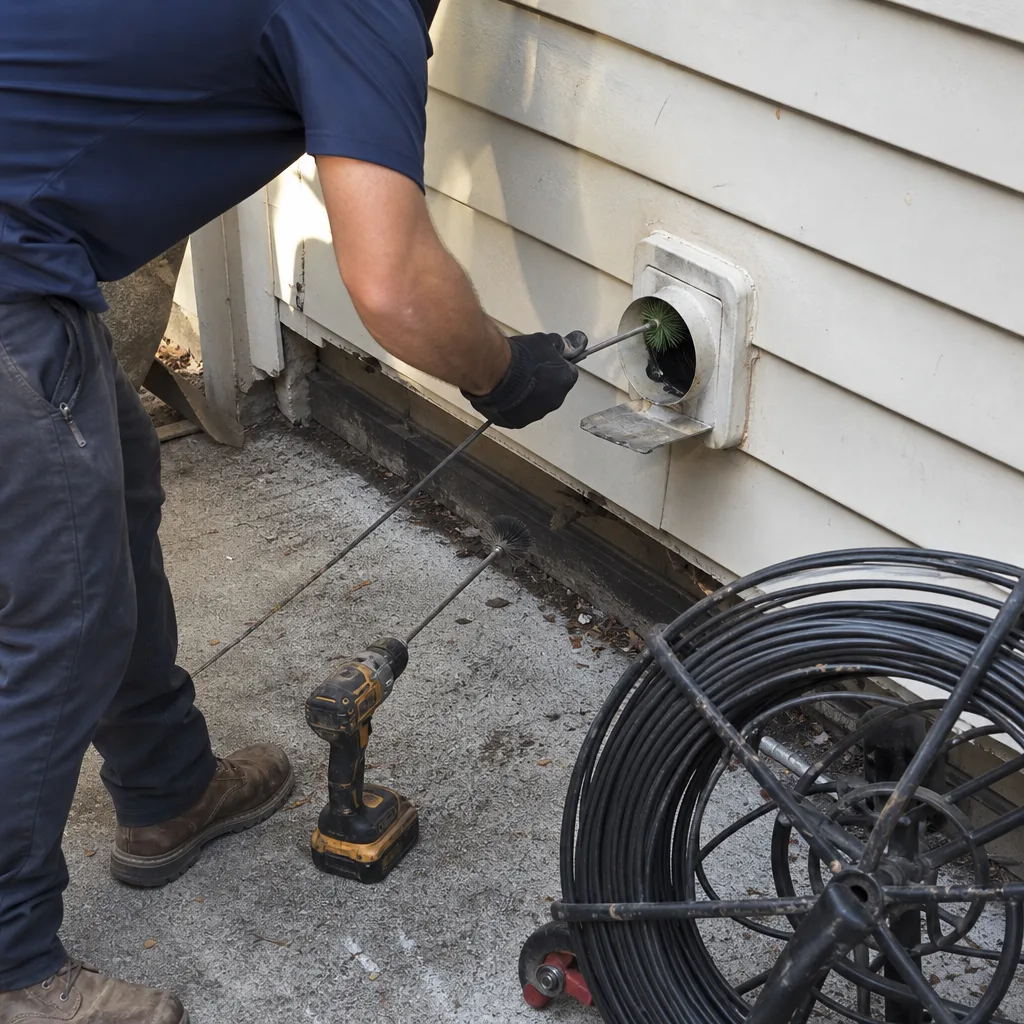
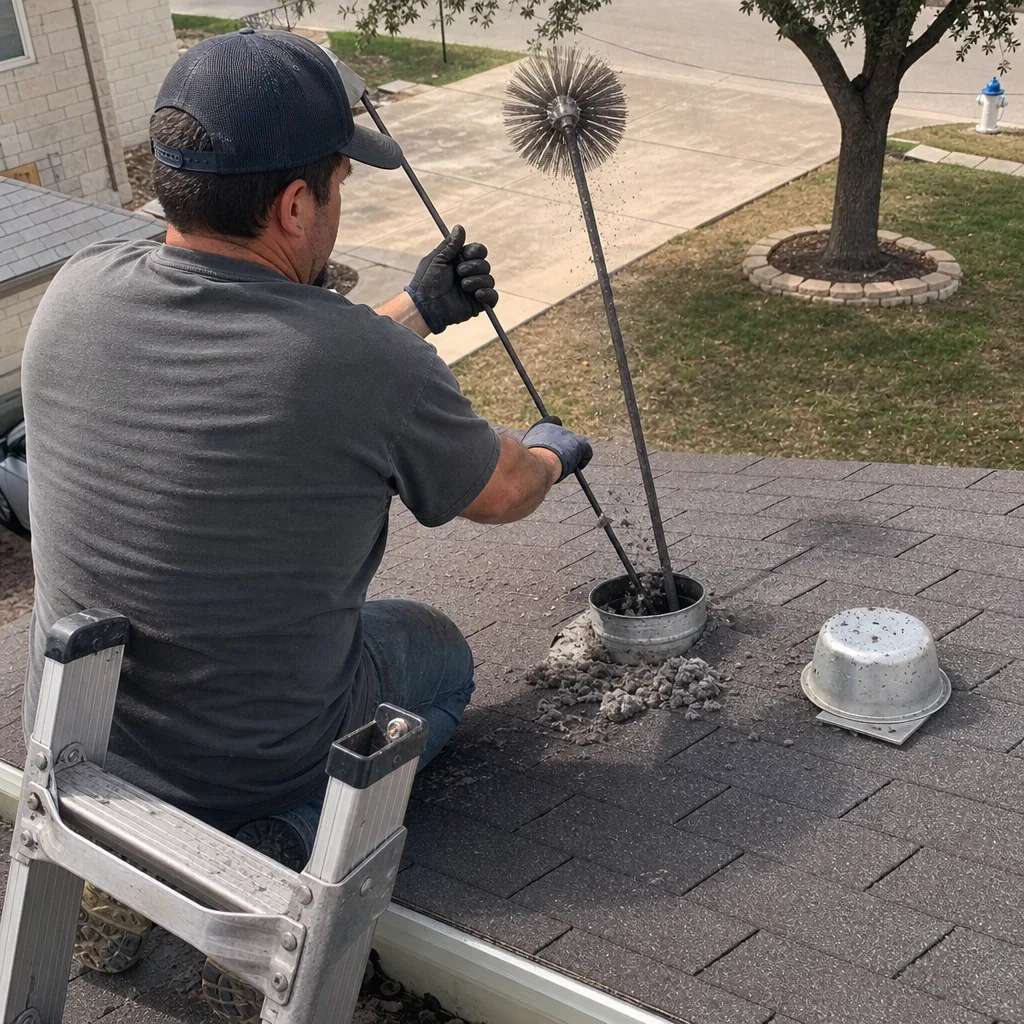
When an inspection leads directly to Vent Cleaning, the primary cleaning tool is a Rotobrush rotary brush system with negative-pressure extraction – meaning the vacuum runs simultaneously with the brush, so displaced lint is captured and removed rather than pushed further into the run or into the room. We do not use a shop vac with a brush attachment. The difference in what gets removed is visible in the before-and-after photos.
The 365-Day Done Right Promise
Every inspection CleanRun performs is backed by the 365-Day Done Right Promise. If something we inspected, documented, or recommended is later found to be inaccurate or incomplete, we come back and make it right – in writing, not subject to manager approval or interpretation. This applies to every job, including inspections where no cleaning was performed.
This isn’t a warranty designed to sound good in marketing. It’s written into every job record we deliver to you. If you compare it to a competitor’s guarantee, ask them to put theirs in writing on the invoice. That’s the test.
FAQs – Dryer Vent Inspection in Schertz
How often should a dryer vent be inspected in Schertz?
Annual inspection is the standard recommendation for most households. Schertz’s humidity levels and the prevalence of longer interior vent runs in local construction mean lint accumulates faster here than in drier climates, so annual inspections are especially practical. High-usage households – four or more people doing frequent large loads – should inspect annually without exception. Call (830) 402-5110 for a written price and to schedule.
Is a dryer vent inspection the same as dryer vent cleaning?
No – an inspection and a cleaning are distinct services. The inspection uses a camera and airflow meter to document what’s inside the duct run and identify any problems. Cleaning physically removes the lint and debris the inspection found. You may need both, or the inspection may show a duct that’s in good condition and doesn’t need cleaning yet. We quote them separately, in writing, so you can decide based on what the camera actually shows.
Can I inspect my own dryer vent?
You can check the exterior cap from outside and shine a flashlight into the connection point behind the dryer. What you can’t do from either end is see around elbows, measure airflow volume, or inspect the duct material and joint integrity inside the wall. Those are the areas where the problems we find most often in Schertz homes actually live. A camera inspection gives you documented evidence of the full run’s condition, not a guess based on what’s visible from the ends.
What happens if the inspection finds a problem?
You receive a written scope of recommended work with a written price attached before any decision is made. The inspection findings are documented in the photo record we deliver to you. If you want to get a second opinion on the recommended scope, we’ll hand you the photos and written findings to take to another provider – that’s the point of documenting everything. If you move forward with CleanRun, the inspection cost is credited toward the cleaning or repair on the same visit. Call (830) 402-5110 to get the inspection price and any follow-on estimates in writing before we arrive.
Schedule a Dryer Vent Inspection in Schertz
If your dryer has been running longer than it should, if you’ve never had the vent inspected, or if you just want to know what’s actually inside that duct run – call (830) 402-5110. We’ll give you a written price over the phone based on your home’s layout, book a time that works for you, and deliver a full camera record of what we find. No verbal estimates, no scope surprises, and no recommendation without a written price attached.
CleanRun has been doing this in Schertz and the surrounding area since 2013. Every job starts with a written price. Every inspection ends with a documented photo record. The CleanRun home page has the full picture of what we do and how we do it, if you want to look before you call.
Written by Tomas Reyes, Owner at CleanRun Air Duct Cleaning Schertz, serving Schertz since 2013.