
Last updated September 23, 2026
Whole-system duct and dryer vent check with before-and-after photos - you see exactly what came out of your vents
That "$99 whole-house special" is a bait ad - the real number appears once they are in your hallway, or the "clean" is a shop-vac at the register. We photograph the inside of your ducts before and after instead.
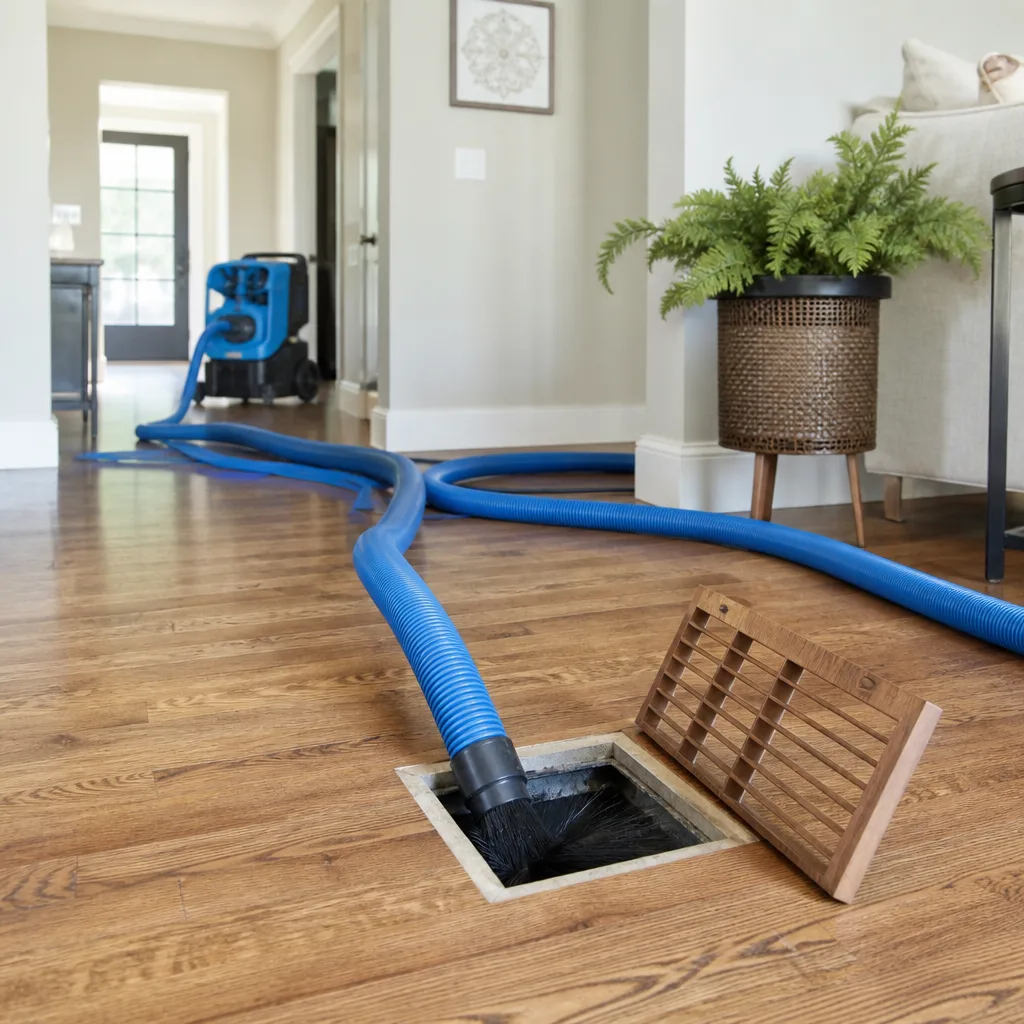
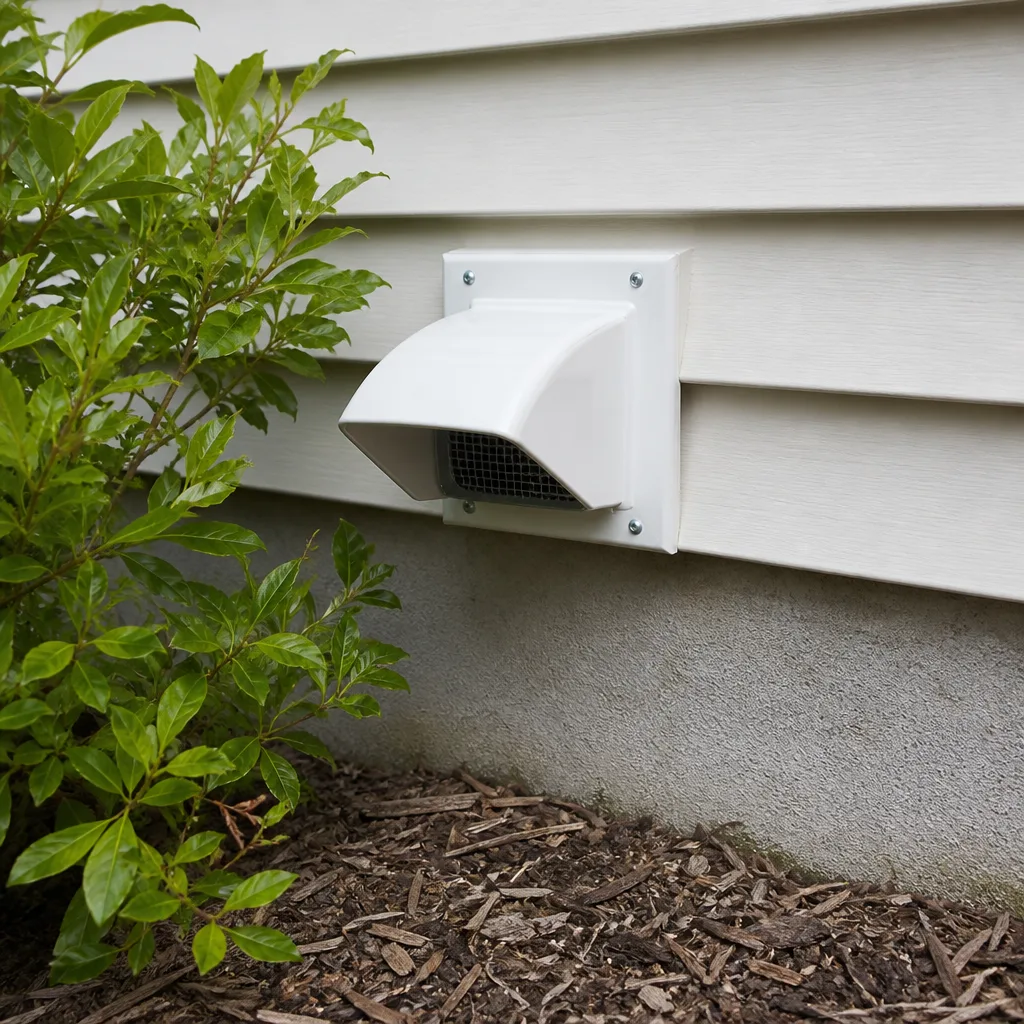
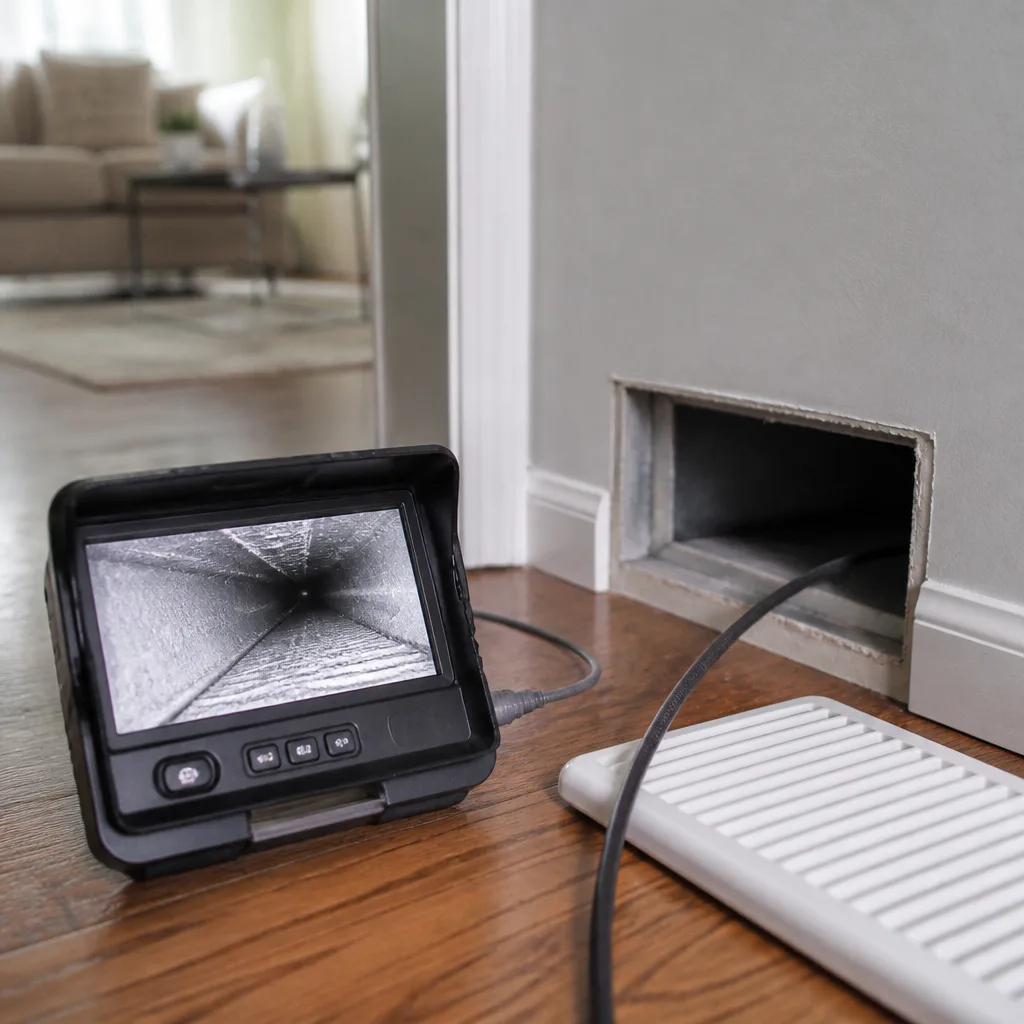
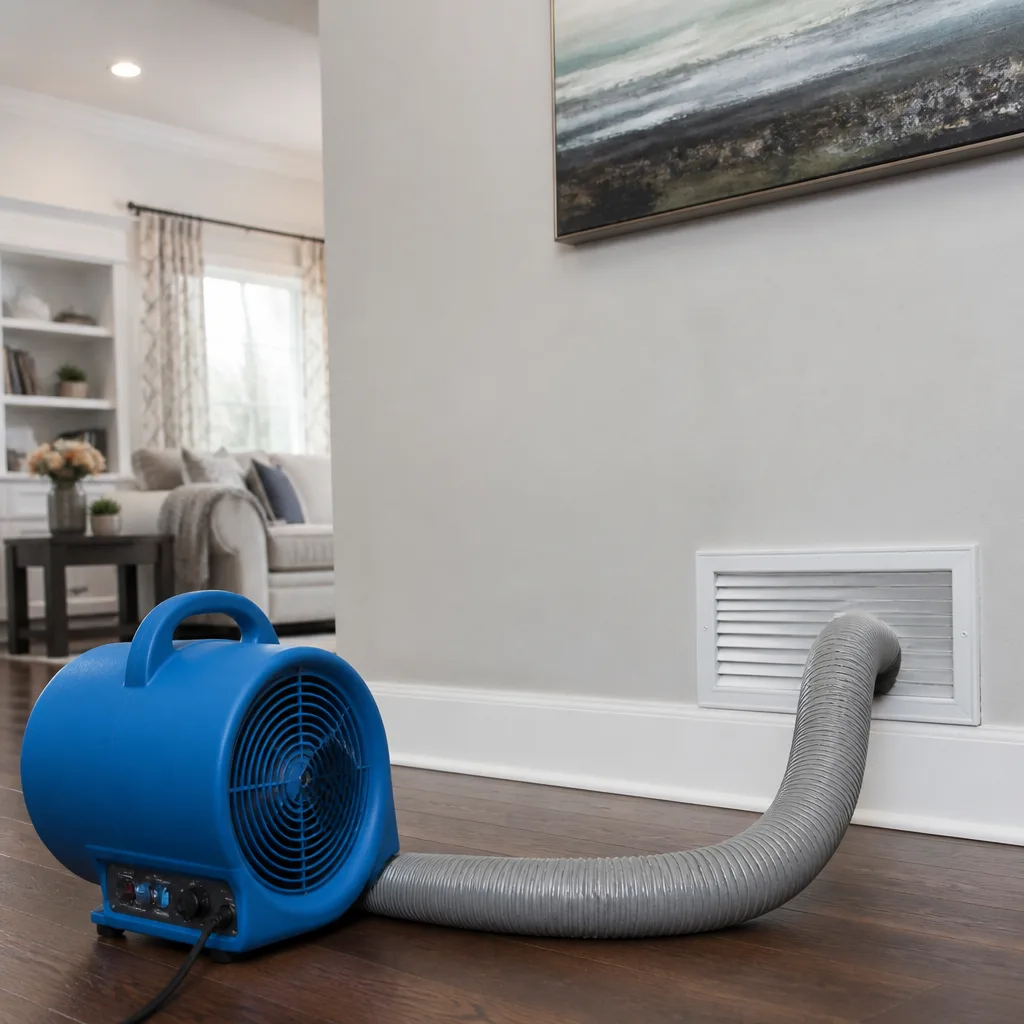
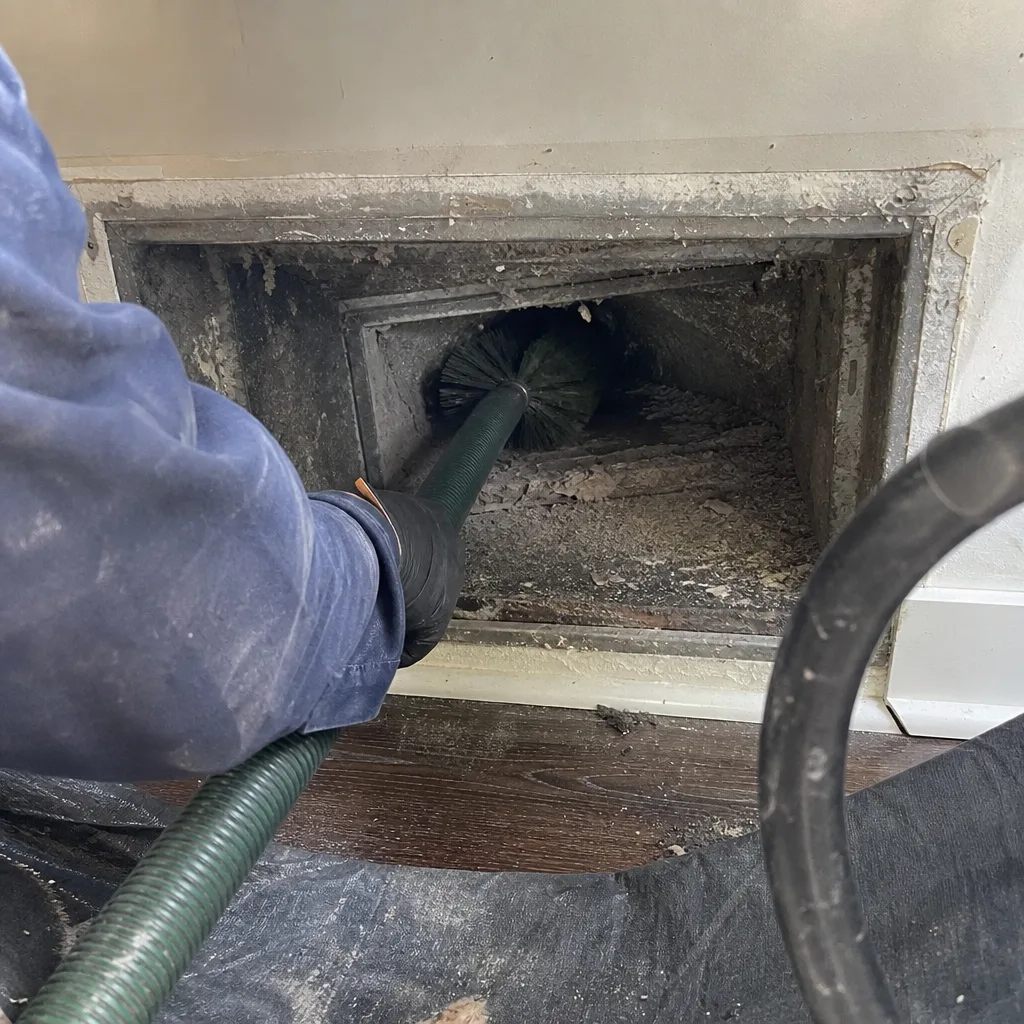 Before
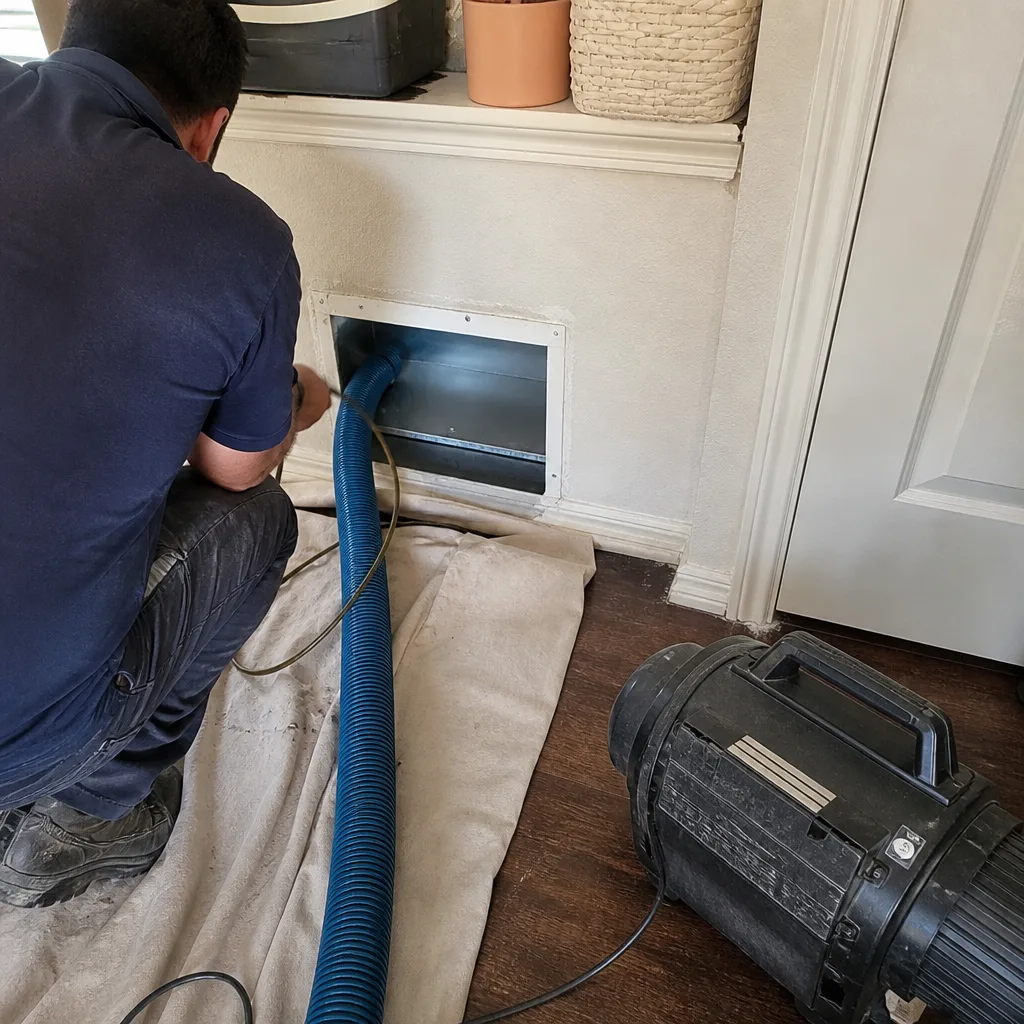 After
After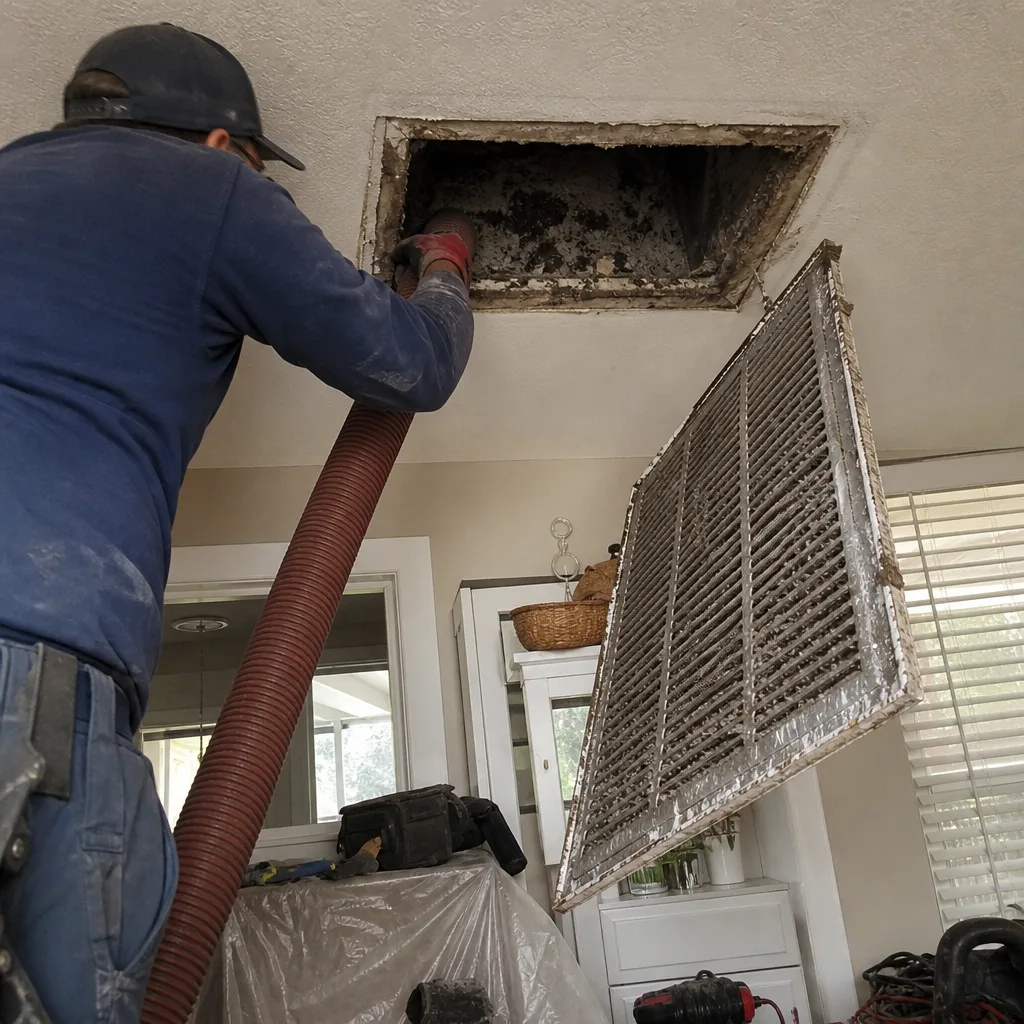 Before
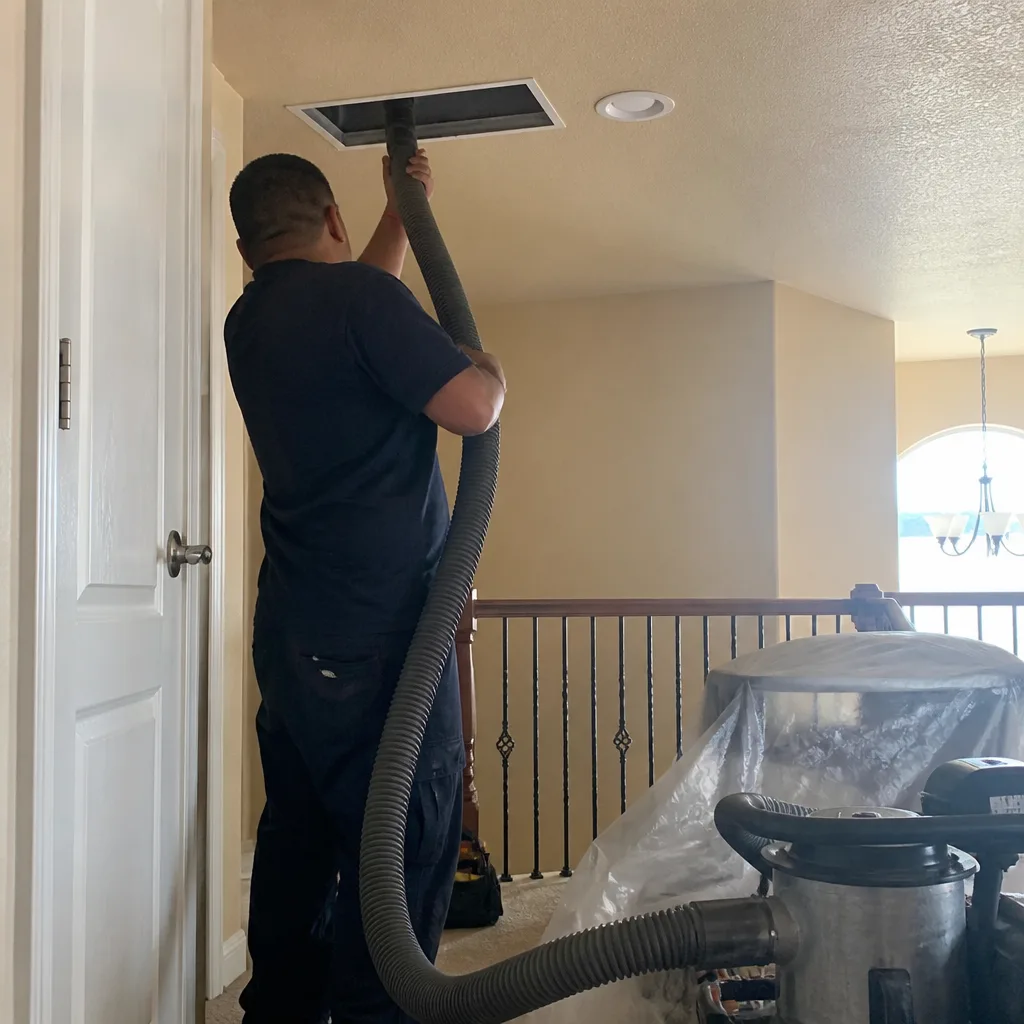 After
After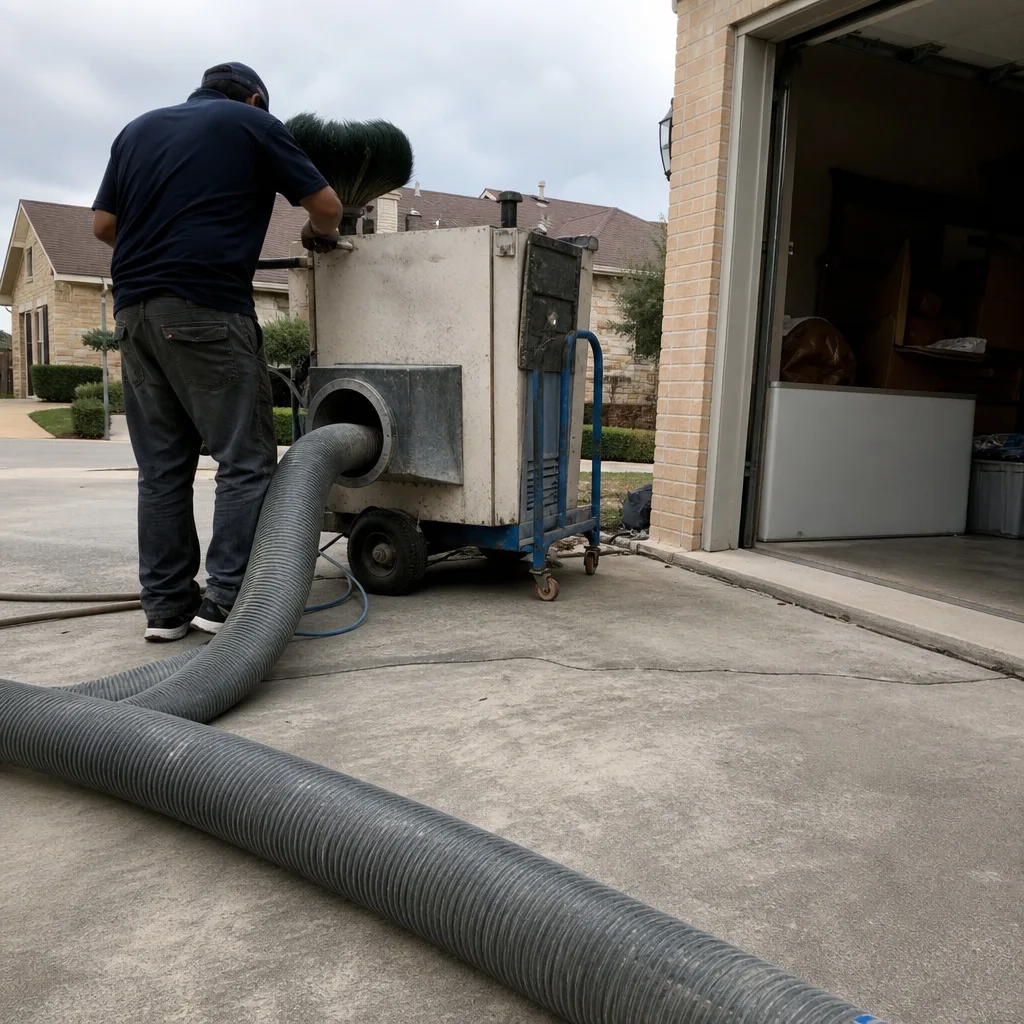 Before
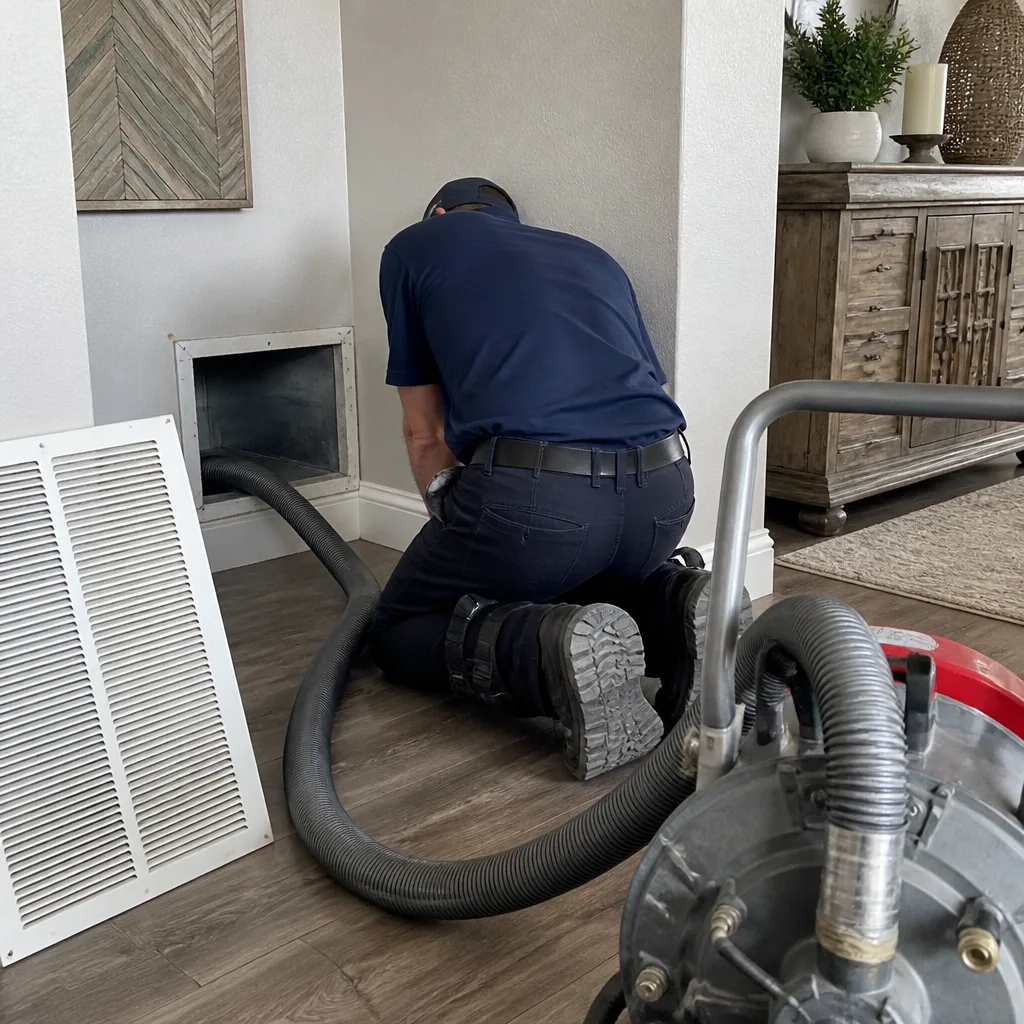 After
AfterAir Duct Cleaning Maintenance Checklist for Schertz Homeowners
Changing your air filter on schedule is not duct maintenance. It’s filter maintenance. The ductwork itself has no routine consumable to replace, which means the checklist most HVAC companies hand you is actually a filter-change reminder dressed up as a comprehensive plan. In Schertz, where summer humidity pushes 80% and winter temperature swings force constant system cycling, that distinction matters. Homeowners here need to know what they can inspect themselves, what signals a real problem, and when a professional camera inspection is the only honest next step. This guide draws that line precisely.
Quick Answer
A proper air duct maintenance checklist for Schertz homeowners includes monthly register inspections with a phone flashlight, quarterly checks of visible flex duct connections, seasonal filter changes with MERV ratings matched to your system capacity, and annual documentation of any odors or moisture events. Professional intervention is warranted only when you find visible bio-growth, confirmed pest entry, or persistent post-renovation particulate that standard vacuuming won’t clear.
Table of Contents
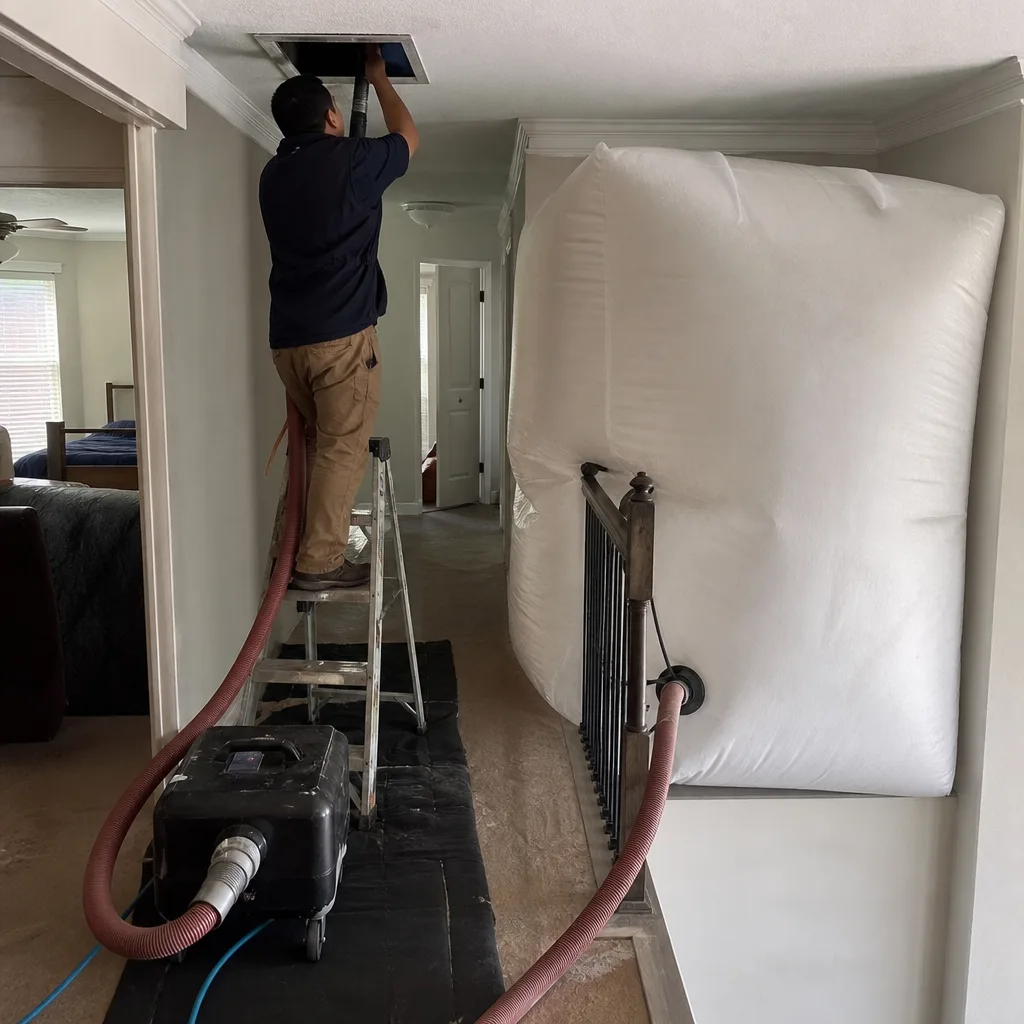
- The Register-by-Register Visual Inspection Homeowners Can Do
- Checking Flex Duct Connections Without Opening Walls
- Filter MERV Ratings for Schertz Conditions
- What to Document in a Simple Home Log
- Three Conditions That Convert DIY Findings Into a Professional Call
- A Seasonal Maintenance Rhythm for Schertz Homes
- Common Mistakes to Avoid
- When to Call a Professional
- Frequently Asked Questions
BeforeAfterThe Register-by-Register Visual Inspection Homeowners Can Do
Every register in your Schertz home tells a story if you know what to look for. We recommend a monthly walk-through with a phone flashlight, checking each supply and return vent for conditions that fall outside normal accumulation.
What normal looks like: A thin, uniform layer of gray dust on the interior duct walls visible from the register opening. This is simply airborne particulate that settled before reaching the filter. In Schertz, where caliche soil generates fine mineral dust and oak pollen seasons run heavy, a light coating between annual cleanings is expected. The key word is uniform. If every register shows roughly the same thin layer, your system is distributing air evenly and the debris is not originating inside the ductwork itself.
What flags attention:
- Thick, clumped debris at one or two registers only. This suggests a localized source: a disconnected duct run pulling attic air, a nearby return pulling excessive particulate from a specific room, or a register boot that has separated from the duct.
- Dark, streaky patterns. These often indicate moisture events. In Schertz’s humid summers, condensation can form at register openings when cold supply air meets warm, moisture-laden room air. Streaking means water has been present long enough to trap and darken debris.
- Visible fibers or insulation fragments. If you see pink or yellow fiberglass particles, the duct lining may be degrading or a flex duct may have torn at a connection point.
- Insect or rodent debris. Look for seed hulls, droppings, or shredded material. Schertz’s proximity to open Hill Country land means field mice and roof rats occasionally find attic entry points.
To perform the inspection, remove the register grille (most lift off or have two visible screws), shine your flashlight straight down the duct, and photograph what you see. Date the photo. This creates your baseline. When a technician arrives later, you have evidence rather than memory.
We’ve delivered Air Duct Cleaning in Schertz since 2013, and the homeowners who keep these photos are the ones who get the most precise diagnoses. They don’t waste money on unnecessary cleanings, and they don’t ignore conditions that genuinely need attention.
Checking Flex Duct Connections Without Opening Walls
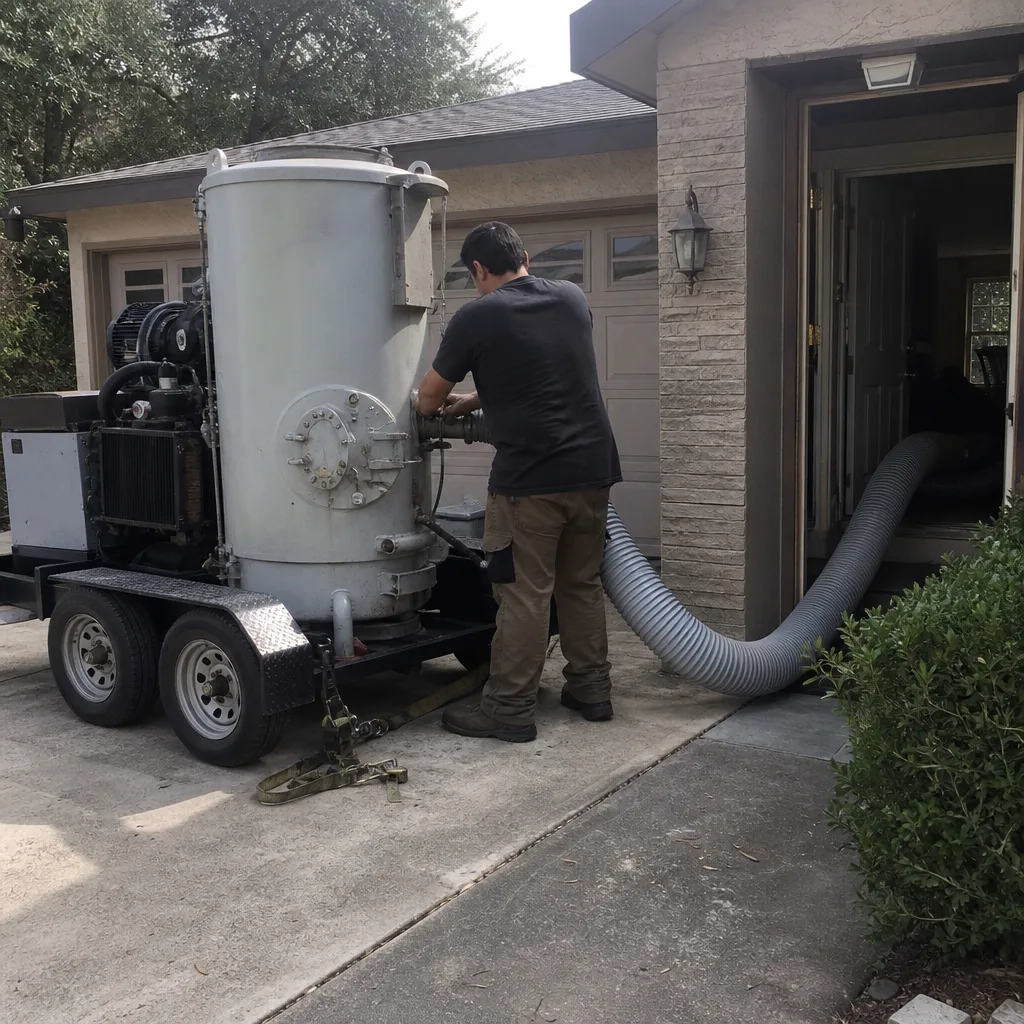
Most Schertz homes built between 1995 and 2015 use flex duct, the insulated flexible tubing that connects the rigid plenum to each register boot. Flex duct is efficient to install but vulnerable at its connection points, especially in attics where summer temperatures exceed 140°F.
You cannot see most of these connections without cutting drywall. But you can see the effects of failure at the register boot, the metal collar where the duct meets your ceiling or floor.
Step-by-step inspection:
- Remove the register grille and look at the boot itself. The boot should be firmly seated in the ceiling or floor with no visible gap between the boot flange and the finished surface.
- Check for dust accumulation on the outside of the boot flange. If you see debris on the room side of the metal, air is escaping from the duct-boot joint and pulling attic or wall-cavity dust with it. This is a common failure mode in Schertz homes where thermal expansion and contraction have loosened tape or clamp connections over years of cycling.
- Feel for temperature variation around the boot perimeter. With the system running, the boot should deliver uniform temperature across its opening. A cold spot at the edge suggests conditioned air is leaking into the wall cavity rather than entering the room.
- Look for sagging or distortion in the ceiling around the boot. Moisture from a disconnected duct can saturate drywall, causing visible sag or staining. In Schertz’s humid climate, this condition worsens quickly.
- Photograph any gaps, stains, or temperature anomalies. These images become part of your home log and your evidence if a repair is needed.
A separated flex duct at the plenum end will show up as a register with weak airflow and unusual dust accumulation. If one room in your Schertz home consistently runs warmer in summer or cooler in winter despite open vents, flex duct separation is a leading suspect. This is not a homeowner repair. The plenum connection requires access to the air handler, and improper reconnection can unbalance system static pressure.
Filter MERV Ratings for Schertz Conditions
The filter is the boundary between your home’s air and your ductwork. Choosing the wrong MERV rating for your Schertz system is one of the most common self-inflicted maintenance errors we encounter.
MERV, or Minimum Efficiency Reporting Value, measures a filter’s ability to capture particles between 0.3 and 10 microns. Higher MERV means finer filtration but also greater airflow resistance. The critical variable is not “better filtration” but matched filtration: the right MERV for your system’s blower capacity.
| System Type | Recommended MERV | Schertz Consideration |
|---|---|---|
| 1-ton to 2-ton split system with standard blower | MERV 8 | Caliche dust and pollen load is significant; MERV 8 captures these without overworking small blowers |
| 2.5-ton to 3.5-ton system with PSC blower | MERV 8 to MERV 11 | MERV 11 improves capture of fine pollen and mold spores during humid months |
| 4-ton or larger with variable-speed ECM blower | MERV 11 to MERV 13 | ECM motors adjust torque to maintain airflow; these systems can handle finer filtration |
| Any system with 1-inch filter slot only | MERV 8 maximum | Thin filters at high MERV create excessive static pressure and can freeze coils in Schertz humidity |
Here’s the specific Schertz problem: many homeowners here install MERV-13 filters in systems that cannot handle them, thinking they’re getting superior protection. What they actually get is reduced airflow, frozen evaporator coils in summer, and premature blower motor failure. In our experience across Schertz neighborhoods from The Crossvine to Willow Grove, the most frequent “emergency” duct call we receive in July is not a duct problem at all. It’s a frozen coil caused by a filter that chokes the system.
Check your air handler’s specification plate or manual for maximum static pressure. If you cannot find it, default to MERV 8 for 1-inch slots, MERV 11 for 4-inch media cabinets, and consult a technician before upgrading. The HVAC Cleaning in Schertz page details how we measure system static pressure during service calls.
What to Document in a Simple Home Log
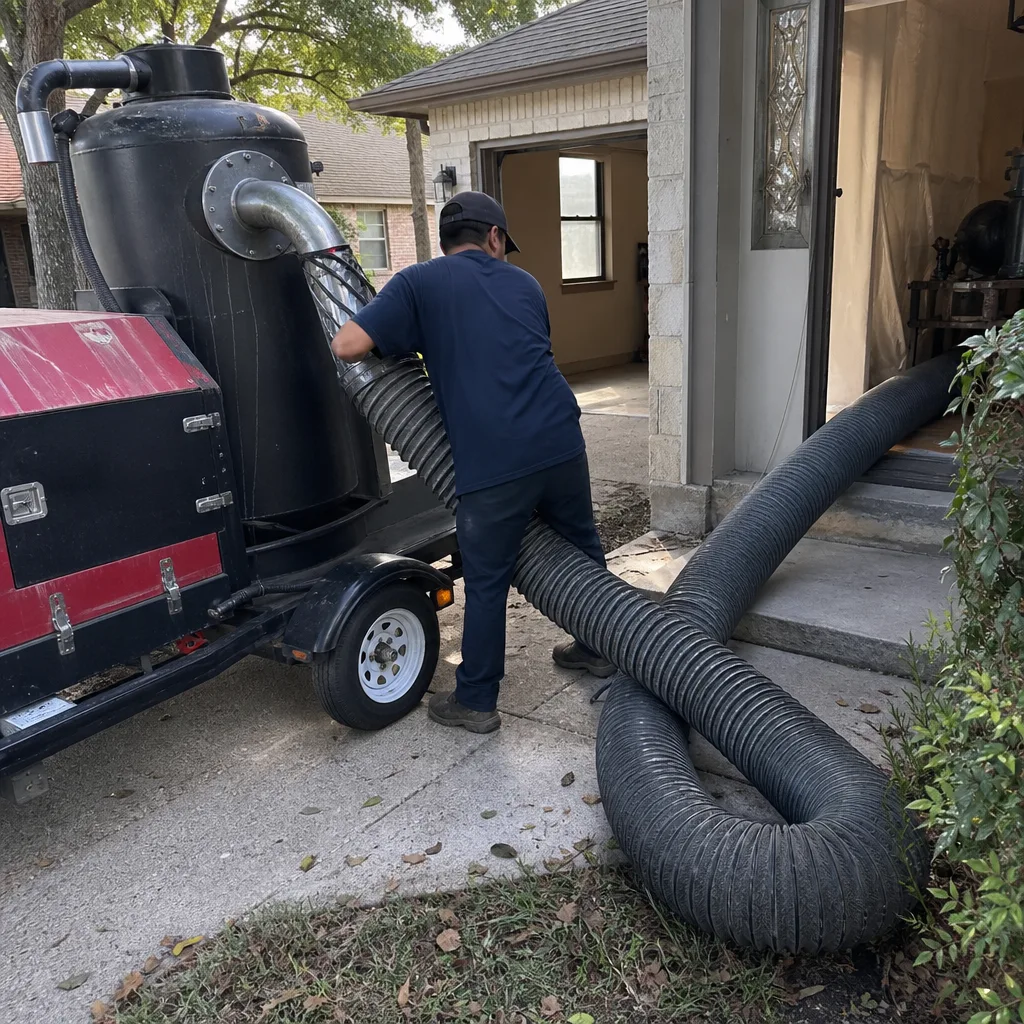
A home log transforms vague complaints into actionable data. Technicians guess less when homeowners track more. The log need not be elaborate. A dated note in your phone or a dedicated notebook page suffices.
Document these items:
- Filter change dates and the MERV rating installed. This prevents the common error of double-changing or forgetting changes, and it lets a technician see if airflow problems correlate with filter upgrades.
- Any odor events. Note the date, the register location, and the character of the odor: musty, chemical, burnt, or sewage-like. Musty odors in Schertz often indicate condensate pan or duct liner moisture. Chemical odors may signal backdrafting from an attached garage or stored volatile compounds. Burnt odors require immediate electrical inspection.
- Visible moisture at registers. Date, location, and whether the moisture appeared during cooling or heating season. Summer condensation at supply registers is common in Schertz’s high-humidity periods; persistent moisture suggests supply air temperature too low or room humidity too high.
- Renovation or construction dates. Any interior work generates particulate. Drywall dust, in particular, has a distinctive fine, white appearance in ducts and can remain airborne for weeks after work concludes.
- Pest control visits or observations. If you’ve had rodent activity in the attic or seen evidence near roof lines, note it. Duct entry often follows attic entry by days or weeks.
- Photos from your register inspections. Embed these by date or keep them in a dedicated album. The visual record is more valuable than written description for most duct conditions.
When you call for service, read from this log. A technician who hears “musty odor at the northeast bedroom register starting July 15, two weeks after the condensate drain backed up” has a diagnostic starting point. One who hears “the house smells funny” starts from zero. The difference in accuracy, and in your final invoice, is substantial.
Three Conditions That Convert DIY Findings Into a Professional Call
Most register dust, most filter decisions, and most seasonal observations are homeowner-managed. Three conditions cross the line into requiring professional equipment and training. Recognizing them prevents both unnecessary expense and dangerous delay.
1. Visible Bio-Growth
If your flashlight shows green, black, or white fuzzy growth on duct walls, you are not looking at dust. You are looking at microbial colonization, and no amount of household cleaning will address it safely. Disturbing mold colonies without containment and negative-pressure extraction spreads spores throughout the home. In Schertz, where summer humidity and winter temperature differentials create condensation cycles, duct liner mold is not rare. It is, however, a condition that requires professional remediation with antimicrobial treatment, HEPA containment, and post-treatment verification. We use Rotobrush systems with HEPA filtration and Guardsman antimicrobial applications where indicated, and we photograph every stage for the job record.
2. Confirmed Pest Entry
Signs of rodent or insect activity inside ducts are not a cleaning issue. They are an entry issue. Until the access point is sealed, cleaning is temporary at best. More critically, rodent droppings carry hantavirus and other pathogens that become airborne when disturbed. Professional service includes entry-point identification (often requiring attic or crawlspace inspection), safe waste removal with PPE and HEPA containment, and duct sanitizing. Our crews operate under Haven Standard Clause 3: Verified Crews, with background-checked technicians identified by name before arrival.
3. Post-Renovation Particulate
Construction dust behaves differently from household dust. Drywall compound, sawdust from treated lumber, and insulation fragments are heavier, more abrasive, and more likely to lodge in duct corners and elbows. Standard household vacuuming, even with a shop vac, lacks the agitation and negative-pressure extraction to mobilize and remove this material. After major renovation, a professional duct cleaning with rotary brush agitation (we use Rotobrush equipment for this application) and high-volume vacuum extraction is warranted. The key indicator: if your register inspection shows thick, layered debris with visible fibers or uniform white coating, and renovation occurred within the past 12 months, call for a camera inspection.
These three conditions share a common feature: they involve risks or equipment beyond homeowner capacity. Everything else on this checklist, you can monitor yourself.
A Seasonal Maintenance Rhythm for Schertz Homes
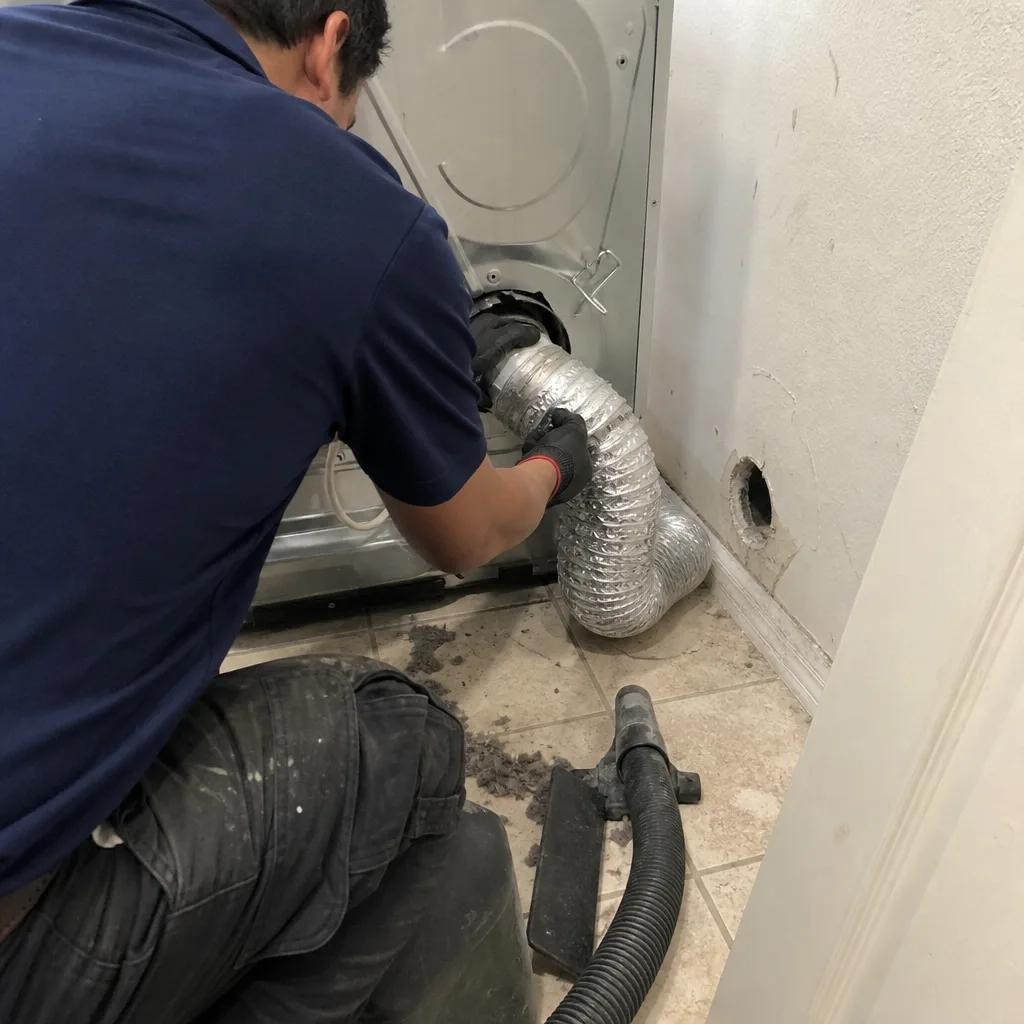
Schertz’s climate demands a rhythm matched to its patterns, not a generic calendar. Here’s what we recommend based on 52,000+ homes served since 2013:
March-April (Pre-Summer):
- Replace filter with MERV rating matched to system capacity
- Inspect all registers for pollen-season accumulation
- Check condensate drain line for blockage (Schertz’s oak pollen clogs drains reliably)
- Document baseline photos of register interiors
June-August (Peak Cooling):
- Monthly register visual inspection
- Monitor for moisture at supply registers during high-humidity periods
- Check flex duct boot connections for signs of attic heat damage
- Replace filter every 60-90 days depending on load
September-October (Transition):
- Full register inspection with photo comparison to spring baseline
- Replace filter before heating season
- Note any odors as system switches from cooling to heating (first-cycle dust burn-off is normal; persistent odors are not)
December-February (Heating Season):
- Monthly register check for unusual accumulation (heating cycles can mobilize settled debris)
- Monitor for flex duct sag in attics where cold-night contraction may have loosened supports
- Replace filter every 90 days
This rhythm keeps you ahead of Schertz’s specific stressors: pollen loading, humidity cycling, and thermal expansion in attic ductwork. It also builds the documentation habit that makes any future professional call more productive and less expensive.
Common Mistakes to Avoid
- Treating filter changes as duct maintenance. They protect the system but do not clean the ductwork. A clean filter with contaminated ducts still circulates contaminated air.
- Installing the highest MERV filter available. In Schertz, we’ve replaced blower motors that failed prematurely because a homeowner upgraded to MERV-13 in a system specified for MERV-8. Match the filter to the system, not to the marketing.
- Using register deodorizers or sanitizing sprays. These mask odors without addressing source conditions and can leave residues that attract more debris. If a duct smells, find why. Don’t cover it.
- Ignoring one “slow” room. Uneven airflow often indicates a disconnected duct run. Homeowners who compensate by closing other registers create static pressure imbalances that strain the entire system.
- Cleaning ducts after every minor renovation. Not every project warrants full duct cleaning. A single room painted with latex paint? Unlikely. Whole-home drywall work with sanding? Yes. Use the visibility threshold: if you can see renovation residue in the ducts, it needs professional extraction.
- Accepting “blow-and-go” cleaning without documentation. If a technician cannot show you before-and-after photos of your specific duct runs, you have no evidence the work occurred. CleanRun’s Documented Photo Record on Every Visit exists because this industry has too much vacuum noise and too little accountability.
- Waiting for visible dust at registers. By the time debris is visible at the register opening, the condition upstream is typically advanced. Monthly flashlight checks catch problems earlier.
When to Call a Professional
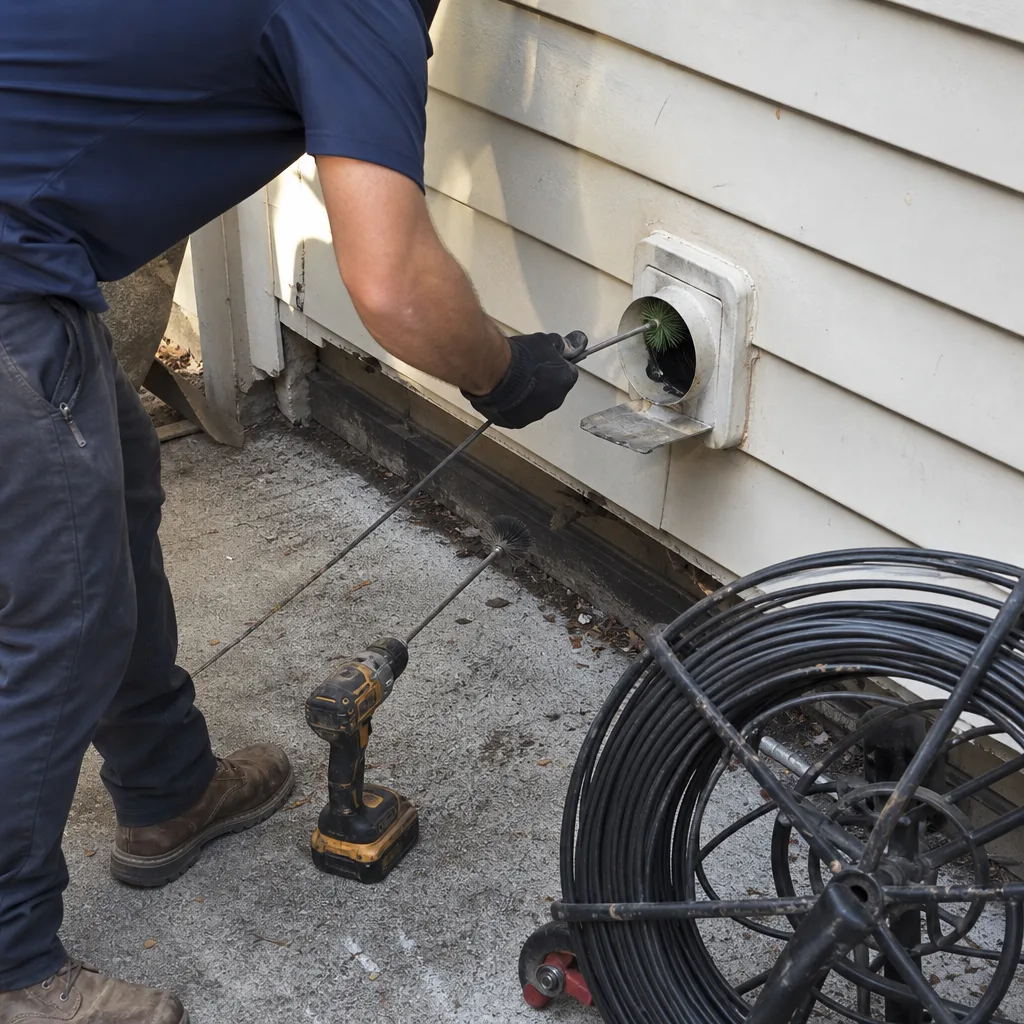
Call when your log and inspections reveal bio-growth, confirmed pest entry, or post-renovation particulate that standard maintenance won’t clear. Call when one room consistently underperforms despite open vents and correct filter selection. Call when odors persist after you’ve eliminated household sources.
A professional camera inspection shows you the condition of duct runs you cannot see from register openings. At CleanRun Air Duct Cleaning Schertz home, we deliver a written price before any work starts, every time, under Haven Standard Clause 1. Our crews use Nikro and Abatement Technologies equipment for negative-pressure extraction, and every job concludes with a Documented Photo Record of every duct run, included as standard. The 365-Day Done Right Promise backs the work in writing, not as a policy subject to manager approval.
CleanRun Air Duct Cleaning Schertz offers free estimates in Schertz. Call (830) 402-5110.
Frequently Asked Questions
Whole-system duct cleaning for a typical Schertz home runs between $400 and $750, depending on system size, accessibility, and condition. CleanRun delivers a written price before any work starts, with no per-vent add-ons or post-arrival upsells. Call (830) 402-5110 for an exact quote on your system.
Every 3 to 5 years for homes without special conditions; immediately after confirmed mold, pest entry, or major renovation; and whenever register inspections show flagged conditions that persist after filter changes. Schertz’s pollen load and humidity may push some homes toward the shorter end of that range.
The $79 coupon model typically covers a brief vacuuming of accessible register openings, not full-system cleaning with agitation and negative-pressure extraction. True duct cleaning requires equipment like Rotobrush rotary systems and high-volume HEPA vacuums, plus time to access and photograph every run. If a quote seems low, ask specifically what equipment will be used, how many duct runs will be cleaned, and whether before-and-after photos are included.
Demand a documented photo record of every duct run, before and after, delivered as part of the job record. CleanRun has provided this on every job since 2013. If a company cannot or will not show you your own ducts, you are buying a service on trust alone, and this industry has not earned that trust.
A shop vac can remove loose debris from the first few feet of ductwork accessible from a register opening. It cannot reach duct elbows, the plenum, or most flex duct runs. More importantly, it lacks the agitation to dislodge adhered debris and the containment to prevent redistribution. For anything beyond surface register cleaning, professional equipment is required.
Caliche dust, the fine mineral particulate from Schertz’s limestone-derived soils, is abrasive and heavier than typical household dust. It settles in duct low points and elbows, and it resists standard vacuuming without rotary agitation. Homes near active construction or unpaved areas in Schertz’s developing corridors see accelerated accumulation. This is why we specify Rotobrush equipment for Schertz jobs: the rotary bristle action mobilizes caliche deposits that straight suction leaves behind.
The Bottom Line
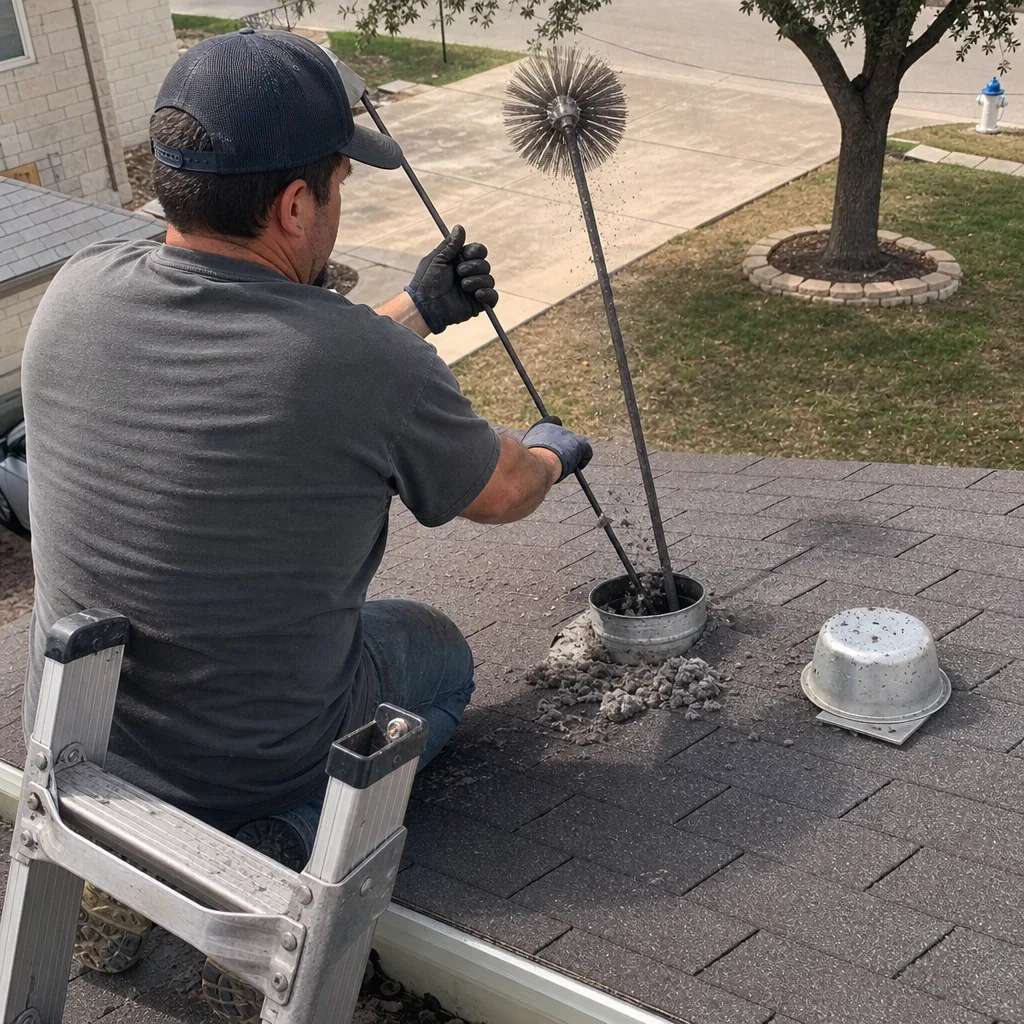
A useful air duct maintenance checklist separates what homeowners can monitor from what requires professional intervention. For more guides & resources, explore our blog. Monthly register inspections with a flashlight, seasonal filter changes with correctly matched MERV ratings, and a simple home log build the documentation that makes every future service call more accurate and less expensive. The three call conditions, bio-growth, pest entry, and post-renovation particulate, are non-negotiable professional territory. Everything else is observation and good record-keeping. In Schertz’s specific climate of heavy pollen, high summer humidity, and caliche dust, that disciplined approach protects both your air quality and your budget.
Written by Tomas Reyes, Owner at CleanRun Air Duct Cleaning Schertz, serving Schertz since 2013.